
How to Spot Top 1% Startups Early
How to Spot Top 1% Startups Early
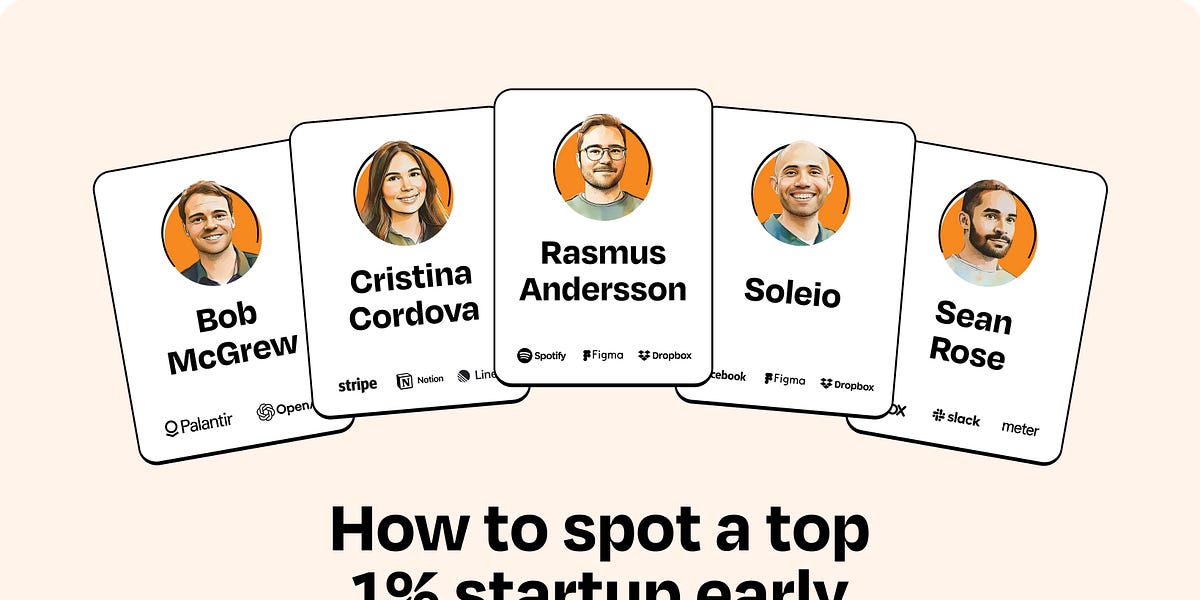
People who joined companies like Palantir, OpenAI, Stripe, and Figma before they took off share clear signals. Investors agree on a few more checks for fundable teams. What stands out from their experiences.
Check for Huge Ambition
Early employees at multiple hits say ambition marks top startups. Bob, who joined Palantir and OpenAI early, called Palantir’s start “ludicrous.” He figured failure meant a year lost to his PhD, but success changed everything. Lenny’s Newsletter interviews with five such joiners (covering Slack, Notion, Spotify, and more) hammer this point.
Sean from early Slack and Box looked for theses with “extraordinary ambition.” Soleio at early Facebook saw a team too smart for “social networking” but dead set on reshaping the internet. Rasmus from Spotify and Figma noted: if everyone agrees it’s obvious, you’re late.
- Founders sound a bit crazy, like Dylan Field pitching Figma in a browser in 2013.
- Others laugh: Record labels mocked Spotify’s plan for all the world’s music.
- No one’s tried it before.
Founders Come First
All agree: founders beat everything else. Cristina, early at Stripe, Notion, and Linear, joined Stripe for the people. “Nothing matters more,” she said. Rasmus put it as “people and mission (who and why).”
Look for these traits:
- They adapt fast. Palantir and OpenAI shifted from mocked strategies. Stripe’s Collisons read widely and sought advice.
- Ferocity and passion. Cristina loved Notion’s Ivan Zhao’s intensity. Soleio saw it in Facebook’s early team.
- Founder-market fit. Palantir took PayPal fraud tech to intelligence. Sean asks if they’re “meant to do it” and no one else could match them.
Show Traction Through an MVP
Investors want proof. North Country Now lists four signs for seed cash, starting with a minimum viable product (MVP). It can be basic—a site, video, waitlist, or single feature.
Susie Harrison’s Hearth Display used Figma designs shared with families. She proved demand with Facebook groups, pre-orders, and an Indiegogo campaign that hit $600,000. Michael Duda of Bullish Inc. pushes crowdfunding to build fans and show real interest, like raising double your goal.
Skip Judging the Early Product
Great companies often launch rough. Early Facebook disappointed Soleio. Slack was “a giant piece of shit,” per co-founder Stewart Butterfield. Figma started as a prototype. Spotify eyed video first. Products pivot, so focus on vision and team over today’s build.
Build on ambition, founders, early traction. Spot top 1% teams with product-market fit and growth ahead.

Sebastyen
Sebastyen Wolf is our Editor-in-Chief. He is an analyst and entrepreneur with experience working alongside early-stage founders, launching online ventures, and studying the data patterns that shape successful companies. A fan of Shark Tank since Season 1, he now focuses on translating the show’s most valuable insights into clear, practical takeaways for readers.