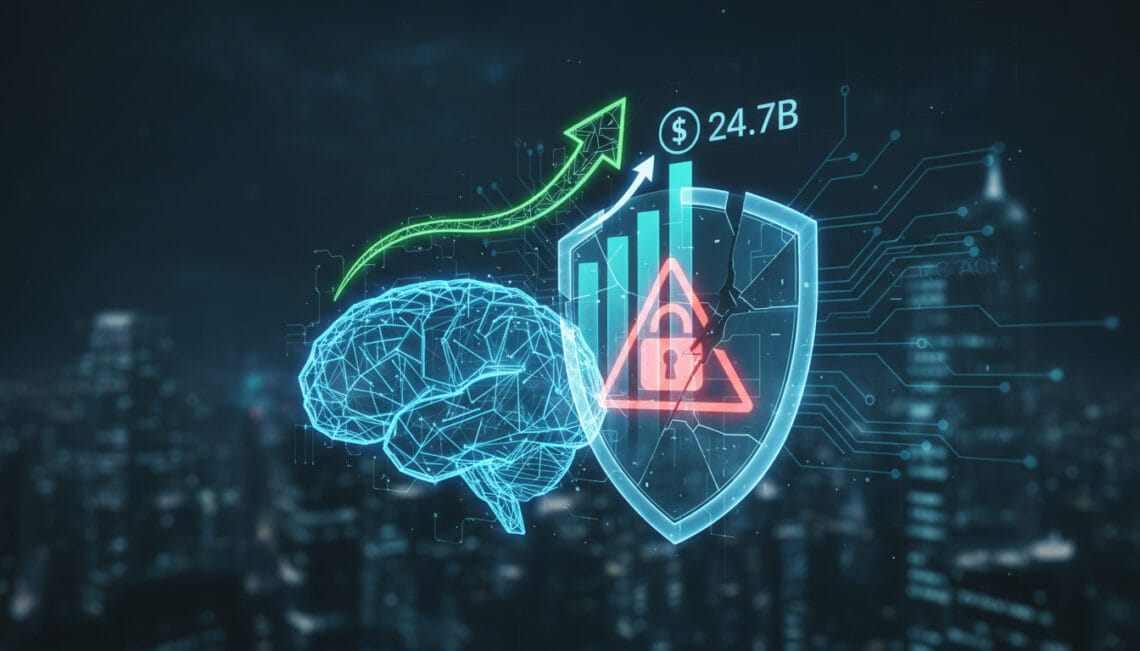
No-Code AI Tools Set for $24.7B Growth by 2029, Security Risks Highlighted
No-Code AI Tools Set for $24.7B Growth by 2029, Security Risks Highlighted
The Facts
MarketsandMarkets forecasts the no-code AI platforms market will expand from $4.9 billion in 2024 to $24.7 billion in 2029, a 38.2% CAGR. Growth spans applications like workflow automation, chatbots, and predictive analytics across sectors including healthcare, finance, and retail. Key players include IBM, Microsoft, Google, AWS, and Salesforce. A GlobeNewswire release details this. Forbes warns of vulnerabilities in AI-generated code from no-code tools (article here). Google launched Workspace Studio for no-code AI agents in Gmail and Drive (Futurum Group). TXP flags low-code legacy issues, AI overload, and supply chain cyber risks for 2026 (IT Brief Asia). Menlo Ventures notes enterprise gen AI spend rising, coding tools at $4B (Menlo Ventures). AI code generators project 16.8% CAGR to 2033 (OpenPR).
Editorial Perspective
No direct Shark Tank pitches match no-code AI platforms yet, but this trend matters for entrepreneurs eyeing quick tech builds. It overlaps Robert Herjavec’s cybersecurity lane. AI code flaws could expose startups handling data. For aspiring pitchers, rapid prototyping helps demos. Valuation discipline like Kevin O’Leary’s stays key in hype. Growth signals more AI pitches. We might see Sharks emphasize security and scalability over flash.
What Does This Means
Startups gain fast AI access without coders, cutting costs for early validation. But founders must audit security to avoid breaches hitting customers. Everyday users see more tailored apps in work and shopping, yet face higher hack risks if tools skip checks. Investors watch for platforms baking in safeguards. Weak ones drag down hot markets.

Sebastyen
Sebastyen Wolf is our Editor-in-Chief. He is an analyst and entrepreneur with experience working alongside early-stage founders, launching online ventures, and studying the data patterns that shape successful companies. A fan of Shark Tank since Season 1, he now focuses on translating the show’s most valuable insights into clear, practical takeaways for readers.