

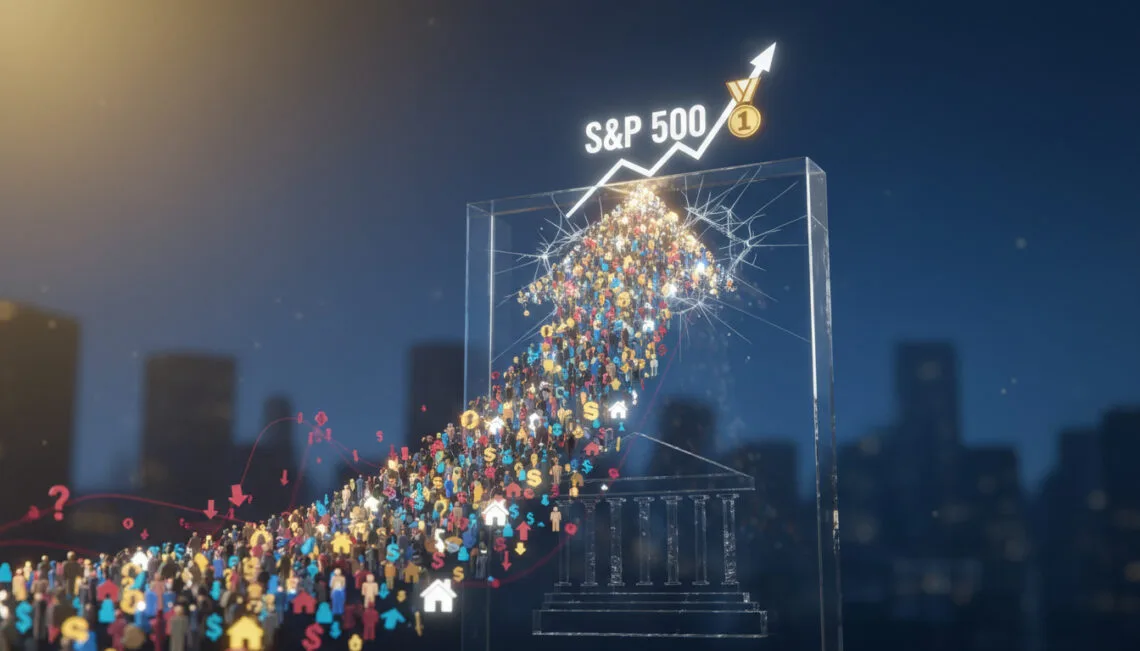
Retail Investors Power S&P 500 Record Highs as Banks Flag Sell Risks
Retail Investors Power S&P 500 Record Highs as Banks Flag Sell Risks

The Facts
The S&P 500 closed at a record 6,901 on Thursday after the Fed’s 0.25% rate cut, up 17.33% year to date, per Fortune. Retail investors added $7.8 billion to stocks in the week to Dec. 10, mostly ETFs ($6.3B), above the $6.3B average (JPMorgan note). Flows track at 1.9x the five-year average. Bank for International Settlements labeled retail the “dumb money.” Bank of America’s Bull & Bear Indicator hit 7.8, signaling extreme bullishness. Friday saw S&P 500 drop 1%, Nasdaq 1.6% amid tech rotation and AI bubble fears (Yahoo Finance; Reuters; Bloomberg). Stifel sees 9% upside in 2026 base case or 20% drop if recession hits (Business Insider).
Editorial Perspective
This overlaps with Kevin O’Leary’s lane on cash flow discipline and spotting Wall Street greed signals like fund flows. Retail now out-trades mutual and hedge funds since volumes doubled from 2010 (Financial Times via Fortune). No direct Shark Tank business tie—none of these are pitch categories—but it shows how everyday investor heat shapes markets. Makes me wonder if Sharks will grill pitchers harder on sustainable valuations amid retail-fueled highs.
What Does This Means
Entrepreneurs face easier funding in hot markets but risk valuation resets if retail pulls back—Stifel eyes 20% S&P drop on recession. Startups with consumer ties watch job market cracks hurting spending (68% of GDP). Regular families see 401(k)s swell short-term from records, yet banks warn of corrections tied to high unemployment or AI doubts (Investopedia). Matters because retail momentum can flip fast, hitting nest eggs and business plans.

Sebastyen
Sebastyen Wolf is our Editor-in-Chief. He is an analyst and entrepreneur with experience working alongside early-stage founders, launching online ventures, and studying the data patterns that shape successful companies. A fan of Shark Tank since Season 1, he now focuses on translating the show’s most valuable insights into clear, practical takeaways for readers.