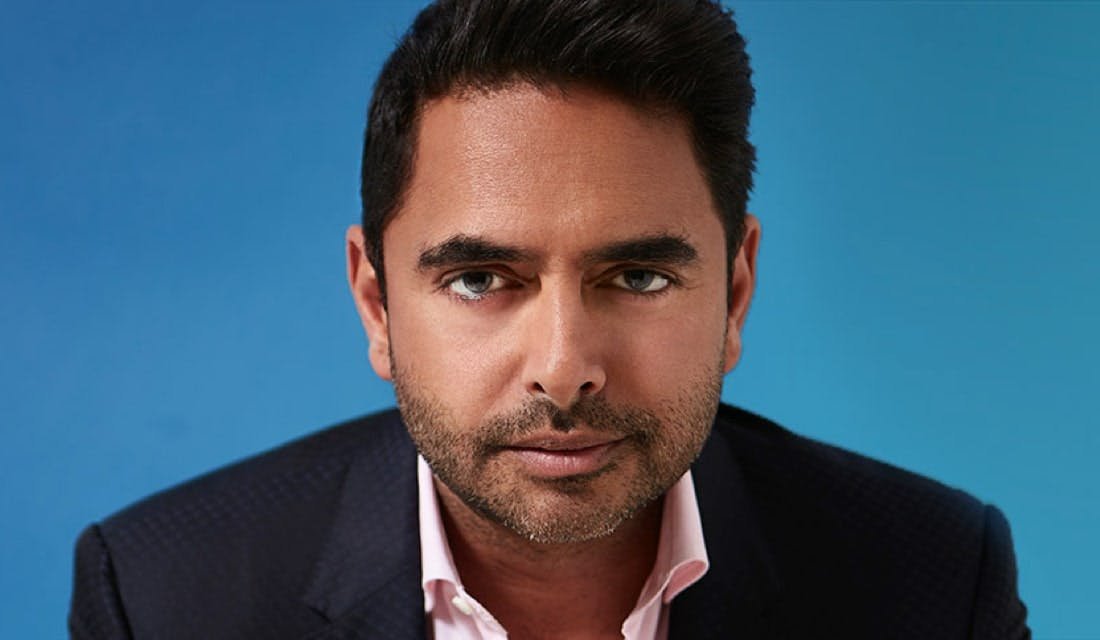
Rohan Oza Net Worth, Shark Tank, and the Brand Instinct Behind Poppi
TL;DR:
– Rohan Oza built his fortune by turning ordinary drinks into brands people wanted to talk about, then selling into much bigger balance sheets
– His career started when a would-be engineer realized he cared more about taste, packaging, and culture than factory process
– Appeared as guest shark in Season 9 (2017); he became Shark Tank’s resident beverage assassin and later backed Poppi, Everytable, and more
– Net worth is estimated at $400 million, built across Glaceau, Bai, CAVU, and later consumer-brand stakes
Contents
– [Early Life](#early-life)
– [The Business That Made Them](#the-business-that-made-them)
– [Investment Philosophy](#investment-philosophy)
– [On Shark Tank](#on-shark-tank)
– [Online Presence](#online-presence)
– [What People Are Saying](#what-people-are-saying)
– [Net Worth](#net-worth)
– [FAQ](#faq)
– [Final Take](#final-take)
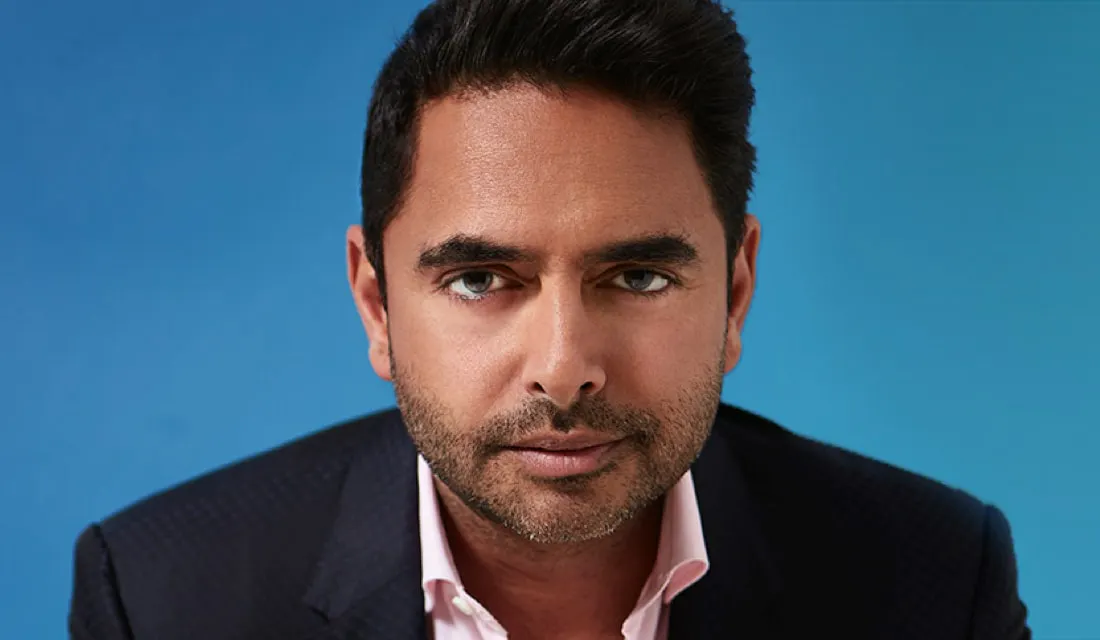
Caption: Rohan Oza, the consumer-brand investor who made his name selling taste, image, and distribution as one package. Image from CAVU Consumer Partners.
Rohan Oza’s whole career can be explained with a refrigerator door. Open it, stare for ten seconds, and you will understand his world. Most drinks are fine. A few have taste. Fewer still have story, shelf appeal, and the nerve to charge more than common sense first allows. Oza built his reputation spotting that last category before the bigger companies decided they wanted it too.
That is why his Shark Tank run worked. He did not show up pretending to know every gadget and app on earth. He came in like a man who could tell, very quickly, whether a founder had a brand or just a bottle with delusions.
Early Life
Rohan Oza was born on October 2, 1971, in Livingstone, Zambia, into a Gujarati business family. In a recent [Masters of Scale interview](https://mastersofscale.com/the-playbook-for-building-billion-dollar-consumer-brands/), he said the entrepreneurial instinct came from home. His family had spent generations in business, and the early assumption was that he would follow the line. The better detail is that he did not want the specific business waiting for him.
He was educated in England, including time at Harrow School, then studied manufacturing and industrial engineering at the University of Nottingham before earning an MBA from the University of Michigan. The academic route made him look like a future operator. The temperament told another story. The [Los Angeles Times](https://www.latimes.com/business/la-fi-himi-oza-20150913-story.html) reported that he eventually realized engineering was the wrong fit and shifted toward marketing and corporate strategy, which sounds much closer to the man television audiences later met.
“Probably my family. I’m originally Indian, born and raised in Africa, educated in England, and now I’m American.” , Rohan Oza, *Masters of Scale*
That blend matters because Oza talks like a marketer but often thinks like an immigrant trader. He is unusually alert to what people actually buy, not what they claim to admire in a survey. People say they want purity and restraint. Then they reach for the loud can with the celebrity on it.
His first jobs sharpened that instinct. He worked at Mars, then at Coca-Cola, where he helped with brands including Sprite and Powerade. That was the useful education. Big companies teach process. They also teach the limits of process. If a brand feels dead, no meeting will rescue it. Somebody has to make the thing feel alive again.
The Business That Made Them
Oza’s breakout move came in 2002, when he left Coca-Cola for Glaceau, the smaller company behind Vitaminwater and Smartwater. According to [CAVU’s official biography page](https://www.cavuconsumer.com/people/), he joined as partner and chief marketing officer, helped build those brands through celebrity partnerships, and then watched Coca-Cola buy Glaceau for $4.1 billion in 2007. That is a tidy result. It is also the sort of outcome that turns a smart marketer into a man people start calling when a category needs oxygen.
The celebrity deals were not decoration. They were the machine. Oza helped make 50 Cent’s relationship with Vitaminwater the template for modern celebrity equity marketing. Jennifer Aniston, Tom Brady, Kobe Bryant, and others helped move product, but the sharper point is that Oza understood fame only mattered when it fit the item in hand. Plenty of founders rent celebrity attention. He was better at making it look native, which is harder and much more profitable.
Caption: Poppi became one of Oza’s biggest modern wins, a drink he helped rebuild after seeing more promise in the liquid than in the original brand. Image from Poppi’s official site.
After the Glaceau sale, he kept pushing into consumer brands that sat just left of mainstream taste and just right of big-acquirer interest. His bets included Vita Coco, Popchips, and Bai. Forbes reported in August 2025 that Oza invested $1 million in Bai when the company had only about $2 million in revenue, then helped position it for a $1.7 billion sale to Keurig Dr Pepper in 2017. That is his repeatable pattern, buy early, sharpen the story, widen distribution, then wait for a giant company to decide it needs the brand after all.
In 2015, he co-founded CAVU Consumer Partners with Brett Thomas. CAVU gave him a more formal home for the strategy he had already been practicing for years: take founder-led brands in food, beverage, wellness, and consumer lifestyle, then use branding, retail access, and cultural positioning to shorten the road from niche shelf to national one. Oza does not build software. He builds desire, then hands that desire to distribution.
The Poppi story shows the method in full. When Allison and Stephen Ellsworth brought Mother Beverage to Shark Tank, Oza saw a product he liked inside a business he did not. Forbes later reported that he believed the liquid was right while the package, brand, and positioning were wrong. He helped stop the original version, reworked the identity, and backed the relaunch as Poppi in 2020. In March 2025, PepsiCo announced it would acquire Poppi for $1.95 billion.
Investment Philosophy
Oza’s philosophy is less abstract than his TV edits sometimes suggest. In interviews, he keeps coming back to passion, chemistry, honesty, and speed. On [Cheddar](https://www.cheddar.com/media/shark-tank-judge-on-what-makes-a-good-pitch/), he said he looks for intelligence and chemistry in founders. In the [Los Angeles Times](https://www.latimes.com/business/la-fi-himi-oza-20150913-story.html), he described himself more bluntly, as someone who moves quickly, trusts his gut, and would rather act than wait for committee comfort.
That bias explains why he likes categories where instinct still matters. Beverage, packaged food, and household products can look simple from the couch. They are not. Consumers can reject a product because the color feels off, the bottle shape feels cheap, or the founder sounds rehearsed. Oza’s advantage is that he judges those signals fast and does not apologize for it.
“I move quick. I trust my gut. I shoot first and ask questions later.” , Rohan Oza, *Los Angeles Times*
There is still financial discipline under the showmanship. He usually wants either a clear consumer habit or a clean story about how a habit can change. He also likes categories where a buyer can imagine the exit before the startup calls itself mature. In food and beverage, if you cannot picture the acquirer, you may just be running an expensive hobby with better fonts.
His personal values show up most clearly when he talks about work and relationships. In a 2019 [Economic Times interview](https://economictimes.indiatimes.com/magazines/panache/rohan-oza-on-having-and-keeping-friends-in-biz-you-need-a-high-degree-of-honesty/articleshow/69983118.cms), he said business friendships survive only with honesty and early confrontation of problems. That tracks with the panel version of Oza too. He is rarely the shark who enjoys fake politeness. He would rather tell a founder the label is bad than let them spend another year acting surprised by weak sales.
On Shark Tank
Oza first appeared as a guest shark in Shark Tank Season 9, Episode 2, which aired on October 1, 2017, according to [Wikipedia’s season guide](https://en.wikipedia.org/wiki/Shark_Tank_season_9). He returned across Seasons 9, 10, and 11. By the numbers, [SharkTankDB](https://sharktankdb.com/shark/rohan-oza/) lists eight on-air deals totaling about $3.58 million, with his biggest check going to Jackson’s Honest at $1.25 million for 15% in that first episode.
The deal list tells you what he values. Jackson’s Honest fit the family story and better-for-you food lane. Q Ball gave him a media angle. Everytable matched his taste for businesses that could scale through broad consumer need. Then came Season 10, Episode 8, his signature episode, where he backed both Yumble at $500,000 for 6% and Mother Beverage at $400,000 for 25%. In plain arithmetic, he paid a much richer multiple for Yumble, but took far more ownership in Mother because he clearly thought the product was salvageable only if he had enough influence to rebuild it.

Caption: Oza’s best-known Shark Tank win came when he backed Mother Beverage, then helped turn it into Poppi. Image from the official Shark Tank Global YouTube clip.
That is the part casual viewers miss. Oza was not buying today’s numbers. He was buying his right to rewrite tomorrow’s shelf presence. If a founder asked for $400,000 at a $4 million valuation, his counter was not just about price. It was about control.
“This is not just pitch anything you feel like!” , Rohan Oza, quoted by Barbara Corcoran after a *Shark Tank* episode
His outcomes were mixed in the normal Shark Tank way, but the standout wins aged well. Poppi became the crown jewel. Everytable kept growing after the show and expanded its low-cost prepared-food model. Knife Aid gave him a service business outside beverages, which made sense because the pitch still relied on a simple consumer story and repeat behavior. Oza was never trying to become the shark for every weird invention under studio lighting. He wanted the businesses where packaging, price, and repeat purchase could line up.
Online Presence
Oza’s online presence is more operator than celebrity, which is healthier for everyone involved. His LinkedIn profile shows about 18,000 followers, and web mirrors of his X account place him near 10,000 followers. Those are not superstar numbers, but they do not need to be. His real audience is founders, consumer-brand operators, retail people, Shark Tank fans, and a certain class of young marketer who thinks the perfect job is getting paid to choose between flavors and fonts.
He also benefits from borrowed visibility. CAVU’s portfolio companies, Shark Tank clips, and podcast appearances keep him in circulation without requiring him to become an all-day content machine. That is probably wise. A man whose whole pitch is judgment should not post like he is trying to win prom king online.
What People Are Saying
Oza’s peers tend to describe him the same way: exacting, fast, and slightly allergic to mediocrity. That reputation can sound theatrical until you look at the exits. Then it sounds like pattern recognition with better tailoring.
“This guy has a vision and high standards, and he will not settle for anything less than stellar execution against the vision.” , John Foraker, quoted in *Forbes*
That is also how viewers tend to remember him. Reddit discussion around his episodes is thinner than the noise around louder sharks, but the tone is consistent. Fans usually treat him as the beverage and branding specialist, the guest shark who can smell bad packaging from across the room and does not bother pretending otherwise.
Net Worth
The cleanest public estimate is still [Celebrity Net Worth’s $400 million figure](https://www.celebritynetworth.com/richest-businessmen/ceos/rohan-oza-net-worth/), which is also the estimate cited by SharkTankDB. Treat it as an informed estimate, not revealed scripture. Private stakes, fund economics, and personal holdings rarely sit still long enough for the internet to behave.
The sources of wealth are much clearer than the headline number. Start with the Glaceau sale to Coca-Cola for $4.1 billion. Add the Bai investment, which Forbes said turned a $1 million bet into an estimated $100 million gain for Oza. Add CAVU economics and later equity in brands such as Poppi, whose sale to PepsiCo at $1.95 billion likely added another serious layer. Even if the exact total wobbles, the money came from ownership and exits, not salary. For a comparison with another guest shark who also built wealth by identifying consumer behavior before Wall Street got comfortable, see [The Shark Monitor’s Michael Rubin profile](https://thesharkmonitor.com/michael-rubin-from-law-school-to-shark-tank/).
FAQ
Who is Rohan Oza on Shark Tank?
Rohan Oza is a consumer-brand investor and marketing executive who appeared as a recurring guest shark in Seasons 9 through 11. He is best known for work tied to Vitaminwater, Smartwater, Bai, and Poppi. On the panel, he was usually the first person to care deeply about shelf appeal and repeat purchase.
What companies did Rohan Oza invest in on Shark Tank?
His better-known on-air deals include Jackson’s Honest, Q Ball, Everytable, Yumble, Mother Beverage, Knife Aid, Pricetitution, and Safety Nailer. The most important outcome from that group was Mother Beverage, which he later helped rebuild into Poppi.
How did Rohan Oza make his money?
He made money by helping build and sell consumer brands, then by investing in similar businesses through CAVU. The big checkpoints include the 2007 Glaceau sale to Coca-Cola, Bai’s 2017 sale to Keurig Dr Pepper, and Poppi’s 2025 sale to PepsiCo.
What is Rohan Oza’s net worth?
Public estimates place Rohan Oza at about $400 million. That figure should be treated as approximate because private-market wealth moves around. The broad conclusion is solid, though: his fortune sits well above “successful executive” territory and firmly inside “serial winner with equity” territory.
Is Rohan Oza still involved with CAVU?
Yes. CAVU still lists him as co-founder and managing partner on its official team page as of July 26, 2026. That matters because CAVU is the central vehicle for much of his current investing work, not a museum plaque for old wins.
Final Take
Rohan Oza was one of Shark Tank’s best guest sharks because he brought a real specialty and did not water it down to sound universal. He knows consumer branding at the level where tiny decisions become expensive ones. When he says the label is wrong, he is usually telling you where your next million dollars will disappear.
My judgment is simple. Oza is not the broadest investor the show has ever hosted, but he may be one of the sharpest within his lane. If your business depends on taste, packaging, retail behavior, and cultural heat, he is exactly the kind of shark you want. If it does not, he probably knows within thirty seconds, and that honesty is worth more than the polite version.
[Article last updated: July 2026. Deal terms and company status reflect publicly available information at time of publication.]

Sebastyen
Sebastyen Wolf is our Editor-in-Chief. He is an analyst and entrepreneur with experience working alongside early-stage founders, launching online ventures, and studying the data patterns that shape successful companies. A fan of Shark Tank since Season 1, he now focuses on translating the show’s most valuable insights into clear, practical takeaways for readers.