Alex Rodriguez Net Worth, Shark Tank, and the A-Rod Corp Empire After Baseball
TL;DR:
– Alex Rodriguez built his second act around A-Rod Corp, using baseball money and athlete discipline to buy into real estate, sports, and consumer brands
– His business turn started when the 2008 crash pushed him away from memorabilia and toward apartment buildings, a much less sentimental hobby
– Appeared as guest shark in Seasons 9, 10, and 12; he favored athletic and consumer pitches, with deals in Ice Shaker, SnapClips, Vade Nutrition, Nui, Slice of Sauce, and more
– Net worth is publicly estimated at about $350 million, built across MLB earnings, real estate, private investments, and A-Rod Corp holdings
Contents
– [Early Life](#early-life)
– [The Business That Made Them](#the-business-that-made-them)
– [Investment Philosophy](#investment-philosophy)
– [On Shark Tank](#on-shark-tank)
– [Online Presence](#online-presence)
– [What People Are Saying](#what-people-are-saying)
– [Net Worth](#net-worth)
– [FAQ](#faq)
– [Final Take](#final-take)

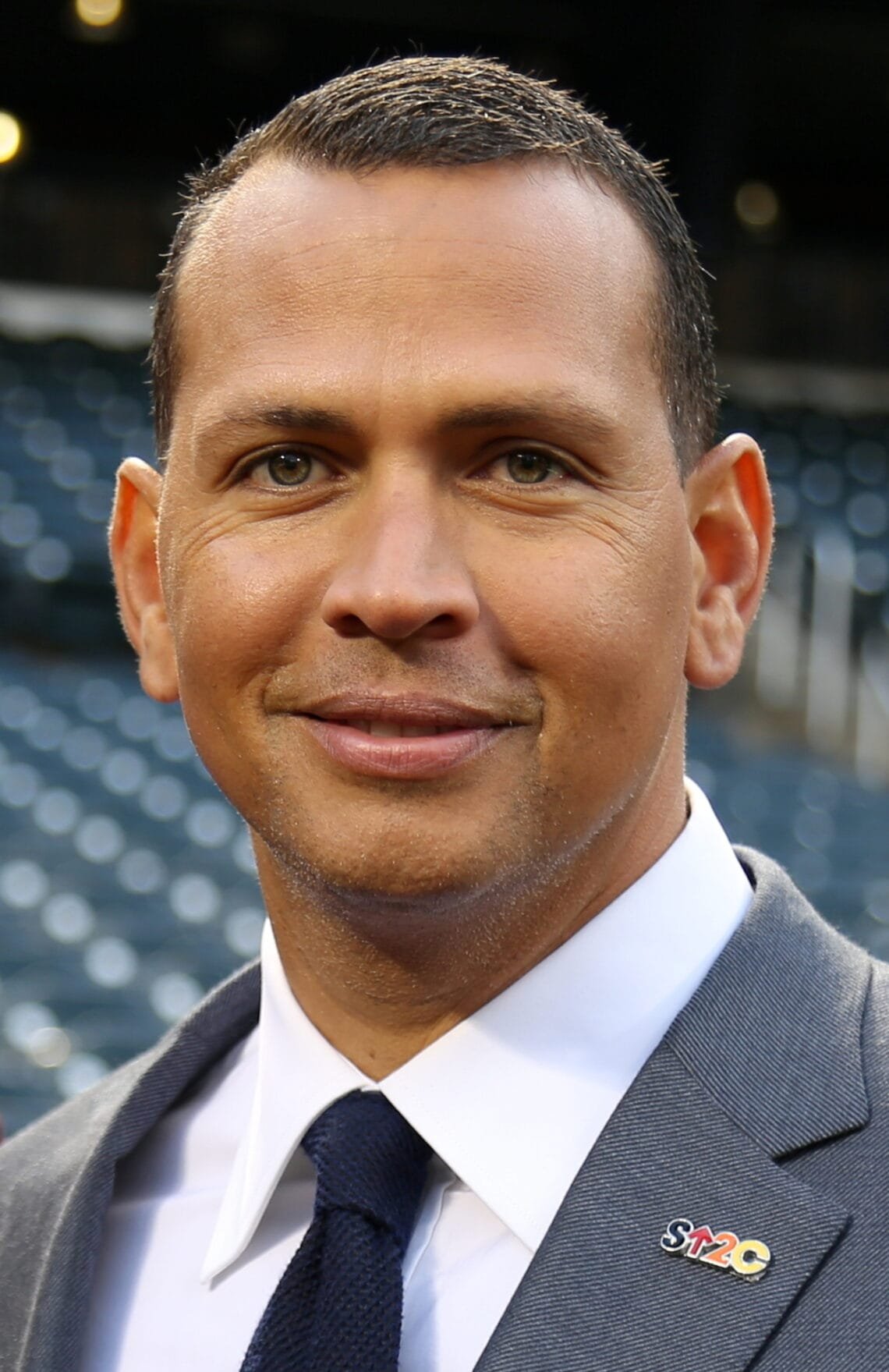
Caption: Alex Rodriguez, the former MLB star who turned retirement into an investing career. Alex Rodriguez photo via Wikimedia Commons.
Alex Rodriguez did not drift into business because a publicist handed him a hobby after baseball. He got there through money, pressure, and the rude discovery that the career which made you famous will not keep inventing itself forever. While most fans were still arguing about batting order and tabloid noise, Rodriguez was buying apartment buildings and learning how unglamorous wealth looks when it is doing its job.
That is why his Shark Tank run made more sense than people gave it credit for. He was not there as a celebrity mascot with polished teeth and a rehearsed smile. He was there as a man who had already spent years trying to turn headline heat into durable cash flow.
Early Life
Alexander Emmanuel Rodriguez was born on July 27, 1975, in the Washington Heights neighborhood of Manhattan to Dominican parents, Victor and Lourdes Rodriguez. His family later moved to Miami, where baseball stopped being a pastime and became a language. The family story matters because Rodriguez has long described sports as structure, not just ambition. In a 2025 [McKinsey interview](https://www.mckinsey.com/featured-insights/diversity-and-inclusion/alex-rodriguez-on-expanding-latino-opportunity-and-representation-in-sports), he said his mother was the center of the household and the source of the work ethic that carried into everything else.
Miami gave him both opportunity and edge. He attended Westminster Christian School, became the best high school player in the country, and was drafted first overall by the Seattle Mariners in 1993. By age 18 he had bypassed college, signed as a premium prospect, and entered a business where performance is public and adolescence is optional. That is useful training for later dealmaking. If you can fail in front of 40,000 people, a bad quarterly review loses some of its theatrical flair.
There is another piece to his background that helps explain the investor version of Rodriguez. He grew up in an immigrant household that valued upward movement, but not fantasy. Talent was not enough. You were expected to cash it in before it expired. Plenty of athletes learn that lesson too late, somewhere between a luxury-car phase and a tax problem. Rodriguez learned it early.
“You have to be able to adapt on the run.” , Alex Rodriguez, McKinsey
That quote works because it sounds like baseball advice until you notice it also explains his whole adult life. Rodriguez has spent two decades adjusting to new roles, some by choice, some because the old role burned down behind him.
The Business That Made Them
The business that made Rodriguez after baseball was not one company so much as a platform. [A-Rod Corp](https://www.arodcorp.com/our-founder), founded in 1995 according to the firm’s founder page, is the umbrella that now sits over his real estate, sports, and consumer investments. The official company biography says the firm has invested in more than 40 businesses. That breadth is impressive, but the more telling detail is how it began to focus.
Rodriguez told [CNBC](https://www.cnbc.com/2018/04/25/how-alex-rodriguez-became-interested-in-real-estate.html) that the 2008 financial crisis pushed him toward real estate. His line about having “zero interest in baseball cards or signed baseballs” and preferring apartment buildings tells you almost everything you need to know. He was moving from trophy ownership to income-producing assets. That is the difference between acting rich and trying to stay rich.
The math on his starting capital was serious. Rodriguez earned well over $400 million in salary during his MLB career, powered by the famous 10-year, $252 million Texas Rangers contract in 2000 and the 10-year, $275 million Yankees contract he signed after the 2007 season. Baseball gave him the seed capital most founders only daydream about. The harder part was not blowing it on vanity projects. His post-playing record suggests he mostly avoided that trap.

Caption: Rodriguez speaking for A-Rod Corp, the investment vehicle behind his real estate and consumer-brand portfolio. Image from A-Rod Corp.
Real estate became the spine. CNBC reported that Rodriguez and his partners had bought hundreds of apartment units in the years after the crash, building a portfolio designed around stable occupancy rather than glamorous headlines. That is a better business than fame. Fame has moods. Rent is due on the first.
He then widened the aperture. In 2025, [Forbes](https://www.forbes.com/sites/jabariyoung/2025/08/14/alex-rodriguez-and-marc-lore-buy-presidente-beer-creating-their-own-private-equity-playbook/) reported that Rodriguez and Marc Lore bought a controlling stake in Presidente beer through a strategy that looked more like private equity than personal-brand merchandising. Forbes also described Rodriguez’s approach with Lore as being “narrow and deep,” a concise way of saying they would rather know a few sectors extremely well than cosplay as universal geniuses.
That is the key to understanding his business reputation. Rodriguez is not pretending to be the smartest technologist in every room. He is building around pattern recognition in sports, real estate, consumer products, and brand extension. It is narrower than the mythology around him. It is also more believable, which is usually the better trade.
Investment Philosophy
Rodriguez talks about business the way disciplined athletes talk about recovery. He likes routine, repetition, and honest measurement. In the McKinsey interview, he emphasized preparation and representation, especially for Latino leaders trying to break into ownership and leadership roles. In the CNBC real estate interview, he framed investing less as glamor and more as building something that compounds while you sleep.
That mindset helps explain why he often likes founders with simple consumer stories and obvious use cases. He is not naturally drawn to complexity for its own sake. He wants products he can picture on a shelf, in a locker room, or inside an everyday habit. In other words, he invests like a former superstar who still distrusts theory until it can survive contact with actual people.
“I have zero interest in baseball cards or signed baseballs.” , Alex Rodriguez, CNBC
That line is funny because it lands like a rejection of nostalgia. It is also a rejection of dead capital. Rodriguez has spent years trying to turn his public image away from the museum gift shop and toward recurring revenue. Not every celebrity athlete manages that pivot. A lot of them buy toys and call it a portfolio.
He also seems to value access and chemistry. On television he often looked for founders he could coach, not just fund. That can sound corny when weaker investors say it. With Rodriguez, it usually sounded more practical. He knows how to live inside scrutiny, sell himself, and keep operating after public embarrassment.
On Shark Tank
Rodriguez first appeared as a guest shark in [Shark Tank Season 9](https://sharktankdb.com/season/9/), then returned in [Season 10](https://sharktankdb.com/season/10/) and [Season 12](https://sharktankdb.com/season/12/). The chronological list at [SharkTankDB’s sharks page](https://sharktankdb.com/sharks/) places him immediately after Rohan Oza among recurring guest sharks from that era, which is why he is the next logical subject after The Shark Monitor’s profile of [Rohan Oza](https://thesharkmonitor.com/rohan-oza-net-worth-shark-tank-and-the-brand-instinct-behind-poppi/).
Season 9 is where Rodriguez looked most like himself. SharkTankDB’s season table lists him in Episode 4 backing Ice Shaker with Mark Cuban at $150,000 for 15%, in Episode 9 backing GloveStix at $150,000 for 15% with Lori Greiner, and in Episode 20 backing SnapClips at $150,000 for 30% with Cuban and Greiner. Those are not random bets. They sit right in his comfort zone: sports, routine, utility, products that can be explained without a PowerPoint-induced migraine.
Season 10 sharpened the pattern. SharkTankDB lists Episode 6 as the Alex Rodriguez showpiece: Vade Nutrition took $700,000 for 40% from Rodriguez and Cuban, while Nui landed $300,000 for 25% from Rodriguez alone. The numbers tell a useful story. On Vade, he was willing to pay up for a business that could use both capital and a partnership bench. On Nui, he went solo and took a quarter of the company, which says he wanted meaningful influence, not just a courtside seat.
“I know what athletes want.” , Alex Rodriguez, during the Ice Shaker pitch
The most revealing later appearance came in Season 12, Episode 10. SharkTankDB records a $200,000 deal for 15% in Slice of Sauce and a $180,000 deal for 30% in Bubbly Blaster with Cuban. Later in the same season, he joined Lori Greiner for a $200,000 SneakERASERS deal in Episode 23. None of these companies looked like moonshot software. They looked like retail products with a chance to move if the branding, channel strategy, and founder execution held together.

Caption: Rodriguez attached himself to practical consumer pitches on Shark Tank, especially products with a sports or retail angle. Image from a Season 12 coverage photo.
One thing stands out across the deal sheet. Rodriguez was usually less interested in being the loudest shark than in finding products he could picture selling through gyms, retail shelves, sports audiences, or everyday kitchen behavior. That is a sensible edge. A guest shark does not need to be universal. He needs to know where his fastball still lives.
The follow-up picture is mixed, which is normal for Shark Tank. Ice Shaker clearly became the headline win and kept growing into mainstream retail visibility. Some other deals appear to have changed structure or fallen through after filming, a reminder that television handshakes are not SEC filings. Rodriguez’s batting average on the show was not perfect. That is fine. Better investors miss.
Online Presence
Rodriguez remains extremely online in the modern executive-athlete way. He has a large social footprint across Instagram, X, YouTube, and LinkedIn, where his feed now leans more toward business clips, interviews, sports commentary, and A-Rod Corp promotion than retired-player nostalgia. That matters because audience is now part of the asset base. If you can move attention cheaply, your cost of distribution changes.
His community is unusually broad. Sports fans still know him as A-Rod. Business audiences know him as a real-estate and private-investing operator. Shark Tank viewers know him as the guest shark who liked fitness gear, functional products, and founders who looked coachable. Those circles overlap just enough to be useful without turning him into a pure influencer, which is probably for the best. The internet already has enough men selling discipline in quarter-zips.
What People Are Saying
The strongest outside read on Rodriguez comes from people who treat him like an operator, not a mascot. In Forbes’ 2025 Presidente story, JPMorgan Chase executive Mary Callahan Erdoes said Rodriguez had never shown up to a meeting without a notebook or without having done the work. That is the kind of compliment serious investors give when they want to separate a famous person from a hobbyist.
“He’s never come to a meeting without a notebook.” , Mary Callahan Erdoes, Forbes
Public reaction to Rodriguez on Shark Tank has generally followed the same split as his larger public life. Some viewers still see the baseball celebrity first. Others see the preparation, sales instinct, and category fit. Both readings can exist at once. The useful conclusion is that he earned enough credibility in business that the second reading is no longer a courtesy.
Net Worth
The most common public estimate places Rodriguez at about [$350 million](https://www.celebritynetworth.com/richest-athletes/baseball/alex-rodriguez-net-worth/). Treat that as an estimate, not gospel. Private stakes move, real estate values move, and nobody outside the cap tables gets a perfect look. The range still makes sense.
The building blocks are easy to trace. Start with more than $400 million in career salary. Add endorsement money from his playing years. Add real-estate gains accumulated after the 2008 crash. Add the value of A-Rod Corp investments, his sports-ownership ambitions with Marc Lore, and newer consumer bets such as Presidente. Even after taxes, fees, alimony-level life events, and the occasional expensive lesson, that math still supports a fortune in the hundreds of millions.
FAQ
How many seasons was Alex Rodriguez on Shark Tank?
Rodriguez appeared as a guest shark in Seasons 9, 10, and 12. Those appearances stretched from the 2017-18 cycle into the pandemic-era 2020-21 season. He was not a constant panel fixture, but he returned often enough to establish a clear investing pattern.
What companies did Alex Rodriguez invest in on Shark Tank?
His on-air deals included Ice Shaker, GloveStix, SnapClips, Vade Nutrition, Nui, Slice of Sauce, Bubbly Blaster, and SneakERASERS. Several were shared deals with Mark Cuban or Lori Greiner. Most sat inside consumer, fitness, or retail-friendly categories.
What is Alex Rodriguez’s net worth in 2026?
The most cited public estimate is about $350 million. That figure is directionally plausible given his career baseball earnings, real-estate investments, and A-Rod Corp portfolio. The exact total is private and will move with asset values.
What is A-Rod Corp?
A-Rod Corp is Rodriguez’s investment platform focused on real estate, sports, and consumer businesses. The firm’s founder page says it was established in 1995 and has invested in more than 40 companies. In practice, it is the structure that turned Rodriguez from retired star into full-time investor.
Why did Alex Rodriguez get into real estate?
By his own telling, the 2008 financial crisis changed his perspective. He saw apartment buildings and income-producing assets as more attractive than collectibles or vanity purchases. That shift gave him a base business that did not depend on baseball nostalgia.
Final Take
Alex Rodriguez turned himself into a better businessman than many people expected, mostly because he stopped trying to win the room with charisma alone. The serious version of his second act is built on discipline, category limits, and a willingness to do boring math after a life spent in very bright lights. That is not glamorous, but it is real.
My judgment is simple. Rodriguez was a good guest shark because he knew exactly what he could help and did not waste time pretending otherwise. He was strongest on athletic, retail, and consumer products where distribution, branding, and daily habit matter more than technical mystique. Baseball made him famous. The business career, for all its messier edges, is what made him credible again.
[Article last updated: July 2026. Deal terms and company status reflect publicly available information at time of publication.]

Sebastyen
Sebastyen Wolf is our Editor-in-Chief. He is an analyst and entrepreneur with experience working alongside early-stage founders, launching online ventures, and studying the data patterns that shape successful companies. A fan of Shark Tank since Season 1, he now focuses on translating the show’s most valuable insights into clear, practical takeaways for readers.