Ashton Kutcher Net Worth, Shark Tank, and the Investor Behind the Fame
TL;DR:
– Ashton Kutcher built a second career around one idea, back people who can solve hard problems before the crowd notices
– After Iowa, modeling, and a fast Hollywood rise, he turned tech curiosity into A-Grade Investments and then Sound Ventures
– Appeared as guest shark in Season 7; his clearest documented on-air deal was Slyde Handboards, alongside Mark Cuban
– Net worth is publicly estimated at $500 million, built across acting, production, early startup stakes, and venture funds
Contents
– [Early Life](#early-life)
– [The Business That Made Them](#the-business)
– [Investment Philosophy](#investment-philosophy)
– [On Shark Tank](#on-shark-tank)
– [Online Presence](#online-presence)
– [What People Are Saying](#what-people-are-saying)
– [Net Worth](#net-worth)
– [FAQ](#faq)
– [Final Take](#final-take)

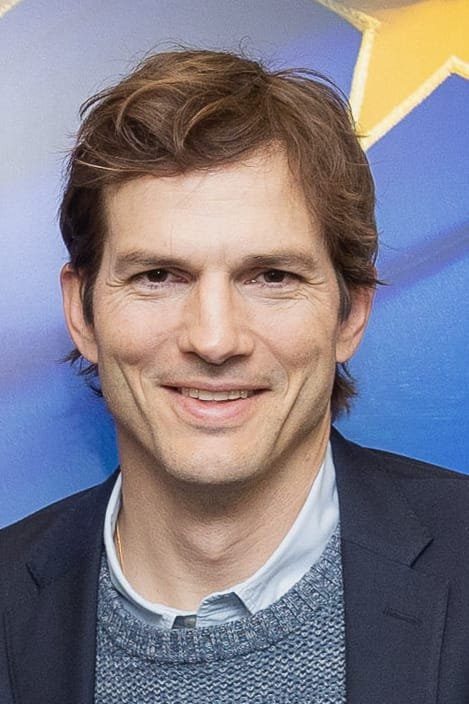
Caption: Ashton Kutcher discussing entrepreneurship after his shift from actor to investor. Image from Entrepreneur YouTube.
The useful Ashton Kutcher story does not start on a red carpet. It starts in Iowa, with a kid who was smart enough to study biochemical engineering, restless enough to get himself in trouble, and scared enough by his twin brother Michael’s health problems to think in practical terms early. That kind of pressure usually cures a person of romantic ideas about success. By the time Kutcher reached the University of Iowa, sold blood plasma for money, and got noticed by a modeling scout at an Iowa City bar, he was not floating toward fame. He was taking the exit ramp that happened to be open.
Most people stop the story once the television checks start arriving. That misses the better part. Kutcher turned acting fame into distribution, then distribution into deal flow, then deal flow into a venture portfolio that serious investors had to stop laughing at. Plenty of celebrities buy small stakes and call it strategy. Kutcher did more than buy a few vanity stakes and call himself an investor. By the time he showed up on Shark Tank, he’d spent years learning how to separate credible founders from polished pitch people.
Early Life
Christopher Ashton Kutcher was born on February 7, 1978, in Cedar Rapids, Iowa, to Diane Finnegan Kutcher and Larry Kutcher. He grew up in a Catholic household with his older sister, Tausha, and his fraternal twin brother, Michael. Michael’s cerebral palsy and childhood heart problems shaped the family story, and they shaped Ashton too. Public biographies and later interviews all point to the same pattern: he learned early that life could turn ugly without warning, which helps explain why he has always sounded more hard-nosed than his early sitcom image suggested.
He moved from Cedar Rapids to Homestead, attended Clear Creek Amana High School, acted in school plays, and also got arrested during his senior year after a break-in at the school with a cousin. The conviction cost him socially and academically. Kutcher has said the episode straightened him out, which is a polite way to say small-town embarrassment can teach faster than a lecture.
At the University of Iowa, he planned to study biochemical engineering because he wanted to help cure his brother’s heart disease. That motive is more revealing than the degree itself. He was not chasing glamour. He was trying to solve a family problem. He hustled for tuition money, got spotted by a modeling scout, and headed to New York, then Los Angeles, then That ’70s Show. The public saw a handsome goofball. Underneath, he was a Midwestern grinder who had already learned that pity is useless and speed matters.
“Nothing makes you feel like a failure like divorce.” , Ashton Kutcher, Esquire
That Esquire line came years later, but it fits his background. Kutcher is at his most believable when he talks about failure, guilt, or work. The smooth celebrity version of him has never been the convincing one. The better version is the man who has spent years admitting that humiliation teaches faster than praise.
The Business That Made Them
Kutcher’s business reputation rests on two firms, A-Grade Investments and Sound Ventures. A-Grade was founded in 2010 with Guy Oseary and Ron Burkle. Forbes reported in 2016 that the group had turned roughly $30 million into a portfolio worth about $250 million. That is real money, not the usual celebrity-investor fog. It is about an 8.3x multiple on the money committed, with early positions in Airbnb, Uber, Spotify, and Warby Parker.
The arithmetic is what gives Kutcher credibility. Forbes reported A-Grade put $2.5 million into Airbnb and $500,000 into Uber. On the numbers Forbes cited at the time, the Airbnb stake alone was worth about $90 million, and the Uber position was north of $60 million. Add Spotify, Warby Parker, Houzz, and other hits, and the central fact is hard to dodge: he was early, and right often enough to matter.

Caption: Kutcher with Sound Ventures, the firm that followed A-Grade and pushed deeper into AI investing. Image from TechCrunch YouTube.
In 2015, Kutcher and Oseary launched Sound Ventures as the successor to A-Grade. That was the point where the operation moved from “actor who invests” into something closer to a real venture platform. Sound Ventures says it manages more than $1 billion in assets. In May 2023, the firm announced a nearly $240 million AI fund and named OpenAI, Anthropic, and Stability AI among the early positions. Whatever you think of celebrity investors, those are serious cap tables.
There were misses. Kutcher’s own comments about failed projects, including Blah Girls and earlier startup experiments, make that plain. Good. Venture investors without misses are either lying or not swinging. The difference with Kutcher is that the wins are large enough to cover the bruises. He did not build a reputation because every pick worked. He built it because the big picks worked at a scale that changed the scoreboard.
Investment Philosophy
Kutcher tends to talk like a product person who learned finance later, not a finance person pretending to love product. That has real advantages. In a 2018 TechCrunch essay, he wrote that he was not trying to fund a stage or a category so much as “brilliant people trying to solve hard problems.” Earlier, at TechCrunch Disrupt, he said the failures people have can be “expensive educations.” Those two thoughts fit together. He looks for founders with a shot at changing behavior, and he is not shocked when tuition gets paid in blood.
His official Sound Ventures bio says he invests around the idea of “enduring happiness,” companies that are good for the customer, good for the builder, and good for the broader world. That phrase is polished, but there is a real test behind it. Kutcher wants products that slip into daily life and feel obvious only after somebody else builds them. It is why he has been strong in marketplaces, consumer apps, and infrastructure that changes routine habits rather than just adding noise.
“I’m a farm kid from Iowa.” , Ashton Kutcher, during the Slyde Handboards pitch
That is a healthier quote than most founder wallpaper. It also explains why he can sound direct on Shark Tank without sounding cruel. He is not there to admire the courage it took to show up. He is there to decide whether the problem is real, whether the founder can sell, and whether the thing has a chance to travel.
There is also a useful personal edge to his business thinking. Kutcher has spoken more than once about setting goals before looking at his phone and refusing to let incoming noise dictate the day. That may sound like ordinary productivity talk, but it lines up with how he invests. He prefers people who can point at a real problem, name a real user, and move without waiting for applause. In Silicon Valley language, that should be obvious. On television, it is almost refreshing.
On Shark Tank
Kutcher’s first verified Shark Tank appearance was the Season 7 premiere, Episode 7.1, which aired on September 25, 2015. IMDb also credits him in Episode 7.24, which aired on April 15, 2016. Those two episodes are enough to see his style.
In Episode 7.1, the pitches were The Beebo, Acton, McClary Bros. Drinking Vinegars, and SignalVault. Kutcher did not force a deal. The public plot summary for the episode shows him passing on The Beebo because he thought he would be more useful in a later growth stage. That may not sound glamorous, but it is the sort of decision a serious investor should make. The person on television who says “I can help later, not now” is usually thinking more clearly than the one trying to buy his way into the edit.
The clearest Ashton Kutcher deal from his guest-shark run came in Season 7, Episode 24 with Slyde Handboards. Steve Watts and Angela Ferendo asked for $200,000 for 15%, which implied a $1.33 million valuation. Kutcher and Mark Cuban teamed up for $200,000 in exchange for 22%. On that final number, the implied valuation dropped to $909,000. That is a haircut of roughly 32 percent from the founders’ ask, and it tells you Kutcher was not starstruck by a beach product just because he came from Iowa and likes founder energy.
“The failures that we have are sometimes expensive educations.” , Ashton Kutcher, TechCrunch Disrupt
That same bluntness showed up on the panel. He did not try to sound like a wizard. The show already has enough grandstanding to fill a stadium parking lot.
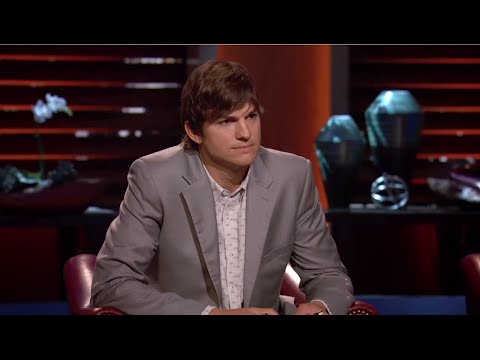
Caption: Kutcher during the Slyde Handboards pitch, the most clearly documented deal from his guest-shark run. Image from ABC YouTube.
The broader record suggests his Shark Tank value was judgment and category fit, not volume. He was not there to spray offers at every founder with a pulse. He was most persuasive when the business involved product feel, consumer behavior, or a founder who could communicate without hiding behind jargon. If you want a useful contrast with another guest shark who also brought operator experience to the panel, The Shark Monitor’s profile of Jason Blum shows a similar pattern from a different industry.
Online Presence
Kutcher’s online footprint has always been part of the business case. Guinness World Records credits him as the first X, then Twitter, user to reach one million followers back in 2009. That sounds like ancient internet history now, but it mattered. He understood earlier than most actors that attention could be turned into influence.
His audience is still large enough to matter. HypeAuditor’s March 2026 snapshot listed his Instagram account, @aplusk, at about 4.9 million followers. That is not Kardashian-scale, but it is plenty when the person behind the account also has fund access, founder relationships, and a long record of being early to platforms. Kutcher’s community is a mix of entertainment fans, startup watchers, and people who still find the actor-investor crossover unusual enough to click.
What People Are Saying
The most revealing peer assessment came from Chris Sacca in Forbes’ 2016 profile of A-Grade. Sacca said there were plenty of celebrity tourists in tech, then separated Kutcher from that crowd by pointing to the daily work. That distinction still holds up. People inside venture may debate his edge, but they generally do not talk about him like a mascot.
“For Ashton in particular it’s been a daily commitment to tech for at least eight years now.” , Chris Sacca, Forbes
Reddit chatter in r/sharktank is mixed in a predictable way. Some viewers liked that Kutcher brought a distinct point of view and real startup credentials. Others found him a little too Hollywood for their taste. Both reactions make sense. He is still Ashton Kutcher. The point is that even critics tend to argue about his style, not whether he has actual investing chops.
Net Worth
A rough public estimate comes from Celebrity Net Worth, which listed Kutcher at $500 million as of April 3, 2026. Treat that as an estimate, not a filing. The exact number is private, but the money trail is clear: television built the base, producing added another layer, and his early startup stakes likely did more than acting to grow his wealth over time.
There is also a philanthropic piece that should be counted as part of the record, not as public relations garnish. Kutcher co-founded Thorn, the nonprofit focused on technology tools that help fight child sexual abuse online. Thorn’s 2022 materials tied his first New York City Marathon to the group’s 10th anniversary and to renewed fundraising for that work. That does not change the math on his wealth. It does change the judgment on what he has chosen to do with a share of his influence.
FAQ
Was Ashton Kutcher really a guest shark on Shark Tank?
Yes. Public episode listings place him on Shark Tank in Season 7 in 2015 and 2016. The clearest documented appearances are Episode 7.1 and Episode 7.24.
What did Ashton Kutcher invest in on Shark Tank?
The most clearly documented on-air deal from his guest-shark run is Slyde Handboards. He and Mark Cuban agreed to invest $200,000 for 22% of the company, which valued the business below the founders’ original ask.
How did Ashton Kutcher make his money?
He made the first part through acting and producing, especially That ’70s Show, Punk’d, and Two and a Half Men. The second, and likely more important, part came from early startup investing through A-Grade and Sound Ventures.
Why is Ashton Kutcher taken seriously as an investor?
Because the portfolio was not built on vanity checks. A-Grade’s early positions in Airbnb, Uber, and Spotify gave him a record that serious investors could not dismiss as celebrity luck.
How much is Ashton Kutcher worth in 2026?
A widely cited public estimate from Celebrity Net Worth put him at $500 million on April 3, 2026. The exact number is private, but the overall picture points to a fortune built from entertainment income, equity stakes, and venture investing.
Final Take
Ashton Kutcher is a more serious businessman than his early public image ever suggested, and that disconnect is probably the source of his edge. People underestimated him for years because he looked like a sitcom punchline who wandered into venture capital. Meanwhile, he and his partners were buying into companies that changed how people travel, move, listen, and pay. That is not branding. That is selection.
As a guest shark, he was not the loudest, the funniest, or the most consistently aggressive. He was useful because he knew what he was and, just as important, what he was not. He looked best when the pitch involved product instinct, founder judgment, and a believable path to scale. In a room full of television investors, that can be worth more than another speech about hustle.
[Article last updated: August 2026. Deal terms and company status reflect publicly available information at time of publication.]

Sebastyen
Sebastyen Wolf is our Editor-in-Chief. He is an analyst and entrepreneur with experience working alongside early-stage founders, launching online ventures, and studying the data patterns that shape successful companies. A fan of Shark Tank since Season 1, he now focuses on translating the show’s most valuable insights into clear, practical takeaways for readers.