Chip & Joanna Gaines: Their Business Story From Start to Magnolia
Chip and Joanna Gaines built Magnolia with a mix of stubborn risk, steady compounding, and a lot of small, unglamorous decisions in Waco, Texas. Their story starts with a $5,000 family loan and ends, for now, with 79 episodes of Fixer Upper, a cable network, a tourist district built around old grain silos, and an estimated combined net worth in the tens of millions. Underneath the paint colors and cupcakes sit hard numbers on budgets, episode counts, and real estate bets that any founder can study.
TL;DR for Chip and Joana Magnolia story
- It was a “10-year overnight success”: Long before Fixer Upper, they spent a decade grinding through small house flips and running a tiny retail shop started with a $5,000 family loan.
- Transparency built the brand: The show succeeded because it focused on real math; the average renovation budget was roughly $111,000, and the clear financial constraints created trust with the audience.
- Geography was their competitive advantage: Instead of expanding to major cities, they concentrated capital and effort solely in Waco, turning the city into a tourism flywheel that now feeds their retail and hospitality businesses.
- Media was the accelerant, not the product: They used TV fame to launch high-margin assets that don’t depend on them being on camera, including the Silos district, a Target product line, and a cable network.
- Values dictated the exit: They walked away from the original Fixer Upper at the height of its ratings to protect their marriage, proving that setting boundaries is essential for long-term business survival.
Origins: ranch work, tire shop, and an unlikely match
Chip Gaines was born in Albuquerque, then raised around Dallas, with long stretches on his grandfather’s ranch in North Texas where he fed animals, fixed fences, and learned to treat hard physical work as normal. He later headed to Baylor University in Waco, earned a business degree in 1998, and spent college years testing small ventures, including a lawn‑care service, a fireworks stand, and a laundry pick‑up route that serviced fellow students. Those side businesses trained him to spot value in neglected assets, says foxbusiness, which eventually pulled him into buying and improving inexpensive houses around Waco.
Joanna Stevens grew up with a Korean mother and a father of Lebanese and German heritage, and her family eventually settled in Waco after time in other cities and at Firestone stores run by her dad. Classmates teased her for looking different in grade school, yet by high school she stood on the homecoming court, a small preview of how she would turn quiet resilience into public presence later in life. She studied communications at Baylor, interned in New York at CBS’s 48 Hours, then came back to Waco and worked at her father’s Firestone shop, where she appeared in local commercials and slowly realized that interiors and atmosphere fascinated her more than news scripts.wiki
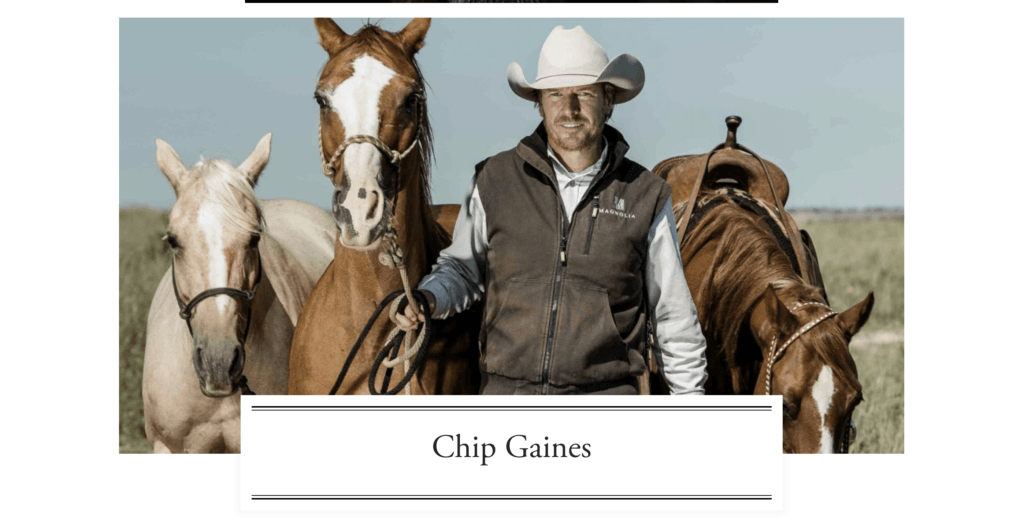
Their paths finally crossed when Chip walked into that Firestone shop for work on his car and saw Joanna’s photo on the wall, then asked around until he met her in person. He has joked that he knew he would marry her after that first interaction, and within a couple of years they did exactly that, holding their wedding at a historic home in Waco in 2003.
The $5,000 Magnolia bet
Soon after the wedding, they took a concrete, risky step that set the tone for everything that followed. With a $5,000 loan from family, Joanna opened a tiny home‑goods and decor shop in Waco under the name Magnolia, while Chip pushed hard on the house‑flipping and small development business. The original store sold candles, accessories, and curated finds that Joanna arranged herself, and the profit from early flips helped cover inventory and basic operating costs.
Those first years were not glossy. At one point they closed the shop so they could focus on renovation work and avoid spreading themselves too thin, and they wrestled with slow seasons, tight cash flow, and a real question of whether they should quietly ease back into safer paths. Instead, they stayed in Waco, doubled down on real estate projects, and kept improving their process: Chip hunted for underpriced homes with structural potential, while Joanna refined a design style built around light palettes, simple lines, and lived‑in warmth.
Table: Early Magnolia structure
| Piece of the puzzle | What Chip handled | What Joanna handled | Source |
|---|---|---|---|
| House flips and rentals | Sourcing, negotiation, construction crews | Layouts, finishes, staging | propelbusinessworks |
| Original Magnolia Market | Financing, lease, logistics | Buying, merchandising, styling | magnoliaglobal |
| Client relationships | Real estate deals and project pipeline | Design consults and “reveal” moments | propelbusinessworks |
Fixer Upper by the numbers
The turning point came only after a decade of that quieter grind. Producers saw Joanna’s renovation blog and some sample video, reached out, and put together a pilot for HGTV that became Fixer Upper in 2013. The show ran for five full seasons, from 2013 to 2018, and produced 79 regular episodes plus the original pilot. Season one and season two each had 13 episodes, season three and season five reached 18, and season four had 17, which kept the couple and their crews under near‑constant production during those years.
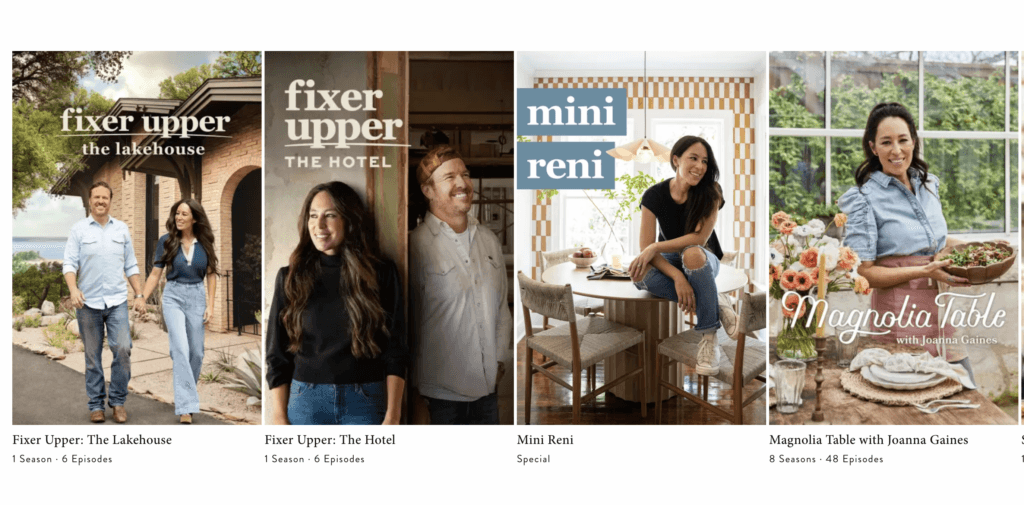
The show worked because it felt grounded in real budgets, not fantasy money. To qualify, homeowners typically needed to buy a home priced under about 200,000 dollars and commit to at least 30,000 dollars in renovation spending, which created constraints and forced visible trade‑offs on camera. A detailed review by Homes.com of every episode found that
- The average combined budget for purchase and renovation across the series sat just under 280,000 dollars.
- The average renovation portion alone came to 111,631 dollars. Season one projects averaged roughly 70,385 dollars of work, and by season four that average climbed to about 154,750 dollars as the scope of projects expanded.
- On average, finished homes gained about 26,000 dollars in value over the total project cost, based on listing and appraisal data, though many owners held the homes rather than sell immediately.
Table: Typical Fixer Upper project
| Metric | Approximate figure |
|---|---|
| Number of seasons | 5 (2013–2018) |
| Total regular episodes | 79 (plus pilot) |
| Average total budget (house plus reno) | Just under 280,000 dollars |
| Average renovation budget | 111,631 dollars |
| Season 1 average renovation | 70,385 dollars |
| Season 4 average renovation | 154,750 dollars |
| Average value added per project | About 26,000 dollars |
| Typical eligibility rules | House under about 200,000 dollars and minimum 30,000 dollar renovation budget |
Beyond renovation budgets, the show also became a personal marketing engine. Entertainment coverage has reported that Chip and Joanna earned roughly 30,000 dollars per episode in earlier seasons combined, which added a TV income stream on top of the gains from individual projects and the Magnolia retail business. Zillow and other analysts later observed that homes with design cues popularized by Fixer Upper, such as barn doors and farmhouse sinks, sold for about 30 percent more than comparable houses in their markets, another sign that the show’s aesthetic had measurable economic impact.
From silos to a media and retail stack
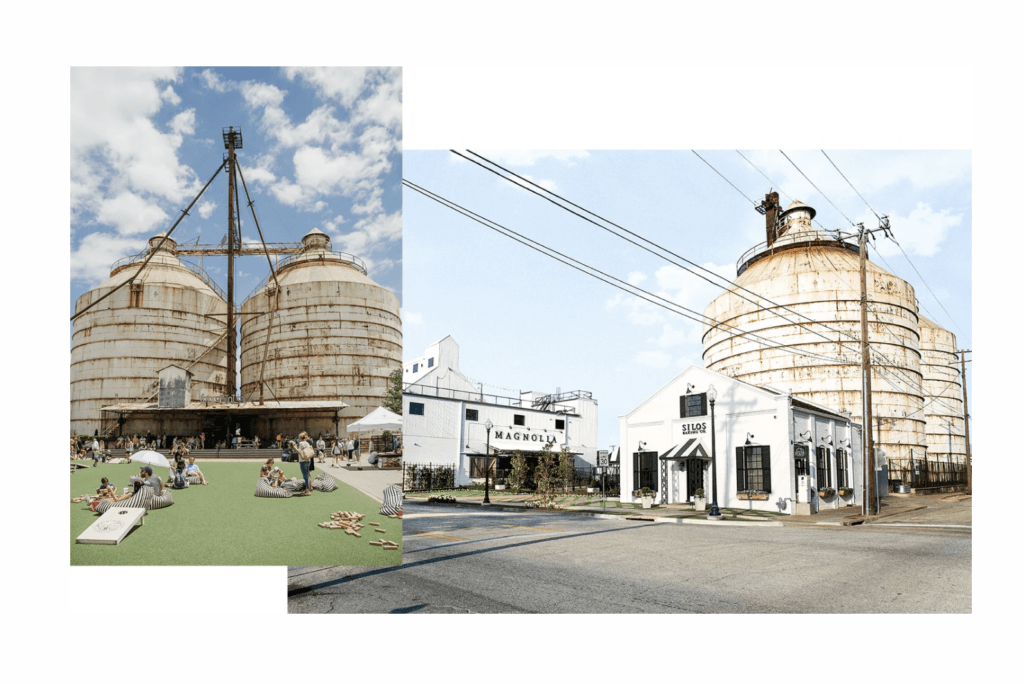
As ratings grew, the couple moved beyond scattered flips and a small shop into assets that shaped a district. In 2014–2015 they bought a decommissioned cottonseed mill and a pair of 120‑plus‑foot silos in downtown Waco, then renovated the grounds into Magnolia Market at the Silos, which opened in late 2015 with a large retail building, food trucks, and a central lawn. The campus has since expanded into about 40 acres that now include Silos Baking Co., Magnolia Press coffee shop, Magnolia Table restaurant, and additional shops, drawing hundreds of thousands of visitors each year and turning a once‑quiet part of Waco into a major tourism driver.
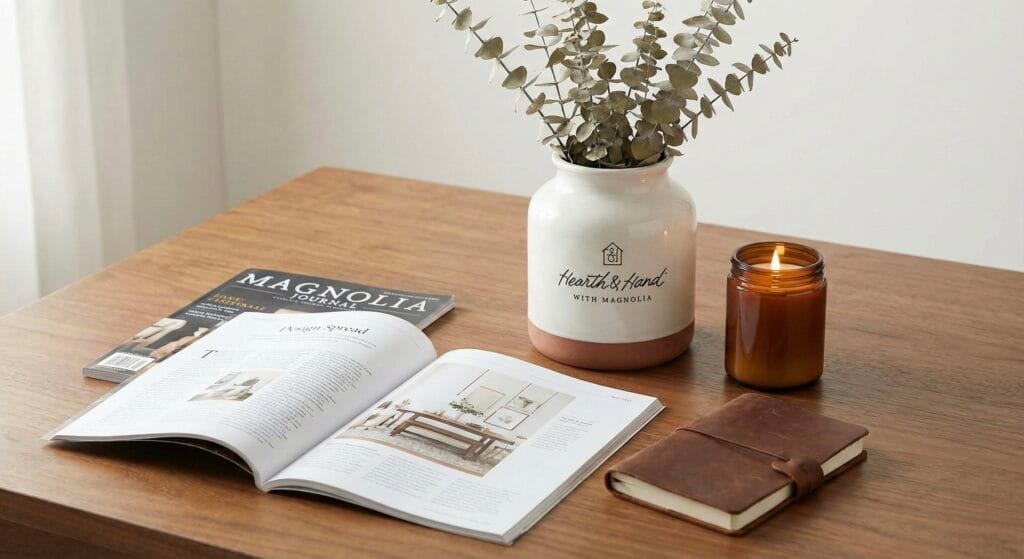
They added more lines as the audience followed. Magnolia Journal, their quarterly print magazine with Meredith (now Dotdash Meredith), launched in 2016 and quickly reached hundreds of thousands of subscribers. The Hearth & Hand with Magnolia partnership with Target started in 2017 and put their brand on housewares and decor in stores across the United States. They also opened short‑term rental properties and a bed and breakfast, wrote books including The Magnolia Story, and eventually teamed with Discovery to transform DIY Network into Magnolia Network, which began rolling out shows in 2021 and expanded further on HBO Max and Discovery+.
Joanna has written that she wants the Magnolia brand to communicate kindness and to meet people “where they are,” instead of pushing impossible standards for homes and families.
Public estimates now place their combined net worth around 50 million dollars, based on income from television, book deals, retail, licensing, hospitality, and real estate holdings. Analysts have speculated that Magnolia Network on its own could reach a valuation in the hundreds of millions of dollars, with some reports floating figures up to roughly 750 million dollars for the joint venture with Warner Bros. Discovery, though the exact number sits behind private contracts.
Table: Key Magnolia milestones
| Year | Milestone | Notes |
|---|---|---|
| 2003 | First Magnolia shop opens in Waco | Funded by 5,000‑dollar family loan |
| 2013 | Fixer Upper pilot airs on HGTV | Begins national exposure |
| 2015 | Magnolia Market at the Silos opens | Converts industrial property into retail and event draw |
| 2016 | Magnolia Journal launches | Print magazine with large subscription base |
| 2017 | Hearth & Hand with Magnolia launches at Target | Mass‑market retail expansion |
| 2018 | Original Fixer Upper run ends | Couple pauses main series to focus on family and business |
| 2021 | Magnolia Network programming rollout begins | Partnership with Discovery, rebrand of DIY Network |
Image suggestion 3
- Image: Aerial shot of Magnolia Market at the Silos on a busy day, with the lawn, bakery, and shops visible.
- Caption: “From derelict cottonseed silos to a 40‑acre retail and hospitality hub that attracts fans from across the country.”people+1
Video suggestion 2
- Video: Short, slow‑paced B‑roll through Magnolia Table and Silos Baking Co., focusing on guests, staff, and small design details like tile work and signage.
- Caption: “How a TV show about houses turned into coffee, biscuits, and a steady stream of visitors in downtown Waco.”people
What keeps them going: faith, family, and the work itself
When Chip and Joanna talk about their motivation, they consistently point to three anchors: their Christian faith, their marriage and five children, and a desire to invest in Waco rather than chase the next big media city. They describe their work as a way to live out hospitality and stewardship, whether that looks like rehabbing a forgotten building, creating jobs, or staging a welcoming table for visitors who fly in just to spend a weekend at the silos.

Joanna often says that she still cares most about the quiet parts of design, such as picking textures that calm a room or arranging a table in a way that invites real conversation. Chip, in contrast, lights up when he talks about demolition, difficult construction problems, and the thrill of buying something neglected and bringing it back to life. In interviews, they have admitted that work at times crowded out family life and that the decision to end the first run of Fixer Upper in 2018 came from a desire to protect their marriage and give their children a more regular rhythm at home.
In a 2016 interview, they explained that they see Magnolia as a way to “create opportunities and hope” in their hometown, not just a business to scale as far as ratings allow.
Lessons for founders and investors
From an investor‑journalist angle, the Magnolia story offers a compact set of principles that transfer well to other ventures, even outside real estate or media.
1. Build the real business before the spotlight
Chip and Joanna ran flips and a brick‑and‑mortar shop for roughly ten years before Fixer Upper put them on cable. That foundation meant that TV exposure poured fuel on a working engine instead of replacing fundamentals, and it also helped Magnolia survive the end of the original run in 2018, because revenue no longer depended on one show.
Practical takeaway: Test and refine the product, margin structure, and operations in quiet years, then treat media and attention as accelerants, not substitutes, for a solid business.
2. Use clear numbers to build trust
The show’s consistent use of real purchase prices, renovation budgets, and stated constraints gave viewers and clients a concrete sense of what a Gaines project involved. The Homes.com analysis showed fairly tight ranges for budgets and transparent cost breakdowns, which contrasted with some other shows that hide costs or wave away overruns.
Practical takeaway: Publish realistic ranges, show trade‑offs, and stay consistent. Transparent economics often become a brand asset on their own.
3. Focus on one place until it compounds
They chose to stay in Waco, pour capital into a narrow radius around downtown and their farm, and let that geographic focus create a flywheel: more visitors, more word of mouth, rising property values, and plenty of content for TV and social channels. That decision gave them leverage in negotiations with partners and city officials, because Magnolia’s success and Waco’s revival became linked in the public mind.
Practical takeaway: Whether “place” means a literal city or a tight niche, depth often outperforms a thin spread.
4. Align growth with personal values
They have spoken openly about turning down certain opportunities, ending a top‑rated show on their own terms, and stepping back at times to regain balance at home. Their faith also shapes choices, from the tone of the network’s programming to Magnolia’s emphasis on kindness campaigns and community projects.
Practical takeaway: Decide early what you will not trade, then let that boundary guide which deals you sign and which ones you walk away from, even when they look attractive.
Table: Converting Magnolia’s approach into founder moves
| Magnolia pattern | Principle behind it | Action for a new founder |
|---|---|---|
| Ten years of flips and a shop before TV | Operations first, exposure later | Validate unit economics before chasing large press |
| One city as the center of everything | Concentrated bets compound faster | Pick one geography or niche and own it |
| Honest budgets on Fixer Upper | Trust built through numbers | Share pricing and cost logic with your audience |
| Ending Fixer Upper while it still rated well | Protect key relationships and energy | Schedule regular reviews of how growth affects your personal life |
| Network and retail collaborations after brand proof | Expand only when the core brand holds | Delay large partnerships until you know what you stand for |

Sebastyen
Sebastyen Wolf is our Editor-in-Chief. He is an analyst and entrepreneur with experience working alongside early-stage founders, launching online ventures, and studying the data patterns that shape successful companies. A fan of Shark Tank since Season 1, he now focuses on translating the show’s most valuable insights into clear, practical takeaways for readers.