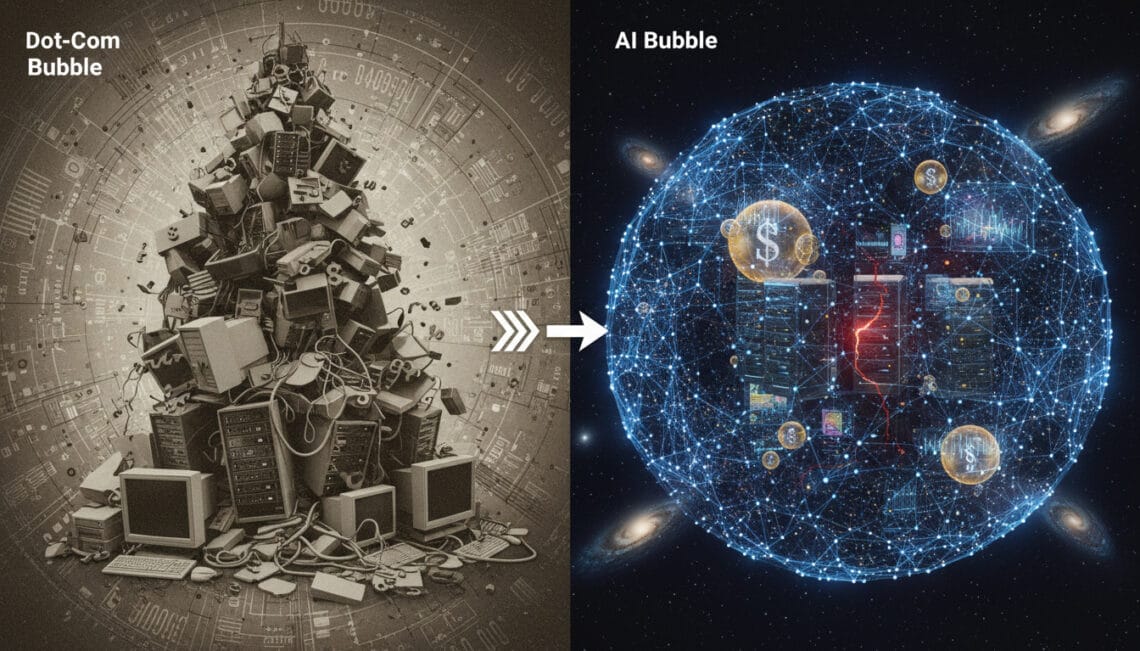
Dot-Com Bubble vs. AI Bubble: Similarities, Differences, and Why It Matters
Dot-Com Bubble vs. AI Bubble: Similarities, Differences, and Why It Matters

People keep asking if today’s AI boom will end like the dot-com crash of 2000. Both eras saw wild hype around new tech, with companies pouring cash into unproven ideas. But are they really the same? Recent expert warnings highlight parallels and differences.
Key Similarities
- Tech firms chased dominance with huge spending. Back then, companies borrowed heavily around Y2K to build out the internet. Now, AI hyperscalers like those in the Magnificent Seven—Alphabet, Amazon, Apple, Meta, Microsoft, Nvidia, and Tesla—are doing the same for data centers and AI infrastructure, as Mark Zandi notes in Business Insider.
- Hype drives prices and investment. AI stocks have soared on optimism, much like dot-com shares, as The New York Times reports. Yet trillions have gone into AI with no clear path to steady profits, according to a Guardian podcast and a Washington Post opinion.
- Uncertain payoffs loom large. Early internet firms collapsed when economics didn’t pan out. Skeptics say AI could follow if the tech doesn’t deliver fast enough, though Axios notes potential survivors.
Main Differences
- Debt levels stand out. Zandi, Moody’s chief economist, points out 2025 tech bond issuance already beats pre-dot-com borrowing—even adjusted for inflation. It’s not just refinancing; companies are piling on more debt to grab AI market share.
- Market concentration is extreme. The Magnificent Seven make up a third of the S&P 500’s value, all betting big on AI. No past bubble tied so much of the economy to one tech, unlike dot-com per The New York Times.
- Potential fallout spreads wider. Dot-com hit mostly stock investors. An AI bust could ripple through bonds and the whole financial system, Zandi warns, because of today’s debt loads.
Why This Matters Now
If AI falters, stock drops could tank confidence across tech, drag other shares, and stress the economy—especially with record borrowing. The Guardian asks what happens when faith fades and money dries up. Zandi calls it a threat to watch: one misstep in AI could hit far beyond equities. History shows bubbles end badly, but this one’s scale and debt make it scarier.

Sebastyen
Sebastyen Wolf is our Editor-in-Chief. He is an analyst and entrepreneur with experience working alongside early-stage founders, launching online ventures, and studying the data patterns that shape successful companies. A fan of Shark Tank since Season 1, he now focuses on translating the show’s most valuable insights into clear, practical takeaways for readers.