Jamie Siminoff Net Worth, Shark Tank, and the Ring Founder Who Turned Rejection Into Leverage
TL;DR: – Jamie Siminoff built Ring by turning a missed doorbell in his garage into a home-security company that Amazon folded into its devices empire – His career origin story started with a simple irritation, he could not hear the front door while working in the garage, so he built the product he wanted to buy – Appeared as guest shark in Season 10 of Shark Tank in 2018 and 2019, making two on-air deals after once leaving the show as a rejected founder – Net worth is commonly estimated around $300 million, built across the Ring sale, earlier startup exits, and his continuing product leadership at Amazon
Contents
- Early Life
- The Business That Made Them
- Investment Philosophy
- On Shark Tank
- Online Presence
- What People Are Saying
- Net Worth
- FAQ
- Final Take
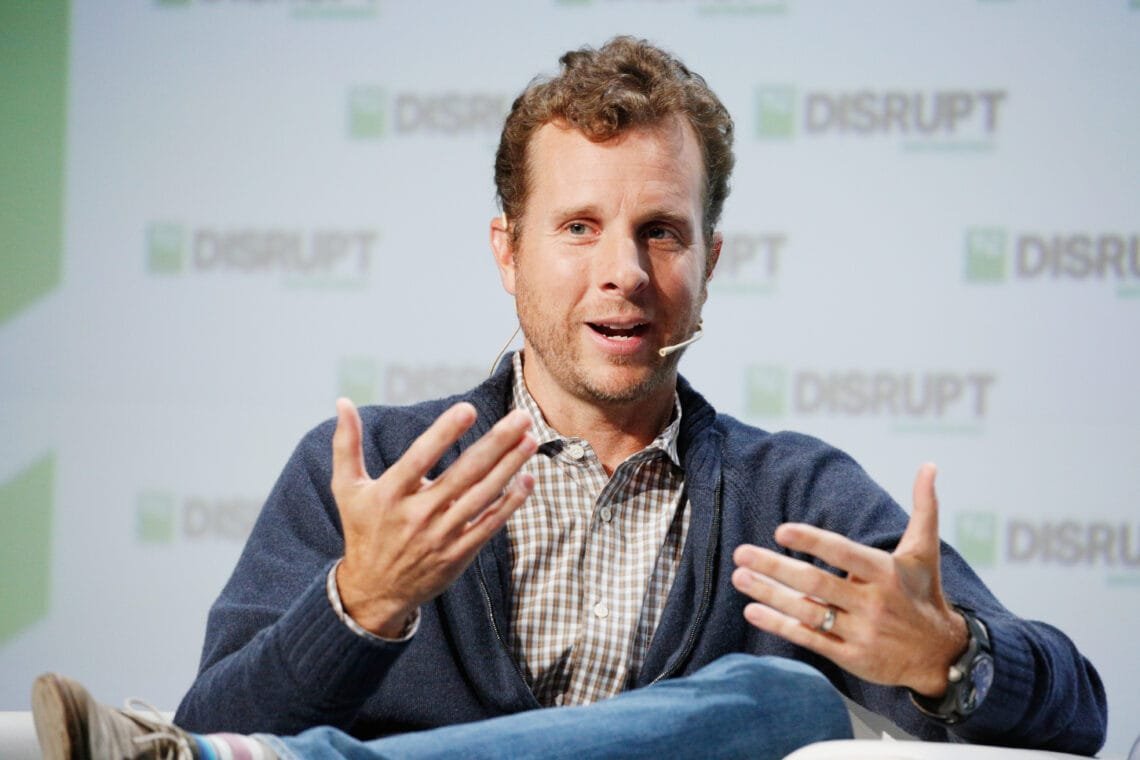
 Caption: Jamie Siminoff in 2018, already looking like a man who had spent years explaining that yes, a doorbell could become a real company. TechCrunch Disrupt San Francisco 2018 – day 2, CC BY 2.0, via Wikimedia Commons.
Jamie Siminoff’s origin story does not begin with a grand theory about the future of the smart home. It begins with a missed knock. He was in his Los Angeles garage, building another gadget, when he realized he could not hear the front door. So he did what restless inventors do, he started building the thing he wished already existed.
That small annoyance became DoorBot, then Ring, then one of the most famous misses in Shark Tank history. By the time his 2013 episode aired, Ring was an eight-person company running out of money in his garage. Five years later, Amazon bought the business. Five years after that, Siminoff was back inside Ring’s orbit again because AI gave the product another act.
Early Life
Siminoff was born on October 18, 1976, and grew up in rural Chester, New Jersey. Inc. described him as “born and raised in rural Chester, New Jersey,” which matters because his public story is less polished boardroom and more kid-with-tools energy. The AACSB profile on him says he was always tinkering in the garage as a child, long before Ring gave that habit a payroll.
“I needed something to work on that could never be solved. If it was a solvable problem, I tapped out too quickly.” Jamie Siminoff, Forbes
Babson College sharpened that instinct into something commercial. He studied entrepreneurship, won a business-planning competition, and learned how to turn curiosity into an actual company instead of an expensive hobby. His professional pattern has never been “pick one lane and behave.” It has been “find the ordinary object nobody respects, then bother it until it does something smarter.”
His family life peeks through the public record in pieces rather than speeches. Inc. quotes his wife Erin several times, and the family story shows up again when Siminoff later bought property in La Belle, Missouri, after backing Moink on Shark Tank. He does not come across as a lone genius in a sealed lab. He comes across as a restless builder whose casual ideas can quickly become a farm, a coffee shop, or a company.
That quote tells you more about him than any résumé line. He is not really chasing elegant closure. He likes messy, recurring problems. That is useful if you are building connected hardware, because nothing in hardware ever stays solved for long.
The Business That Made Them
Before Ring, Siminoff had already built and sold businesses, including PhoneTag, a voicemail-to-text company, and Unsubscribe.com, an inbox-cleanup service. ABC’s official Shark Tank bio says those companies were sold in 2009 and 2011. Useful exits, yes. Defining exits, no.
The product started as DoorBot in 2011. Babson’s AACSB profile says he built it after realizing there was no simple doorbell that could send video to a phone. The timing was almost annoyingly good. Smartphones were normal. Cheap connected devices were becoming less weird. Porch theft and home-security anxiety were not exactly running out of customers. Siminoff was not inventing demand from thin air. He was giving it a button and a lens.
“Because if it was not for you we would not exist as a company.” Jamie Siminoff, Ring’s open letter to Shark Tank
Inc. reported that DoorBot was doing about $1 million a year in sales when he pitched Shark Tank in 2013. He wanted $700,000 for 10 percent, which valued the business at $7 million. For a hardware company still battling manufacturing costs, that was rich. Kevin O’Leary’s royalty-heavy offer looked ugly for a reason. On a product business, permanent royalties can eat margins fast. Siminoff walked away anyway, which looked stubborn in the moment and smart in hindsight.
 Caption: Ring turned a plainspoken product pitch into a household brand, which is a reminder that the right logo often arrives after the hard part. Ring logo, via Wikimedia Commons.
The post-show math is where the story turns from sympathetic to brutal. Siminoff wrote in Ring’s 2015 open letter to Shark Tank that the business was eight people deep, working in his garage, and “going out of business” when the episode aired. The exposure changed that. Within a month, public estimates say DoorBot generated more than $1 million in sales. In plain English, television did what venture capital had not done yet, it bought him time.
Then came the more serious scale-up. Ring attracted Richard Branson, Shaquille O’Neal, Kleiner Perkins, and later Amazon. Amazon’s 2018 press release said the acquisition would help accelerate Ring’s mission, and Amazon’s September 30, 2018 10-Q later pegged the cash consideration at about $839 million net of cash acquired. Forbes and other outlets reported the headline value closer to $1.0 billion to $1.1 billion, which is the number most readers remember. The exact difference matters to accountants. The larger point is simpler: the business became a category winner.
Investment Philosophy
Siminoff’s investment style makes more sense once you treat him as a founder who still thinks like a product mechanic. He wants to know whether the founder can survive the ugly middle part, when the product sort of works, the customers sort of understand it, and the cash sort of exists.
That shows up in how he talks about mission. In the 2015 Ring open letter, he wrote that the company’s mission to reduce crime in communities kept the team moving when the numbers were not enough on their own. In a 2017 This Week in Startups interview summarized by Glasp, he stressed unfiltered customer feedback and the value of putting his email on every box. That is not polished investor theater. It is a founder’s admission that support emails are annoying right up until they keep you from building the wrong thing.
TechCrunch’s January 13, 2026 interview gives the current version of that mindset. Siminoff said AI should feel like an “intelligent assistant” that reduces cognitive load for the user. That line shows he still thinks in consumer terms first. Not “look at our machine learning stack.” More “does this remove friction for a person with a front door, a phone, and a finite amount of patience?”
On Shark Tank
Jamie Siminoff’s Shark Tank story has two acts. Act one is the part everybody knows: in 2013 he pitched DoorBot, got no deal, and rejected O’Leary’s royalty offer. Act two is the better television trick, because he came back in Season 10 as the guy sitting in a shark chair. ABC’s official bio called him a lifelong inventor who turned DoorBot into Ring after leaving the show empty-handed. That is not just a comeback story. It is one of the show’s most expensive passes.
As a guest shark, SharkTankDB credits him with two on-air deals totaling $500,000. The first came in Season 10, Episode 1, where he invested $100,000 for 25 percent in Bear Bowl, the collapsible camping cookware business later known as Bear Minimum. The second came in Season 10, Episode 15, where he offered Moink $400,000 for 20 percent after the other sharks backed away.
“The best university you can go to is failure.” Jamie Siminoff, quoted by Inc. after his Bear Minimum deal
The valuation math tells you what he was doing. Bear Bowl’s founders asked for $100,000 for 20 percent, a $500,000 valuation. Siminoff paid the same cash for 25 percent, which values the company at $400,000. That is a modest haircut, not a mugging.
Moink was more revealing. Lucinda Cramsey asked for $250,000 for 10 percent, a $2.5 million valuation. Siminoff paid $400,000 for 20 percent, implying a $2 million valuation. He wrote a larger check but demanded a steeper ownership share because the business needed room to absorb execution risk. That is exactly how a founder-turned-investor prices a company. He is not bidding on the story alone. He is bidding on what the next twelve months are going to do to the cash.
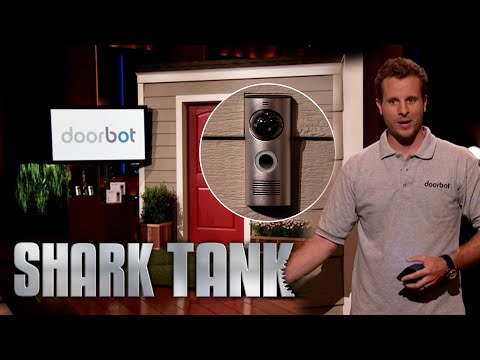 Caption: Siminoff’s original Shark Tank pitch became the clip people keep replaying when they want proof that one bad room does not end the story. Image via ABC on YouTube.
The most notable post-show outcome is Moink, not just because the company kept growing but because Siminoff wound up buying a farm near La Belle, Missouri, and helping back other local projects after meeting founder Lucinda Cramsey. Inc. reported Moink was on pace for about $23 million in 2023 sales with roughly $2 million in profit, which means Siminoff did not just buy a charming farm story. He bought a business running at roughly a 9 percent profit margin in a logistics-heavy category.
That does not make the deal a fairy tale. It makes it something rarer, an on-air deal that still feels connected to the investor’s actual worldview. If you compare him with our Matt Higgins profile, the difference is obvious. Higgins reads like an operator in a suit. Siminoff reads like the inventor who still has solder on his shirt.
Online Presence
Siminoff is less of a social-media peacock than some guest sharks, and that probably helps him. The louder footprint belongs to Ring itself, which by Fortune’s 2026 reporting had become a fixture in more than 10 million American homes. That tells you the shape of his public brand: low-key founder, very high-recognition product.
His community online is a mix of founders, gadget people, Shark Tank fans, and ordinary customers who think about him only when someone rings the bell and their phone lights up. That is not glamorous. It is better.
What People Are Saying
One of the sharper outside reads on Siminoff came from Babson president Stephen Spinelli in Inc.’s 2023 profile. Spinelli said Siminoff had matured as he “started to see economic and social value as intricately woven together.” That is a cleaner summary than most CEOs ever get.
“Jamie doesn’t do anything halfway.” Erin Siminoff, quoted by Inc.
The peer view is basically this: Siminoff is energetic to the point of inconvenience, but the energy tends to drag real businesses behind it. That can be exhausting in a person and still valuable in an operator. The trick is whether the ambition stays connected to customers. Most of the evidence suggests his usually does.
Net Worth
The public net-worth figure most often attached to Siminoff is about $300 million, with Celebrity Net Worth using that estimate. I would treat that as a reasonable working figure, not a notarized fact.
Here is the math that makes it believable. Amazon’s SEC filing put Ring’s 2018 acquisition price at roughly $839 million net of cash acquired. Wider press coverage placed the deal around $1 billion or a little above it. Siminoff’s exact ownership stake at closing was never publicly pinned down with the neatness people on the internet pretend exists. But once you combine a founder’s likely equity, earlier exits from PhoneTag and Unsubscribe.com, years of compensation inside Amazon, and subsequent investing and operating roles, a figure around $300 million stops sounding fanciful and starts sounding conservative enough to survive daylight.
My judgment is simple: call him very rich, clearly. Call the exact number approximate, also clearly. The useful point is that one rejected hardware pitch turned into one of the biggest wealth-creation stories ever connected to this franchise.
FAQ
What is Jamie Siminoff’s net worth?
Public estimates usually put Jamie Siminoff around $300 million. That number is approximate because his exact Ring ownership stake at the Amazon sale was not publicly disclosed.
How did Jamie Siminoff make his money?
Most of his wealth comes from founding Ring and selling it to Amazon in 2018. He also sold earlier startups, including PhoneTag and Unsubscribe.com, and has continued working in product leadership roles.
Why did the sharks pass on Jamie Siminoff?
The 2013 DoorBot pitch asked the sharks to fund a hardware company with high manufacturing risk and a rich valuation. O’Leary offered a royalty-heavy structure, but Siminoff believed it would squeeze margins too hard and walked away.
What happened to DoorBot after Shark Tank?
DoorBot used the show’s exposure to boost sales, hire engineers, and keep operating long enough to improve the product. It rebranded as Ring, raised outside money, and later sold to Amazon.
What companies did Jamie Siminoff invest in on Shark Tank?
As a guest shark, his two on-air deals were Bear Bowl, later known as Bear Minimum, and Moink. Of the two, Moink became the more meaningful business story and the more revealing fit with his founder-first style.
Final Take
Jamie Siminoff is the rare guest shark whose credibility does not depend on pretending he saw everything coming. He did not win because he was the smartest man in the first room. He won because he outlasted the room, fixed the product, found better capital, and kept going until the market caught up.
That is why he works as a guest shark. He does not sell invincible-billionaire theater. He remembers what it looks like when the product still has sharp edges, the bank account is thinning out, and the person across from you mistakes temporary ugliness for permanent weakness. On this show, that kind of memory is not sentimental. It is useful.
[Article last updated: August 2026. Deal terms and company status reflect publicly available information at time of publication.]

Sebastyen
Sebastyen Wolf is our Editor-in-Chief. He is an analyst and entrepreneur with experience working alongside early-stage founders, launching online ventures, and studying the data patterns that shape successful companies. A fan of Shark Tank since Season 1, he now focuses on translating the show’s most valuable insights into clear, practical takeaways for readers.