Clean Green Golf Balls: Two Brothers Turned 20,000 Lost Golf Balls Into a $6M Business
TL;DR: – Rami and Sami Mubasher built Clean Green Golf Balls around one simple bet: golfers will buy used balls if they’re clean enough, graded honestly, and priced fairly – Walked into Shark Tank Season 17 asking $350,000 for 5% equity at a $7 million valuation – Landed a deal with Kevin O’Leary and Robert Herjavec: $350,000 for 15% equity plus a $1 per-unit royalty until $1.05 million is repaid – $6 million in 2024 revenue with roughly $700,000 in annual profit; projected $7.1 million for the year of the pitch – Now the #1 recycled golf ball brand on both Amazon and TikTok Shop, with 20 million balls shipped since launching in 2021
The Numbers Behind the Pond Dive
Most business pitches on Shark Tank involve some version of a big swing. Clean Green Golf Balls is not that kind of pitch. The brothers from Bastrop, Texas walked into the Tank with five consecutive years of revenue growth, a profitable operation, and a business model so simple it fits in a sentence: collect lost golf balls, clean them, sort them, and sell them for about half the price of new ones.
What makes their story worth examining is not the drama of the pitch. It is the fact that a business this straightforward, launched by two guys with no golf industry background, managed to hit $6 million in annual sales and claim the top spot on Amazon in its category. The question the Sharks were really asking was not whether the business worked. It clearly worked. The question was whether Rami and Sami had built something with a real ceiling, or whether they had maxed out a niche.
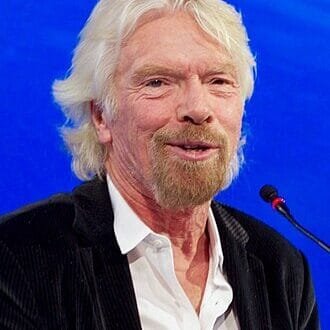
 Image courtesy of ABC / Shark Tank
The Founders
Rami and Sami Mubasher are brothers, based out of Bastrop, Texas, a small city about 30 miles southeast of Austin. They did not come from golf. There is no story of a lifelong obsession with the sport or a professional career in the golf industry. What they had was sharper than that: they noticed a problem and ran a test before committing.
In the summer of 2021, Rami sourced 20,000 used golf balls and listed them online. The entire inventory sold out over a single weekend. That result alone said something meaningful: demand for affordable, quality-graded used golf balls was real and underserved. Within months of that first test, the company posted $1 million in sales. Clean Green Golf Balls was incorporated in June 2021.
The business grew fast from there. By 2022 the company had approximately 16 full-time employees working out of a 12,000 square foot warehouse. Revenue hit $3 million that year, $4.3 million in 2023, and $6 million in 2024. The brothers built a supply chain that relies on a network of divers, golf course staff, and local homeowners who recover balls from ponds, rough terrain, and adjacent properties.
Their approach to the category was direct. Rather than trying to compete with new ball manufacturers, they positioned Clean Green as the affordable, sustainable option. The environmental angle was real but secondary to the pitch: the core promise was always value. Mint-condition Pro V1s at half the price of new ones. Titleist, TaylorMade, Callaway, all graded and sorted so buyers knew what they were getting.
The Product
Clean Green Golf Balls sells recycled, cleaned, and professionally graded used golf balls across multiple quality tiers. Balls arrive from their collection network, go through a multi-step cleaning process involving soaking and washing, then get sorted by brand and condition grade before being repackaged and sold.
The price point is the core of the pitch to consumers. New premium golf balls from brands like Titleist can run $50 or more per dozen. Clean Green’s graded recycled versions of those same balls sell for roughly half that. For recreational golfers who lose several balls per round and do not want to do the math on how many rounds it takes to offset the cost of a sleeve of Pro V1s, this proposition is obvious.
An estimated 300 million golf balls are lost in the United States every year. At an average retail price of $4 or more per new ball, that represents well over $1 billion in potential recovery value sitting at the bottom of ponds and in the rough — the vast majority of which has historically gone uncaptured by any named brand.
The unit economics of the business are notable. Each ball costs the company roughly $0.32 to acquire and process, and sells for around $1.25. That spread, across millions of units, generates the margins that make this a real business rather than a hobby.
The company sells primarily through Amazon, where it claims the top position for recycled golf balls, and through TikTok Shop, where it also holds the number one ranking. It also operates its own direct-to-consumer website and has distribution through Walmart. The Amazon channel was the engine of early growth; the Mubashers leaned into the platform before many competitors recognized how many golfers were searching for affordable balls there.
The Shark Tank Pitch
Clean Green Golf Balls appeared in Season 17, Episode 13 of Shark Tank, which aired on March 11, 2026. Rami and Sami walked in asking for $350,000 in exchange for 5% equity, which placed their implied valuation at $7 million.
The 5% ask was ambitious. At $6 million in 2024 revenue and approximately $700,000 in annual profit, the business was profitable and growing. But the Sharks were going to push on whether $7 million was the right number for a company in a category with no barriers to entry and margins that depended on low-cost labor and supply chain discipline.
Kevin O’Leary moved first. He offered $350,000 for 10% equity, with a $1 per-unit royalty until he recouped $350,000, after which the royalty would drop to 50 cents per unit permanently. Robert Herjavec came in with a competing offer of $350,000 for 17% equity with no royalty attached.
The brothers made a move that not many founders try: they asked both Sharks if they would work together on a combined deal. O’Leary agreed, but made clear the royalty was staying. Herjavec agreed to come down on equity if O’Leary was in. The final structure was $350,000 for 15% equity combined, split equally between O’Leary and Herjavec at 7.5% each, with a $1 per-unit royalty until $1.05 million had been repaid.
The royalty structure is the part founders consistently underestimate. At Clean Green’s current shipping volume, a $1 per-unit royalty does not take years to repay — it takes months. O’Leary’s standard logic applies here: equity is a bet on an exit; royalties are a bet on cash flow. When a business generates steady cash and may never be acquired, royalties are the smarter instrument for the investor.
The royalty structure is worth examining. It means the Sharks get their cash back before equity appreciation matters much. For a business shipping millions of balls annually, $1 per unit adds up fast, which is exactly what O’Leary intended. For the founders, the tradeoff was getting both Sharks’ networks and presumably their marketing expertise on the social media side.
| Ask | $350,000 for 5% equity |
| Deal | $350,000 for 15% equity |
| Shark(s) | Kevin O’Leary and Robert Herjavec |
| Valuation asked | $7 million |
| Valuation implied by deal | $2.33 million |
Business Insights and Highlights
The business model at Clean Green Golf Balls is, by design, hard to get excited about in the way investors usually want. There is no proprietary technology, no defensible patent, no software layer. The moat is operational: a supply network built over four years, an Amazon ranking earned through reviews and volume, and brand recognition in a category that did not really have a named brand before they showed up.
That is both the strength and the risk. Supply chains and Amazon rankings take real time to build and are harder to replicate than they look. A competitor starting today would have no review history, no supplier relationships, and none of the logistics infrastructure Clean Green has spent four years assembling. The risk, though, is transparency: once the category looks valuable, well-capitalized entrants will try to buy their way in and outspend them on price.
The brothers asked for $7 million. The Sharks paid $350,000 for 15%, which implies a $2.33 million valuation. That is a hard negotiation loss on paper. It only works out for the founders if revenue grows substantially from here. If the company doubles to $12 million in the next few years, the dilution looks reasonable. If it plateaus at $7-8 million, the royalty structure means the Sharks still win and the founders gave up equity for below-market terms.
Prior to Shark Tank, the company had no outside investors or accelerator funding documented in public sources. They bootstrapped from Rami’s initial 20,000-ball test order in 2021 to $6 million in annual sales in 2024 without institutional capital. That is a meaningful signal about how capital-efficient the model is when run well.
The deal had not been publicly confirmed as closed at the time of writing. That is not unusual: most Shark Tank agreements take several months to finalize, and a meaningful percentage never close at all. Whether O’Leary and Herjavec stay involved long-term will matter less than whether the brand can hold its Amazon position as the category draws more competition.
Online Presence and Community
Clean Green Golf Balls operates across Instagram, TikTok, Facebook, and their own website. Their handle across platforms is @cleangreengolf.
Instagram is not where this brand lives. With roughly 15,000 followers and 231 posts, the account is active but modest for a company at $6 million in annual revenue. The content is standard: product shots, before-and-after cleaning photos, customer testimonials. The golf demographic skews older and discovers products differently from the TikTok crowd.
TikTok is the better story. The @cleangreengolf account had approximately 15,700 followers with over 169,000 accumulated likes at the time of the Shark Tank airing. More importantly, they embedded into TikTok Shop early, which means purchases happen inside the app without sending buyers to a separate website. That frictionless setup matters more than any follower count. Brands that got into TikTok Shop in 2023 and 2024 built a structural head start that competitors entering now will spend years trying to close.
Before the Shark Tank appearance, the brand sat at roughly 8,500 TikTok followers and 9,200 on Instagram. Growth since airing has roughly doubled both numbers, which is a typical post-episode bump and usually plateaus within a few weeks. The more durable question is repeat purchase behavior, and golf balls score well there: golfers who find a product that works and fits their budget tend to order it again without much comparison shopping.
What People Are Saying
Golfers are buying them and coming back. Reviews from independent golf equipment sites and YouTube equipment channels say the same thing: a mint-condition recycled Pro V1 from Clean Green plays identically to a new one, arrives clean, and costs about half as much. The grading is accurate enough that buyers know what they are getting. That consistency is the only thing that matters for a product where the entire pitch is “same ball, lower price.”
“Arrived clean, graded exactly as described. I’ve been playing Pro V1s from Clean Green for two years. I’ll never buy new balls again.” — Representative sentiment from Amazon reviewers, echoed across multiple independent golf equipment review sites
The specific angle that resonates with buyers is the premium brand access. Clean Green sells recycled Titleist Pro V1s, TaylorMade TP5s, and Callaway Chrome Softs at prices that would otherwise require buying lower-tier new balls. For recreational players who want to use the same ball the pros play without spending $60 per dozen, this fills a gap that nobody else had addressed with this level of consistency.
The Shark Tank community’s response was largely positive, with viewers noting the straightforward nature of the business and the strong revenue numbers. The deal got attention partly because it involved two Sharks jointly investing, which is relatively uncommon. Kevin O’Leary’s presence is almost always noted in community discussions because his royalty-heavy deal structures attract debate about whether founders understand the long-term cost.
Press coverage from golf industry publications and entrepreneurship outlets has tracked the company’s rise, focusing primarily on the environmental angle of diverting golf balls from landfills and water hazards. The company’s claim of 20 million balls shipped since launch gives a sense of scale: at an average loss rate of a few balls per round, that represents a measurable fraction of the estimated 300 million balls lost annually in the United States alone.
ShipStation, the shipping logistics platform, featured Clean Green in a case study focused on how they manage daily shipping volume at scale. That kind of third-party recognition is a useful signal: logistics-heavy businesses that get profiled by their software vendors are typically the ones running operations efficiently enough to be worth showcasing.
Final Take
Clean Green Golf Balls is a well-built small business that got to Shark Tank by doing the basics better than anyone else in a category that did not have strong incumbents. The revenue growth from $0 to $6 million in three years without outside capital is legitimate, and the unit economics work. This is not a company in search of product-market fit.
The challenge from here is the ceiling question. The recycled golf ball market has real scale potential: 300 million lost balls per year in the US represents a huge supply, and only a fraction of golfers who buy used balls are buying from a single brand. If Clean Green can hold its Amazon position and expand its Walmart shelf presence, there is a path to $20 million in revenue. If competitors with deeper pockets enter the category and compete on price, margin pressure could become significant.
The deal structure reflects the Sharks’ read on this. O’Leary in particular structures royalty deals when he believes a business generates steady cash flow but has limited upside as an equity story. Getting $1.05 million back before equity matters is a defensive move. It says he thinks the company will generate solid returns, but is not betting on a major exit.
For Rami and Sami Mubasher, the outcome is strong. They built a profitable business from scratch, bootstrapped to $6 million, and walked away with two experienced investors at a dilution they can work with. Whether the O’Leary and Herjavec relationship delivers strategic value beyond the capital will become clear over the next 18 months.
If you want to see how a different kind of Shark Tank deal plays out with a founder who came from equally unexpected territory, the profile of The Qi on The Shark Monitor is worth reading alongside this one.
The recycled golf ball idea was not obvious in 2021. It is obvious now, which means Clean Green has a clock running on how long the category stays clear of serious competition. The brothers know that. Their job over the next few years is to make the brand sticky enough that golfers who switch to recycled balls think of Clean Green first, not just whoever has the lowest price that week on Amazon.

Sebastyen
Sebastyen Wolf is our Editor-in-Chief. He is an analyst and entrepreneur with experience working alongside early-stage founders, launching online ventures, and studying the data patterns that shape successful companies. A fan of Shark Tank since Season 1, he now focuses on translating the show’s most valuable insights into clear, practical takeaways for readers.