Alli Webb Net Worth, Shark Tank, and the Drybar Founder Who Built a Business on One Simple Promise
TL;DR:
– Alli Webb built Drybar around one narrow promise, no cuts, no color, just blowouts
– Her career origin story started in Los Angeles homes, where a stay-at-home mom charged $40 to dry hair and spotted a bigger gap
– Appeared as guest shark in Season 10 in 2019, where she made two on-air deals in a single episode and leaned hard into simple consumer math
– Net worth is widely estimated at about $100 million, built across Drybar, the 2020 Drybar product sale, later ventures, and advisory work
Contents
- Early Life
- The Business That Made Them
- Investment Philosophy
- On Shark Tank
- Online Presence
- What People Are Saying
- Net Worth
- FAQ
- Final Take

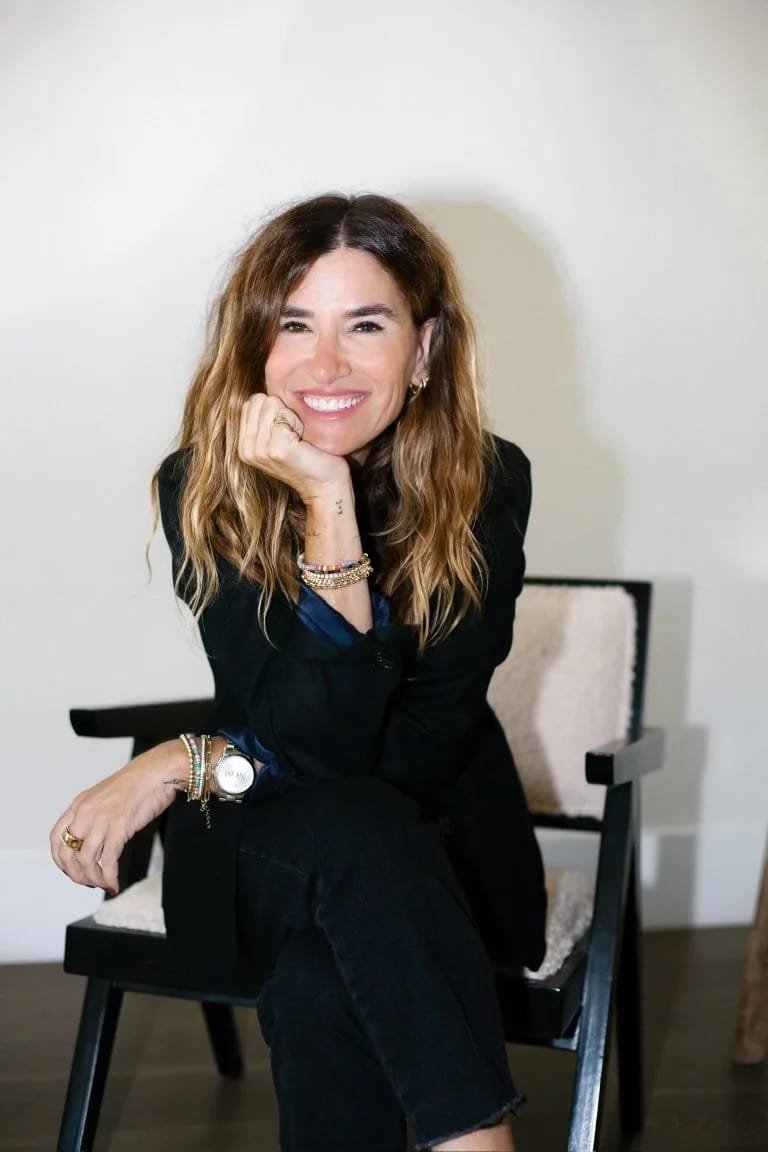
Caption: Alli Webb in a recent official portrait, still selling the idea that great hair should feel easier than most people make it. Image from Alli Webb’s official site.
The first Drybar idea did not arrive in a boardroom. It showed up in traffic. Alli Webb was driving around Los Angeles, hauling a blow dryer into clients’ homes, charging forty bucks a visit, and trying to make motherhood and work fit in the same day without setting either one on fire. She was not trying to invent a category. She was trying to keep doing hair without going back to the old salon grind.
Then the pattern became impossible to ignore. Women kept saying yes to a cheap blowout at home, and Webb kept seeing the same hole in the market. Full salons were expensive and slow. Bargain chains felt hit or miss. What many customers wanted was narrower and more practical, a good blowout in a clean, polished place that did not ask them to buy a whole afternoon just to leave looking finished.
That is why Webb made sense as a guest shark. She turned a narrow service into a scalable brand, and the money followed the discipline.
Early Life
Webb was born on Long Island, New York, and grew up in South Florida, where business was normal dinner-table talk. In a 2024 interview with Fortune, she said her parents were entrepreneurs and that she learned by watching them bend over backward for customers. Their company, a women’s clothing chain called Flips, gave her an early look at the useful part of retail, not the pretty part, inventory, service, seasonality, and the fact that customers remember how you treat them when something goes wrong.
She was not the kind of founder who marched through school with a polished five-year plan. By her own account, she was more restless than tidy. She went straight from high school into a string of jobs, worked with Nicole Miller through her brother’s connection, then eventually went to beauty school in Boca Raton because hair, unlike vague ambition, gave her something concrete to do with her hands.
“I grew up watching my parents run a business and learned firsthand how to do it, and how to bend over backward for customers.” , Alli Webb, Fortune
That background matters because Drybar’s polish can fool people into thinking Webb came out of some elegant beauty-brand incubator. She did not. She spent years close enough to customers to hear what they complained about without needing a consultant to translate it.
The Business That Made Them
Drybar started with Webb’s mobile service, Straight-at-Home, around 2008 and 2009. She was a stay-at-home mother who wanted creative work that fit around family life, so she began giving in-home blowouts to friends in Los Angeles. The business case was hiding in plain sight. Customers loved the convenience. Webb loved that she could do one thing well and get paid for it. Then she realized the same service could work even better in a fixed location with stronger branding and tighter unit economics.
In 2010, Webb opened the first Drybar in Brentwood with her brother Michael Landau and her husband Cameron Webb. The line was simple enough to fit on a mirror, “No cuts. No color. Just blowouts!” That sentence did the heavy lifting. It told customers what they would get, what they would not pay for, and why the service could be faster and cheaper than a traditional salon. Most founders try to sound bigger than they are. Webb did the opposite. She made Drybar legible in one sentence, and that clarity became a business asset.

Caption: Drybar Storefront, CC BY-SA 4.0, from Wikimedia Commons.
The numbers climbed quickly. Forbes reported Drybar was doing more than $40 million in revenue by 2013. By 2016, another Forbes profile said the company was on track for $100 million in revenue, up from $70 million the year before and $20 million in 2012. That is not cute growth. That is a service business turning itself into a real national brand.
Webb and her family brought in outside money as the company expanded, including Castanea Partners, because opening dozens of salons is expensive in a way podcasts like to skip over. Rent, labor, and training can kill a good concept fast. Webb survived that stretch by knowing exactly what Drybar was supposed to be, and by resisting pressure to turn it into a generic full-service salon.
The 2020 exit needs a footnote. Helen of Troy acquired Drybar Products LLC for about $255 million in cash, while Drybar Holdings kept operating the salons under a trademark license. Webb sold the product business, not one neat all-in bundle.
Investment Philosophy
Webb talks about business the way a service founder usually does, with very little patience for theatrical complexity. Customer service sits at the center of her worldview. In a 2020 Forbes interview, she said if Drybar did not get customer service right, nothing else mattered, because the company was selling confidence and experience as much as hair styling. That sounds sentimental until you remember repeat service businesses live or die on whether customers want to come back next week.
She is also blunt about focus. In the same interview, Webb described pushing back when investors urged broader moves in beauty. Her answer, in substance, was no. She knew blowouts. She knew how to make them feel fun and affordable. She did not want to chase every adjacent category just because a spreadsheet got excited. That discipline is easy to praise after success. It is much harder when the room is full of people asking why you are leaving money on the table.
That sentence tells you why she works on Shark Tank. Webb is not there to fall in love with novelty. She is there to decide whether a founder knows the one thing the company should own. In a 2024 talk at USC Marshall, she put it even more plainly: a great idea is a dime a dozen, and without execution it does not matter much. That is the right bias for consumer businesses, where weak execution can turn a charming idea into warehouse dust at impressive speed.
Her advice has stayed consistent. Know your strengths. Hire around your weaknesses. Stay in your lane until the lane itself is too small. She keeps bringing the conversation back to the same question, does the product solve a real problem at a price the business can defend?
On Shark Tank
ABC announced Webb as a new guest shark for Season 10 on November 27, 2018, and her on-air appearance landed in Season 10, Episode 14, which aired on March 3, 2019. She appeared only once, but she used the seat like an operator, not a celebrity cameo. Two deals in one episode is a credible first showing.
The first deal was Zookies, the bake-at-home dog treat kit founded by Justin Miller and Tom Simon. They asked for $50,000 for 20%, which implied a $250,000 valuation. Webb offered the same $50,000 for 30%, which values the business at about $166,667. That is a haircut, yes, but not a random one. Zookies had charm, a clear price point, and a giftable product. It also had the usual small consumer-brand risks, customer acquisition, shelf life, retail fit, and the awkward fact that plenty of dog owners already buy treats without preheating an oven.
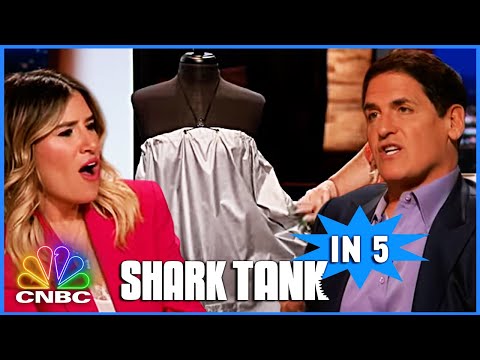
Caption: Webb’s one Shark Tank episode was enough to show her taste for direct consumer products and founders who could actually sell. Image from CNBC Ambition on YouTube.
The second deal was Shower Toga, Kressa Peterson’s portable privacy wrap for rinsing off and changing after races and camping trips. Peterson asked for $80,000 for 33%, roughly a $242,424 valuation. Mark Cuban and Webb teamed up for $80,000 for 40%, which dropped the implied value to $200,000. The margins were strong, the use case was visible, and the real challenge was distribution.
SharkTankDB lists Webb’s total on-air spending at $90,000, with $50,000 into Zookies and $40,000 of the Shower Toga deal credited to her side of the partnership. Post-show outcomes look decent. Zookies still sells treat kits through its own site, while Shower Toga remains active as an e-commerce business.
“You remind me of myself.” , Alli Webb to Kressa Peterson during the Shower Toga pitch
That line was not empty television. Webb tends to respond to founders who know their customer in a practical, lived-in way. In both cases, the product was born from irritation, which is one of the more reliable ways to build something useful.
If you compare her Shark Tank style with our Bethenny Frankel profile, the difference is fun to watch. Frankel likes the jab. Webb likes the simplification. She asks whether the product makes sense and whether the founder knows the lane.
Online Presence
Webb’s online presence has broadened well beyond Drybar. Her official site now serves as a hub for her book, podcast appearances, speaking, consulting, and her newer brand, Messy. On YouTube and podcasts, she shows up as the candid operator who can talk about product-market fit, burnout, and why simple ideas are often the hardest ones to protect.
What People Are Saying
One of the cleaner outside assessments comes from business-school interviews and founder media that treat Webb less like a TV guest and more like a disciplined operator. The recurring theme is clarity.
“A great idea is a dime a dozen. You can have a great idea, but if you don’t have good execution, it doesn’t really matter.” , Alli Webb, USC Marshall
That quote doubles as reputation and warning label. Webb kept saying no long enough for the original yes to become a business worth buying.
Net Worth
Alli Webb’s public net worth estimate most commonly lands around $100 million, with Celebrity Net Worth using that figure. The estimate is plausible, but it deserves caution. Drybar’s product sale was sizable, yet Webb was one owner among several, and private-company economics have a way of hiding the interesting math.
Still, the broad math works. Start with a company that reached roughly $100 million in annual revenue before the sale. Add the reported $255 million Drybar product acquisition in 2020, remembering Webb was a co-founder, not the sole owner. Layer in book income, speaking, advisory work, and equity from later ventures like Squeeze and Messy.
FAQ
Who is Alli Webb on Shark Tank?
Alli Webb is the Drybar founder who appeared as a guest shark in Season 10. She brought a retail and beauty-services point of view that was more practical than flashy.
Did Alli Webb sell Drybar?
Yes, with a footnote. In 2020, Helen of Troy bought Drybar Products LLC for about $255 million in cash, while the salon operation continued under a trademark license.
What is Alli Webb’s net worth?
Public estimates usually put her around $100 million. It is not audited in public, but it fits the Drybar sale and her later business work.
What companies did Alli Webb invest in on Shark Tank?
Her two on-air deals were Zookies and Shower Toga, both in Season 10, Episode 14. One was a giftable pet product, and the other solved a messy real-world problem.
What happened to Drybar after the sale?
Drybar products moved under Helen of Troy, while the salons continued operating through a licensed trademark structure. The brand split into pieces instead of disappearing.
Final Take
Alli Webb earned her seat on Shark Tank the old-fashioned way, by making one idea sharper than the people around her thought it needed to be. Drybar was not a miracle. It was a disciplined service business with repeat customers and a founder who understood that narrowing the offer can widen the market.
My verdict is simple. Webb is a better business story than television character, and that is a compliment. Find the habit people already want, make it easier to buy, and defend the idea from all the clever people who want to improve it into nonsense.
[Article last updated: August 2026. Deal terms and company status reflect publicly available information at time of publication.]

Sebastyen
Sebastyen Wolf is our Editor-in-Chief. He is an analyst and entrepreneur with experience working alongside early-stage founders, launching online ventures, and studying the data patterns that shape successful companies. A fan of Shark Tank since Season 1, he now focuses on translating the show’s most valuable insights into clear, practical takeaways for readers.