Anne Wojcicki Net Worth, Shark Tank, and the 23andMe Bet That Refused to Stay Small
TL;DR:
– Anne Wojcicki built 23andMe around a blunt idea, people should be able to buy access to their own genetic data without asking a doctor for permission first
– Her career started when a Yale biology graduate took a Wall Street research job almost by accident, then decided studying biotech companies was less interesting than building one
– Appeared as guest shark in Season 11, where she made one on-air deal with Gallant and brought a biotech filter to consumer pitches
– Net worth is best read in a band of roughly $150 million to $270 million now, after peaking much higher when 23andMe went public
Contents
– FAQ

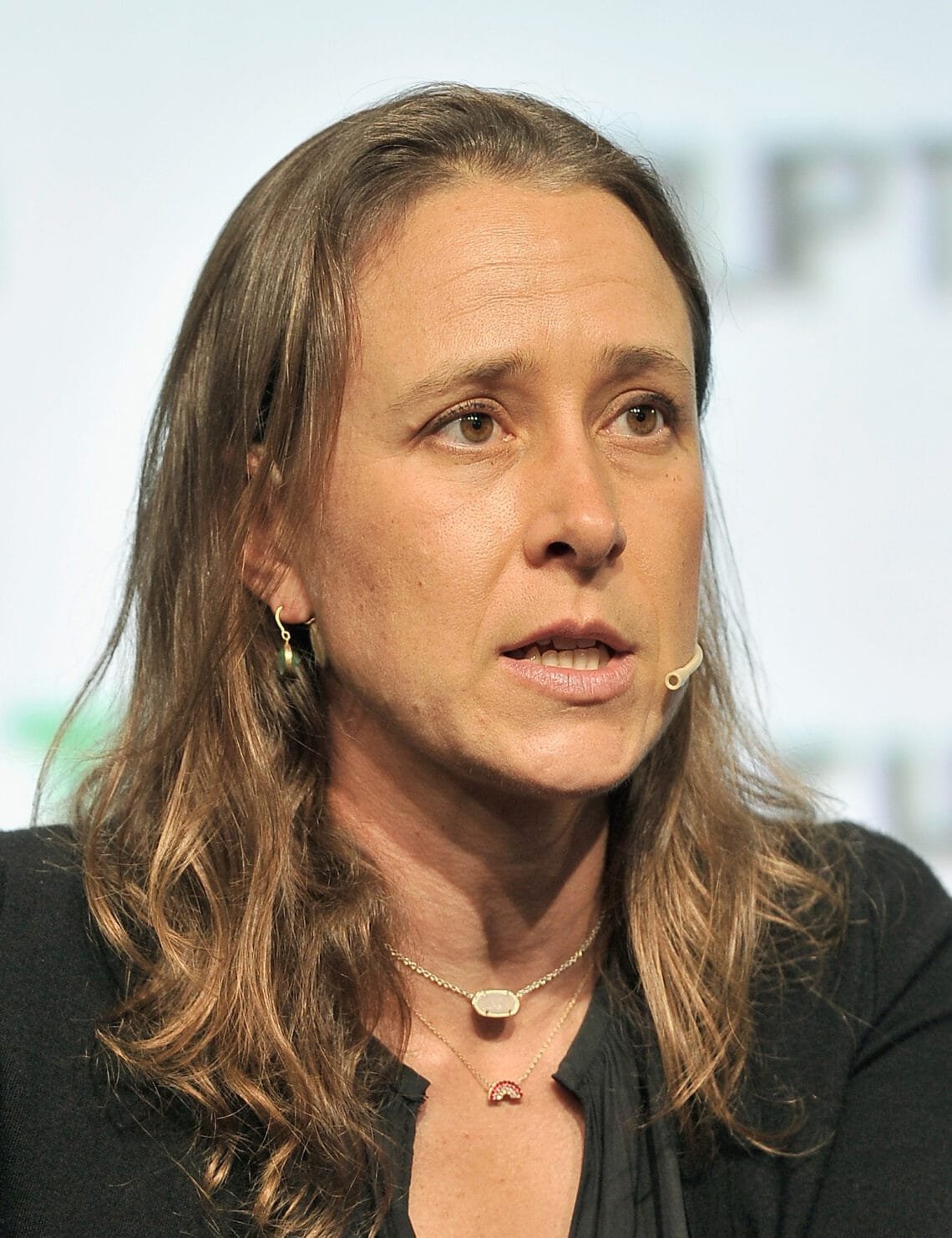
Caption: Anne Wojcicki, the 23andMe co-founder who brought genetics, stubbornness, and a cool clinical stare to Shark Tank. Anne Wojcicki, CC BY 2.0, via Wikimedia Commons.
Anne Wojcicki’s origin story does not begin in a lab, even though the branding would have loved that. It begins near Wall Street, where a biology graduate realized the people financing biotech often understood the money better than the medicine, and the people practicing medicine often kept consumers at arm’s length.
For a long time, 23andMe made that insight look brilliant. It sold a simple promise in a white box, spit in a tube, mail it back, learn something real about your ancestry and health. That promise made Wojcicki famous, briefly made her a billionaire on paper, dragged her through the FDA, then shoved her into the kind of corporate wreckage that turns glossy founders into case studies.
Early Life
Anne E. Wojcicki was born on July 28, 1973, in Palo Alto, California, and grew up on the Stanford campus in a family that treated ideas like regular household furniture. Her father, Stanley Wojcicki, was a Stanford physics professor. Her mother, Esther Wojcicki, became one of the best-known journalism teachers in California. Her sisters were Janet Wojcicki, now an epidemiologist and professor at UCSF, and Susan Wojcicki, the late former CEO of YouTube. Some families pass down jewelry. This one passed down advanced degrees and strong opinions.
She studied biology at Yale, where she also skated competitively and played varsity ice hockey, according to Forbes and public biographical listings tied to her profile. The sports detail matters because it explains something about her public style. Wojcicki does not sound like a founder who waits politely for the room to understand her.
In a Y Combinator interview, she said she landed on Wall Street after a job fair and only took the interview because of the airline miles. That detail is too good to ignore, mostly because it sounds like the kind of throwaway decision that later becomes a TED Talk. What mattered more was what happened once she got there. She became a healthcare research analyst and spent years studying biotech companies from the outside.
“I won’t do things that are just for money.” , Anne Wojcicki, *PLOS Genetics* interview
That line from her 2015 PLOS Genetics interview explains why she left analysis for company-building and why she kept pushing after 23andMe ran into regulators, public-market disappointment, and bankruptcy. She also described moving to New York on a $40,000 salary, saving $1,000 a month, and living on a tiny food budget. The public story is bold vision. The hidden engine is discipline.
The Business That Made Them
23andMe is the business that made Anne Wojcicki famous, rich, controversial, and, at several points, very tired. She co-founded the company in 2006 with Linda Avey and Paul Cusenza after roughly a decade covering healthcare and biotechnology as an analyst. The original pitch was simple, let ordinary people access their own genetic information directly, without treating the data like it belonged to a priesthood in a white coat.
Caption: 23andMe turned a consumer test kit into a huge genetics brand, then spent years proving that being first does not mean getting an easy life. Image from 23andMe.
The numbers tell the rise cleanly. By June 2019, Forbes reported that about 10 million people had used 23andMe kits and that the company had booked an estimated $475 million in annual revenue the prior year. In February 2021, 23andMe announced a merger with Richard Branson’s VG Acquisition Corp. at an enterprise value of about $3.5 billion. At the moment of the SPAC debut in June 2021, Forbes estimated Wojcicki’s stake at roughly $1.3 billion. That is not good money. That is call-your-accountant-and-then-stare-at-the-wall money.
The trouble is that paper wealth is a lousy babysitter. 23andMe had scale, a strong brand, and a huge DNA database, but it never found an easy way to turn a one-time test purchase into a durable high-margin machine. The company also took a heavy reputational punch from the 2023 data breach. By March 2025, Forbes reported that 23andMe had filed for Chapter 11 and Wojcicki had stepped down as CEO.
Yet the story did not stop there. Reuters reported in June 2025 that a nonprofit controlled by Wojcicki won the bankruptcy auction for 23andMe with a $305 million bid. By June 3, 2026, the Los Angeles Times reported that 23andMe had emerged from bankruptcy as a nonprofit and had DNA data from about 13 million users. The official 23andMe Research Institute leadership page now lists Wojcicki as founder and CEO of the nonprofit organization.
Investment Philosophy
Wojcicki’s philosophy comes from two sources, data and impatience. She likes science, but she also likes speed. In the Y Combinator conversation, she said young people should take opportunities because they do not know what will come their way. In the PLOS interview, she made the sharper point that she is not interested in work that is only about money.
“You never really know what’s going to come your way, just take every opportunity.” , Anne Wojcicki, *Y Combinator*
She also thinks knowledge creates responsibility. In a 2016 Guardian interview, she argued that people planning to have children should know whether they carry certain inherited conditions. You may agree with that framing or find it a little severe. Either way, it is not the language of a founder who wants her product treated like a novelty tube for holiday shopping.
The practical version of her philosophy is simple. She backs things that move information closer to the user and trusts individuals more than institutions do. That is admirable when the system is paternalistic. It is riskier when the system is complicated for reasons that are not all stupid.
On Shark Tank
Anne Wojcicki’s Shark Tank run was short, but it made sense. She was credited in three Season 11 episodes, with two clear panel appearances on November 17, 2019, in Season 11 Episode 8, and May 6, 2020, in Season 11 Episode 21. The first episode featured Gallant, Mrs. Goldfarb’s Unreal Deli, Terra-Core Fitness, and Outer. The second included UnbuckleMe, Tanoshi, Proven, and Van Robotics.
By the numbers, SharkTankDB credits her with one completed on-air deal, Gallant, where she teamed with Lori Greiner for $250,000 in exchange for 2.5%. Gallant was asking $500,000 for 2%, which implied a $25 million valuation. Anne and Lori’s final structure priced the company at a $10 million valuation. That is a 60% haircut, which sounds rude until you remember the business was selling pet stem-cell storage into a market where “trust me” is not a compliance strategy.

Caption: Wojcicki’s Shark Tank presence worked because she looked at pitches the way a biotech analyst looks at slide twelve, calm face, active doubt. Image from ABC on YouTube.
Gallant later looked like a reasonable call. In January 2024, the company announced a Series A financing of more than $15 million. On June 30, 2025, Gallant announced an $18 million Series B. On February 27, 2026, the company said it had signed a fulfillment partnership with MWI Animal Health ahead of hoped-for FDA conditional approval for its lead therapy.
“I don’t think the company is world-changing.” , Anne Wojcicki, on Outer during *Shark Tank* Season 11
That line, reported in TV Insider’s recap, captures her on-air style better than a long speech would. She was not there to flatter people into better television. She was there to ask whether the business had scientific credibility, category logic, and enough upside to matter. On UnbuckleMe, she teamed with Kevin O’Leary for an offer the founders declined. On Gallant, she put money behind a company that at least spoke her native language, regulated science with a consumer wrapper.
Her biggest contribution to the show was not volume. It was standard-setting. When Wojcicki looked unconvinced, the room tended to notice. During the Gallant pitch, TV Insider reported that Daymond John bowed out with a sentence that said plenty about her credibility, “If Anne’s nervous, I’m out.”
Online Presence
Wojcicki’s online presence is lighter than you might expect for someone who helped build a consumer internet health brand. Her public LinkedIn profile shows about 18,000 followers. The 23andMe ecosystem carries much more weight than her personal social output does, which is probably the cleaner arrangement.
The audience around her is a mix of biotech watchers, founders, healthcare professionals, privacy skeptics, and the long tail of people who bought a kit because they wanted to know where their family came from. That is a stranger coalition than most guest sharks bring. It also means her brand sits in a permanent argument between curiosity, commerce, and trust.
What People Are Saying
Wojcicki inspires a kind of admiration that usually comes with an asterisk. People who like her tend to like her nerve. People who doubt her tend to doubt the business model, the privacy risk, or both.
“I have to admit that I have been rooting for 23andMe since its inception.” , Jane Gitschier, *PLOS Genetics*
That line from the PLOS interview says a lot about how Wojcicki was viewed during the company’s strongest years. More recent coverage is colder, and fairly so. The Los Angeles Times piece on the nonprofit reboot makes clear that the mission survived, but the old commercial structure did not.
Reddit discussion around her Shark Tank episodes is thin compared with louder guest sharks, though Gallant still gets mentioned when fans talk about science-heavy pitches that needed a real specialist in the room.
Net Worth
Anne Wojcicki’s net worth is a moving target because it has always been tied heavily to 23andMe equity. The current public estimate spread is wide. Celebrity Net Worth lists her at $150 million. Forbes’s profile page last listed her at $270 million as of June 1, 2023. Both are far below the brief 2021 billionaire moment tied to the SPAC listing.
My judgment is that the range matters more than the exact sticker. She was genuinely worth more than $1 billion on paper in June 2021 when 23andMe traded publicly at a much richer valuation. She was worth much less after the stock collapse, the 2025 bankruptcy filing, and the corporate restructuring. If you need one clean conclusion, use this one: Wojcicki made real wealth from ownership, then watched a large piece of that wealth evaporate because the market stopped believing the growth story.
Her fortune came from equity in a company that changed consumer genetics and then struggled to build a stable second act. The same stock that made her look like a healthcare oracle also reminded everyone that public markets are very good at withdrawing applause.
For another guest shark whose wealth story also depends on translating a specialized field into consumer trust, see The Shark Monitor’s Rohan Oza profile.
FAQ
Who is Anne Wojcicki on Shark Tank?
Anne Wojcicki is the co-founder of 23andMe and a Season 11 guest shark on Shark Tank. She brought a healthcare and consumer-genetics background that made her more skeptical than flashy, which is usually a healthy trade.
What company did Anne Wojcicki found?
She co-founded 23andMe in 2006 with Linda Avey and Paul Cusenza. The company made direct-to-consumer genetic testing mainstream by letting people order a kit, send in saliva, and receive ancestry and health-related reports.
What did Anne Wojcicki invest in on Shark Tank?
Her main on-air deal was Gallant, a pet stem-cell company, where she teamed with Lori Greiner. She also made an offer on UnbuckleMe with Kevin O’Leary, but the founders chose a different deal.
How did Anne Wojcicki make her money?
She made her money through ownership in 23andMe. At the 2021 public listing, that stake briefly made her a paper billionaire, though later declines in the stock and the 2025 bankruptcy cut that figure sharply.
What is Anne Wojcicki’s net worth now?
Public estimates now land roughly between $150 million and $270 million. That spread is not laziness, it reflects how much of her wealth depended on 23andMe’s changing valuation.
Final Take
Anne Wojcicki was a good guest shark for the same reason she has always been a polarizing founder, she brings a real point of view and she does not shrink it to make everyone comfortable. She knows science, knows how consumer products get sold, and knows how quickly a beautiful story can go bad when the numbers or the regulators stop cooperating.
My judgment is blunt. Wojcicki built a company that mattered, even if it did not become the stable healthcare giant she once promised. That still counts. On Shark Tank, she looked exactly like what she was, a founder who had already lived through enough real stakes that studio drama could not impress her much. If you wanted applause, she was not the right shark. If you wanted someone who could smell weak logic under a polished pitch, she was excellent.
[Article last updated: August 2026. Deal terms and company status reflect publicly available information at time of publication.]

Sebastyen
Sebastyen Wolf is our Editor-in-Chief. He is an analyst and entrepreneur with experience working alongside early-stage founders, launching online ventures, and studying the data patterns that shape successful companies. A fan of Shark Tank since Season 1, he now focuses on translating the show’s most valuable insights into clear, practical takeaways for readers.