Maria Sharapova Net Worth, Shark Tank, and the Business of Owning More Than Your Image
TL;DR:
– Maria Sharapova built her post-tennis business life around Sugarpova, brand investments, and boardroom roles, using sports fame as a door, not the whole house
– Her career origin story started when her father brought her from Russia to Florida with about $700, chasing a tennis future that looked improbable on paper and expensive in every other way
– Appeared as guest shark in Season 11 in 2020, where she made one deal with Mark Cuban for Bala Bangles and gave the panel a sharper eye for consumer brands
– Net worth is commonly estimated around $220 million, built across prize money, endorsements, Sugarpova, and private investments
Contents
– FAQ

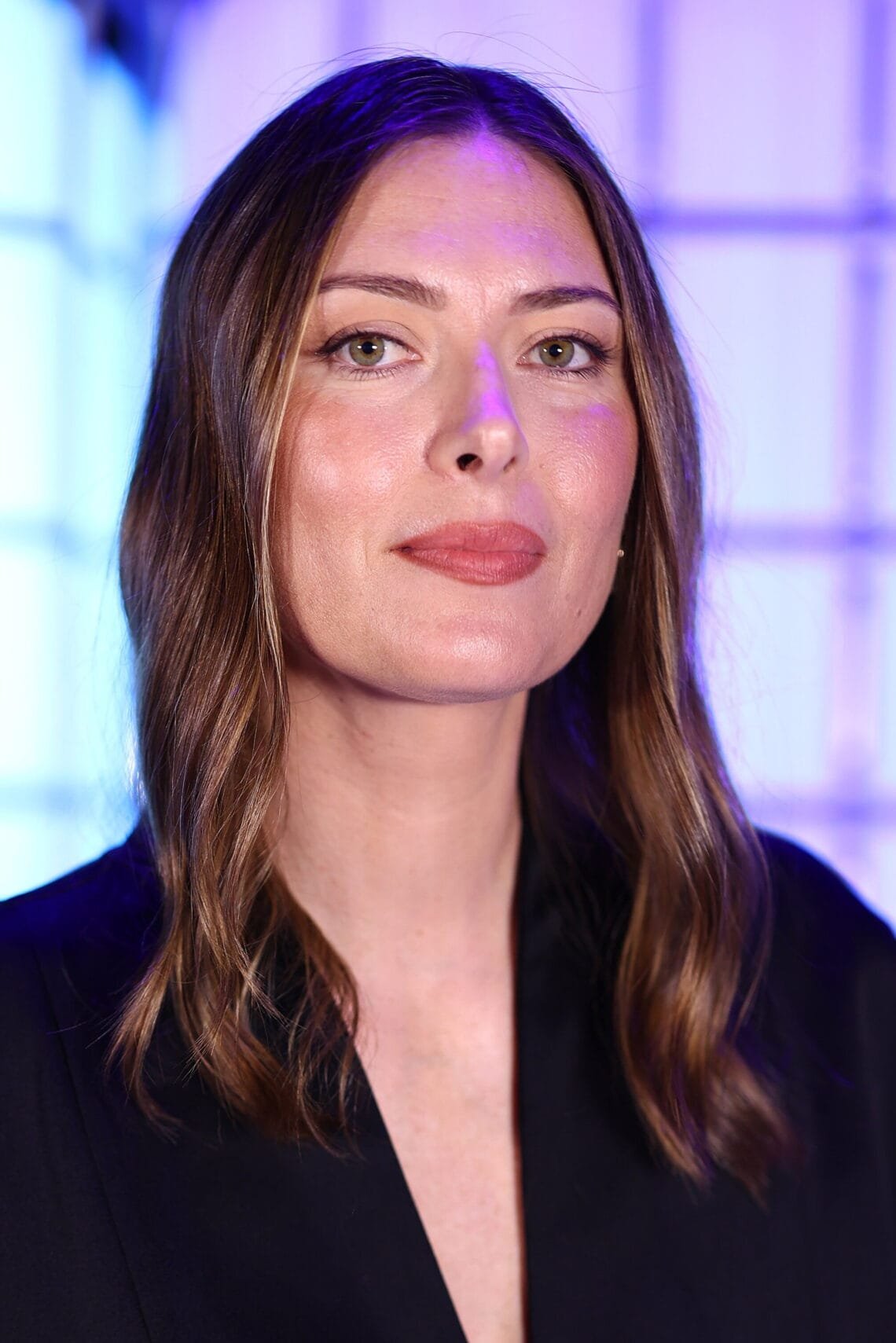
Caption: Maria Sharapova, the former world No. 1 who turned a tennis empire into an investing career. Collision 2024 – VR7 1035, CC BY 2.0, via Wikimedia Commons.
Maria Sharapova’s business story starts with a suitcase, a father, and a child who could hit a tennis ball hard enough to make adults rearrange their plans. Before the trophies and Nike checks, there was a six-year-old arriving in Florida from Russia while her father counted dollars like they were oxygen.
That beginning matters because Sharapova never presented herself as a retired athlete dabbling in business. She learned early that talent buys you a chance, not security. By the time she arrived on Shark Tank, she already thought like someone who understood pressure and the difference between endorsement money and actual control.
Early Life
Maria Yuryevna Sharapova was born on April 19, 1987, in Nyagan, then part of the Soviet Union, and grew up in Sochi after her family relocated. Her father, Yuri, saw unusual talent early, and when Maria was still a child, he took her to the United States to train while the family operated on a shoestring.
In an ABC News interview, Sharapova said, “We came to America with only $700.” That one sentence explains why money, ownership, and control show up so often in her later business life. People who start with scarcity do not usually romanticize dependence.
She trained at the Nick Bollettieri academy in Florida and became a prodigy fast enough to make the whole exercise look fated. It was not fate. It was repetition, exile, and the kind of parental gamble that would terrify a normal accountant. When she won Wimbledon in 2004 at age 17, she became a global star almost overnight.
“We came to America with only $700.” , Maria Sharapova, *ABC News*
The tennis record still reads like a corporate prospectus written by an overachiever. Sharapova won five Grand Slam singles titles, completed the career Grand Slam, held the world No. 1 ranking, and finished with 36 WTA singles titles and $38.8 million in prize money, according to the WTA. The WTA’s Hall of Fame coverage adds the broader frame, 408 weeks in the top five and a career strong enough to land her in the 2025 induction class. She retired in 2020 with enough stature to live on past glory, but instead moved into businesses where results would be measured again.
The Business That Made Them
The business most associated with Sharapova is Sugarpova, the premium candy brand she launched in 2012. On paper, this looks like the kind of celebrity side hustle that usually ends in discount bins and a publicist’s shrug. In practice, it was the first sign that Sharapova wanted more say over product, packaging, and economics than a normal endorsement deal would allow.
In a Forbes profile, Sharapova said she started the company after shoulder surgery forced her off the court long enough to think seriously about ownership. She invested about $500,000 of her own money and, four years later, still owned 100% of the company. That is the key detail. Plenty of celebrities license their face. Sharapova wanted the equity.

Caption: Sugarpova, Sharapova’s first serious consumer brand, turned a polished athlete image into a product she actually owned. Sugarpova Candy, CC BY-SA 3.0, via Wikimedia Commons.
Her reasoning was unusually blunt. In the same Forbes story, she explained that as an athlete she often represented brands without making the decisions that mattered. Building Sugarpova was a way to stop being the face and start being the owner.
Sharapova’s larger money story came from the machine she built around tennis. Forbes estimated in 2022 that she had earned more than $300 million off the court, on top of her nearly $39 million in prize money, and pegged her net worth at $220 million. It came from years of premium endorsement positioning with brands such as Nike and Evian, followed by a second phase as an investor and board member.
The portfolio has become more interesting than Sugarpova alone. Forbes reported in 2021 that Sharapova had invested in Tonal, Therabody, Supergoop, and Rove, while her Forbes profile later added Public.com and MoonPay. The Moncler Group board page lists her as an independent director.
If you want the simple math, here it is. Start with $38.8 million in career prize money. Add more than $300 million in endorsement income before taxes over her playing years. Then add full ownership of Sugarpova for much of its run, minority stakes in private growth companies, and paid board work. A $220 million net worth estimate is believable, but only because she converted a short athletic prime into assets that could outlast it.
Investment Philosophy
Sharapova talks about business with more caution than swagger. In the ABC interview, she said entrepreneurship appealed to her because she wanted to be the one making the decisions.
In a Tennis.com conversation with Kevin O’Leary, she said, “Deal making and the strategy behind deal making became very different. That’s when I really started understanding business.” That line is worth pausing on. She is describing the moment when endorsement math stopped being enough and ownership math took over.
“I want to be the one that’s making more decisions.” , Maria Sharapova, *ABC News*
Sharapova also has a healthy respect for vulnerability. ABC quoted her saying that entrepreneurship leaves you open to judgment in a different way because you are putting your own idea into the market. Tennis taught her how to handle scoreboards. Business taught her how to handle silence after the pitch deck closes.
Her investing style appears to favor branded consumer products and health-oriented companies where product quality, story, and discipline can all matter at once. She is not trying to sound fluent in every category. She stays near businesses where premium positioning, habit, and performance can actually be judged.
On Shark Tank
Sharapova appeared as a guest shark in Shark Tank Season 11, Episode 13, which aired on February 28, 2020. The episode lineup included Bala Bangles, Shake It Pup, Pips & Bounce, and Fur.
According to Tennis.com and the season records compiled by SharkTankDB, Sharapova’s one on-air deal came with Mark Cuban for Bala Bangles at $900,000 for 30%. The founders had entered asking for $400,000 for 10%, a $4 million valuation. The final deal more than doubled the cash and tripled the equity. On implied valuation, the ask priced the company at $4 million, while the final deal priced it at $3 million. That is a 25% haircut for the founders, but with a much bigger check and two well-matched partners. For a fast-growing fitness accessory brand about to run into the pandemic home-workout boom, that trade looks smart in hindsight.
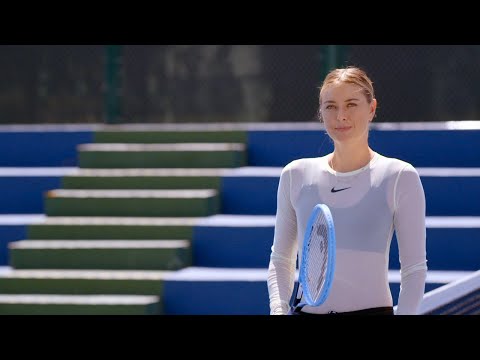
Caption: Sharapova’s Shark Tank appearance worked because she sounded like a real operator, not a celebrity rental. Image from ABC on YouTube.
The post-show numbers made the deal look even better. Forbes reported Bala did about $2 million in sales in 2019 and roughly $20 million in 2020 after the episode aired just ahead of the home-fitness surge.
Sharapova’s other moments on the episode were revealing even when she passed. On the Fur pitch, Tennis.com quoted her saying, “Two-point-five percent is really nothing. I feel like I would need so much more skin in the game.” That is one of the cleanest investor tells you will hear on television. She was not buying proximity to cool founders. She wanted ownership that mattered.
“Two-point-five percent is really nothing. I feel like I would need so much more skin in the game.” , Maria Sharapova, on *Shark Tank*
She also had no interest in faking enthusiasm for weak fits. On Pips & Bounce, a table-tennis social club concept, Tennis.com reported her response as “Hellllll no.”
That directness helped her episode. Sharapova did not waste time pretending every lifestyle brand was a natural fit, and that made the Bala deal more credible when she finally moved. She came off like a buyer, not a celebrity trying to keep the room comfortable.
The broader lesson from her episode is that Sharapova was not there to perform warmth on command. She was there to evaluate brand quality, unit economics, and founder seriousness. For another guest shark who also favored clean consumer logic over theatrics, see [The Shark Monitor’s profile of Rohan Oza](https://thesharkmonitor.com/rohan-oza-net-worth-shark-tank-and-the-brand-instinct-behind-poppi/).
Online Presence
Sharapova’s online presence is still enormous even after retirement, though it now feels more curated than constant. She still commands a large audience across Instagram and X, with additional reach spread across Facebook, YouTube, and business media appearances.
The community around her is broader than tennis alone. Some followers came for the Wimbledon years and never left. Others now track her because she sits at the intersection of luxury branding, health and wellness investing, and the celebrity-to-cap-table pipeline that usually produces more hype than substance.
What People Are Saying
Outside commentary on Sharapova has shifted with her second act. During her tennis peak, coverage leaned on glamour and rivalry because that is how sports media behaves when it sees a marketable star. The more interesting recent commentary treats her as a disciplined businessperson with taste, patience, and a willingness to learn sectors before talking too loudly about them.
“You actually said no to people, most guests don’t have the guts or the cahoonas to do that.” , Kevin O’Leary, *Tennis.com*
That quote from the Tennis.com discussion matches the evidence. Sharapova has built a boardroom reputation sturdy enough to earn an independent director seat at Moncler and investor status in companies that were not just looking for a famous face. Reddit chatter around her specific Shark Tank episode is surprisingly light, but the fan reaction that does exist tends to focus on how direct she was and how naturally Bala fit her lens.
Net Worth
Maria Sharapova’s net worth is most commonly cited at about $220 million, based on Forbes’s public estimate. That figure passes the smell test. The inputs are visible, even if the precise current value of her private stakes is not.
Prize money alone gave her a base of $38.8 million, according to the WTA. Forbes has reported that she made more than $300 million before taxes off the court during her career, which is where the real scale appears. From there, you add Sugarpova, private investments such as Tonal, Therabody, Supergoop, Public.com, MoonPay, and Rove, plus board income and long-tail commercial licensing. The result is not mystery wealth. It is celebrity wealth that was managed with more discipline than usual.
“That’s when I really started understanding business.” , Maria Sharapova, *Tennis.com*
My judgment is that Sharapova’s fortune matters less for the sticker number than for what it says about her timing. She started pushing for ownership while she was still an active athlete with maximum pricing power. That gave her a chance to convert fame into equity before retirement turned her into a nostalgia product.
FAQ
Who is Maria Sharapova on Shark Tank?
Maria Sharapova is a former world No. 1 tennis player and five-time Grand Slam singles champion who appeared as a guest shark in Season 11. She brought a brand-builder’s eye and a sharper-than-average view on equity.
What did Maria Sharapova invest in on Shark Tank?
Her on-air deal was Bala Bangles, which she funded with Mark Cuban. They agreed to invest $900,000 for 30% of the company, a much larger check than the founders requested.
What is Maria Sharapova’s net worth?
The latest widely cited public estimate is about $220 million, based on Forbes’s 2022 profile. It is supported by her prize money, endorsement history, Sugarpova ownership, private investments, and board roles, but it is still an estimate rather than a live balance sheet.
What is Sugarpova?
Sugarpova is Sharapova’s premium candy brand, launched in 2012. It was one of her first big moves from athlete endorser to product owner, which is why it matters more than the candy aisle might suggest.
Why did Maria Sharapova get into investing after tennis?
By her own account, she wanted to make more decisions herself and learn the strategy behind deals. Tennis gave her capital and visibility. Investing gave her control, which appears to be the part she values most.
“I want to be the one that’s making more decisions.” , Maria Sharapova, *ABC News*
Final Take
Maria Sharapova was a strong guest shark because she understood something many celebrity investors never quite grasp, attention is useful, but ownership is the point. She did not come into the tank chasing applause or trying to sound omniscient.
My editorial read is simple. Sharapova’s business career is more serious than the candy-brand jokes suggest and narrower than the mythology around athlete-investors usually allows. That is a compliment. She has stayed close to the few lanes where she has an actual edge, premium consumer branding, wellness, performance, and disciplined self-presentation. That restraint is part of the story. She has mostly avoided the celebrity-investor habit of mistaking visibility for judgment.
[Article last updated: August 2026. Deal terms and company status reflect publicly available information at time of publication.]

Sebastyen
Sebastyen Wolf is our Editor-in-Chief. He is an analyst and entrepreneur with experience working alongside early-stage founders, launching online ventures, and studying the data patterns that shape successful companies. A fan of Shark Tank since Season 1, he now focuses on translating the show’s most valuable insights into clear, practical takeaways for readers.