Nirav Tolia Net Worth, Shark Tank, and the Nextdoor Founder Who Bet on Community
TL;DR: – Nirav Tolia built Nextdoor around a simple idea, neighbors matter more than Silicon Valley usually admits – After growing up in Odessa, Texas, and learning early internet culture at Stanford and Yahoo, he kept building companies around community – Appeared as guest shark in Season 13 in 2021; he made three on-air deals, with HelloPrenup becoming the clearest post-show winner – Net worth is publicly estimated around $50 million, built across Nextdoor, earlier exits like Epinions and Shopping.com, and later investing
Contents
- Early Life
- The Business That Made Them
- Investment Philosophy
- On Shark Tank
- Online Presence
- What People Are Saying
- Net Worth
- FAQ
- Final Take
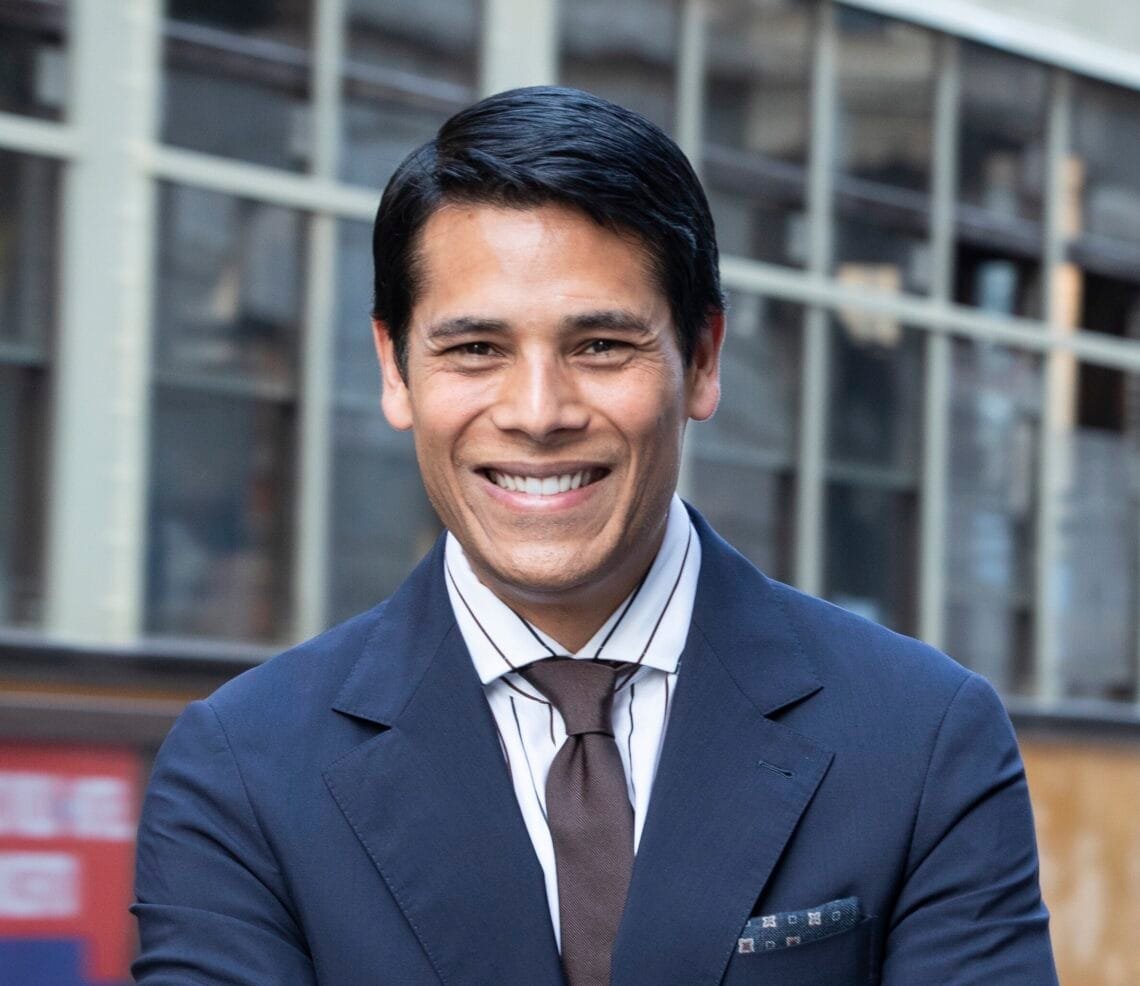
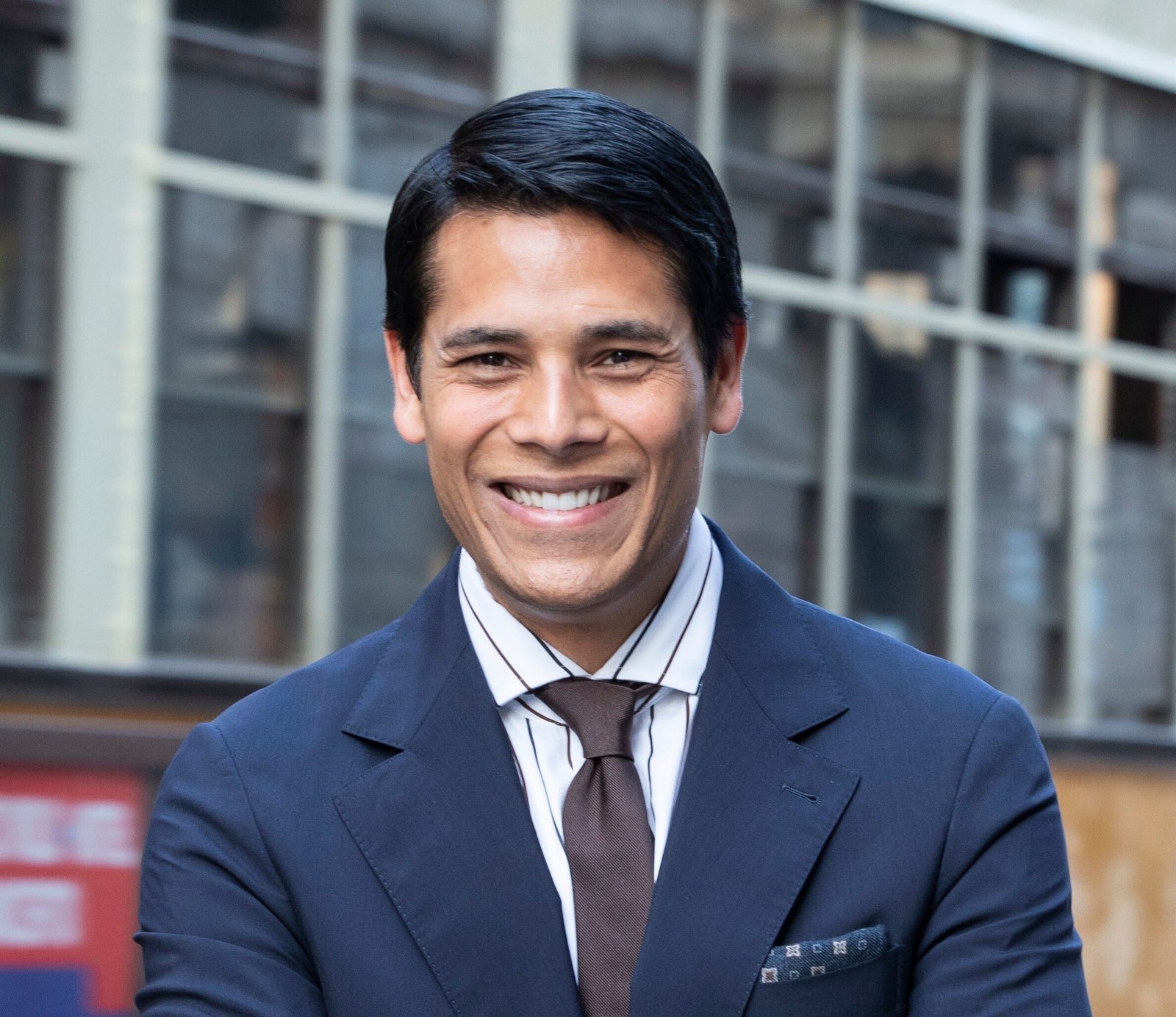 Caption: Nirav Tolia, co-founder of Nextdoor, on the company leadership page. Image from Nextdoor.
He did not come out of some tidy Palo Alto assembly line. Nirav Tolia grew up in Odessa, Texas, where the community was strong, the geography was limiting, and football carried the kind of civic weight that would make a city council meeting feel optional. That combination matters, because it explains why his biggest company was not built around frictionless scale or flashy personal branding. It was built around the old-fashioned idea that your street still counts.
That made Tolia a slightly odd fit for Shark Tank, which is part of why he worked. He showed up with real operating history, not just investor polish. By the time ABC gave him a chair, he had already been employee No. 84 at Yahoo, co-founded Epinions, helped steer Shopping.com, built Nextdoor into a public company, and spent enough time in Silicon Valley to know when founders were selling confidence instead of substance. In a room that often confuses noise with edge, that is a useful trait.
Early Life
Nirav Tolia was born in 1973 and raised in Odessa, Texas, the son of Indian immigrant physicians. In interviews with Startups.com and The Florentine, he has described growing up as visibly different in a small West Texas city, Indian, brown, and far from the big coastal centers that tend to dominate American business mythology. He has also been blunt that the same place gave him a durable sense of what community looks like when it is real and not just a line in a mission statement.
His first big intellectual shift came at Stanford. Tolia arrived planning to become a doctor, like his parents, then discovered he was more alive in the parts of college that mixed ideas, people, and organization. He has said that using Usenet in the early 1990s gave him an almost embarrassingly clear epiphany: the internet could erase the limits of geography. For a kid from Odessa, that was not abstract. It meant the world had just gotten a lot bigger without him having to leave his dorm room first.
He graduated from Stanford with a B.A. in English, which is the sort of degree that makes venture-capital types nod politely right before underestimating you. He later joined Yahoo, where the company grew from roughly 80 employees to about 10,000 during his time there. It was an absurdly good education in how internet businesses scale, how talent clusters, and how fast a good story can turn into a balance sheet.
“Everything I’ve done in my career is about community.” , Nirav Tolia, Los Angeles Times
That line is not branding fluff. If anything, it is a cleaner organizing principle than many founders ever manage to produce. Epinions was community. Round Zero was community. Nextdoor was community with a mailing address and a moderation problem. The man has been working the same theme for decades. Silicon Valley just kept changing the wardrobe.
The Business That Made Them
The company that made Tolia’s reputation is Nextdoor, which he co-founded in 2011. The pitch was simple enough to sound almost quaint: verify where people live, then let them talk to the people nearby. That sounds obvious now. It was not obvious then, especially in a tech culture obsessed with global virality and frictionless reach. Nextdoor was the opposite. It was local, slow, trust-dependent, and built neighborhood by neighborhood. In startup terms, that is the kind of idea that looks boring right up until it becomes hard to copy.
Before Nextdoor, Tolia had already built a serious résumé. He co-founded Epinions.com and served as CEO, then became COO of Shopping.com after Epinions merged with Dealtime. Shopping.com went public in 2004 and was acquired by eBay in 2005 for $620 million. That matters because it means Nextdoor was not a first swing. By the time he launched it, he had already seen a startup scale, merge, list, and get sold. Founders with that kind of scar tissue usually make fewer romantic mistakes, though they still find fresh practical ones.
 Caption: Nextdoor, the neighborhood network that turned Tolia into a public-company founder. Image from Nextdoor.
The headline math on Nextdoor is respectable, even after the public market took the usual baseball bat to internet valuations. The company went public through a SPAC in November 2021 at an enterprise value of about $4.3 billion. More recently, Nextdoor’s May 6, 2026 first-quarter results reported $62 million in quarterly revenue, up 14% year over year, with 22.3 million platform weekly active users and a net loss narrowed to $11 million from $22 million a year earlier. That is not perfection. It is, however, a real operating business with real user reach and better financial discipline than plenty of shinier consumer apps.
The deeper lesson is about the business model. Nextdoor is not a mass-entertainment machine. It is a utility with social features. People go there to find a plumber, sell a stroller, ask about a strange noise, or complain that someone’s dog has political views. That is not glamorous, but it is sticky. Tolia’s insight was that local trust has commercial value. Plenty of founders say they are building community. He built a product where community was the moat and the monetization path.
Investment Philosophy
Tolia invests like a founder who still remembers the cost of false momentum. In a D CEO profile, he said he values “a founder’s mentality,” which he defined as mission focus, obsession with details, and an owner’s mindset. That is not revolutionary language, but it is practical. He is not looking for theater. He is looking for evidence that the person across from him can carry the business when the dopamine leaves the room.
The strongest recurring thread in his interviews is that business should solve a lived problem, not a fantasy problem. On Startups.com, he traced Nextdoor back to his own experience of geographic isolation and the internet’s power to break it. On The Florentine, he talked about community as a force just below family, faith, and health. Those are not the words of someone chasing cute products for the sake of portfolio variety. They are the words of someone who wants the business to mean something before he decides whether it can scale.
“People first is the most valuable lesson I’ve learned.” , Nirav Tolia, D CEO
That philosophy explains why his Shark Tank deals leaned toward software, utility, and products with obvious daily use. He is not naturally a packaging guy in the Lori Greiner sense. He is more interested in whether the founder understands adoption, retention, and why the customer comes back. He thinks like a network-builder, which can make him seem calmer than the room until he spots a business that actually fits his frame. Then the checkbook comes out fast.
On Shark Tank
Tolia first appeared as a guest shark in Season 13, Episode 4, which aired on October 29, 2021. ABC’s episode summary lists him on the panel for pitches from TheMagic5, Tabby, SoaPen, and 54 Thrones. He returned in Season 13, Episode 6 on November 12, 2021, the episode that included HelloPrenup. According to SharkTankDB, his on-air total came to three deals and $300,000 invested: $125,000 into 54 Thrones, $100,000 into SoaPen, and $75,000 as part of the HelloPrenup deal alongside Kevin O’Leary.
The 54 Thrones deal is the cleanest read on his style. Founder Christina Funke Tegbe asked for $250,000 for 10%, a $2.5 million valuation. O’Leary and Tolia eventually teamed up for $250,000 for 17.5%, which implies a post-money valuation of about $1.43 million. That is a 43% haircut from the ask, not a gentle trim. Tolia clearly liked the founder and the category, but he still priced risk like a person who has sat through enough board meetings to know that good branding does not pay inventory bills.
In SoaPen, he made a solo offer of $100,000 for 10% plus a $1 royalty until $200,000 was repaid. That structure told you exactly how he thinks. He liked the problem, children not washing their hands is a pretty reliable market inefficiency, but he wanted downside protection. Investors who pretend royalties are romantic are usually lying. Tolia was not lying. He was underwriting execution risk.
“This is how people become millionaires.” , Nirav Tolia, on HelloPrenup
HelloPrenup was his strongest outcome. On air, he and O’Leary agreed to invest $150,000 for 30%. The deal later held in substance. HelloPrenup’s press release announced the partnership after the episode, and Suffolk Law’s March 2024 follow-up said the company had reached more than $22 million in valuation and about $3 million in annual sales. That is not unicorn territory, but it is exactly the sort of practical, category-creating growth a good guest shark should be happy to own.
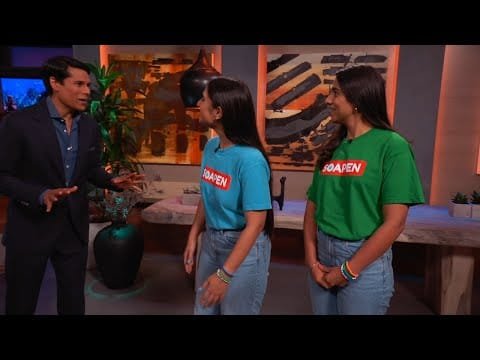 Caption: Tolia on Shark Tank during his Season 13 guest-shark stretch. Image from ABC YouTube.
The broader verdict is that Tolia was a useful shark because he widened the frame. He brought software logic and adoption logic into a show that often wants everything to behave like a retail shelf item. If you want a contrast with a guest shark who came from a much louder consumer-commerce lane, The Shark Monitor’s Michael Rubin profile is a good comparison.
Online Presence
Tolia’s online presence is smaller than the celebrity sharks and sharper than the average founder. His LinkedIn profile shows about 12,000 followers, and his public appearances now tend to cluster around podcasts, investor conversations, and Nextdoor’s own communication channels rather than constant social posting. That fits the brand. He is not trying to win the internet’s attention every morning. He is trying to keep credibility with founders, advertisers, and public-market investors.
Nextdoor itself has a much larger footprint. The company’s investor site says the platform reaches one in three U.S. households and operates in 11 countries as of March 31, 2026. That is the thing to pay attention to. Tolia’s personal following is not the product. The network is the product, and his public profile mostly functions as an extension of that machine.
What People Are Saying
The warmest outside assessment of Tolia usually centers on his seriousness about community, which is harder to fake than it sounds. The Los Angeles Times profile captured that well by tying his Odessa upbringing directly to the values behind Nextdoor.
“People relied on their neighbors, they believed in the golden rule.” , Nirav Tolia, Los Angeles Times
Reddit reaction to his Shark Tank run was quieter than the louder guest sharks, which is revealing in its own way. He did not dominate the discourse with a gimmick, a feud, or a billionaire mythology. He mostly came across as credible, a little measured, and clearly more interested in real traction than on-air one-liners. On television, that almost counts as a personality trait.
Net Worth
The public estimate most often attached to Tolia is about $50 million, cited by Market Realist in 2023 and repeated widely since. Treat that number as directional, not audited truth. Public-company founders often look richer in headlines than they do in liquid cash, and Nextdoor’s public-market ride has not exactly been a champagne fountain.
Still, the components are clear enough. There is wealth from Epinions and Shopping.com, wealth from Nextdoor equity, compensation from executive leadership, and some later investing and board work. Public filings also show material stock-based compensation. Nextdoor’s April 2026 proxy, for example, listed Tolia’s 2024 total compensation at a little over $21.1 million, largely driven by incentive compensation and stock awards. The better way to read his finances is this: he is not a billionaire guest shark, and he does not need to be. He is a rich operator whose money came from building, exiting, and then returning to fix the company most associated with his name.
Frequently Asked Questions
Who is Nirav Tolia on Shark Tank?
Nirav Tolia is the co-founder and CEO of Nextdoor, the neighborhood social network. He joined Shark Tank as a guest shark in Season 13 and brought a software-and-community lens that was different from the usual retail-heavy panel logic.
What companies did Nirav Tolia invest in on Shark Tank?
His documented on-air deals were 54 Thrones, SoaPen, and HelloPrenup. Of those, HelloPrenup has the clearest publicly confirmed post-show traction and investor follow-through.
How did Nirav Tolia make his money?
He built wealth through startup equity and executive roles, first with Epinions and Shopping.com, then with Nextdoor. The core pattern is ownership, not salary alone.
What is Nirav Tolia’s net worth?
Public estimates usually place him around $50 million, though that figure is not confirmed by Tolia himself. Like most founder-wealth numbers, it moves with private assumptions and public share prices.
Why did Nirav Tolia step away from Nextdoor and then return?
He stepped down from the CEO role in 2018 but remained tied to the company through the board. In February 2024, Nextdoor announced that he would return as CEO, president, and chair as the company tried to sharpen product relevance and improve financial execution.
Final Take
Nirav Tolia is not the most famous guest shark and that probably helps him. He does not need to perform wealth. He needs to judge whether the founder has a real reason to exist, whether the product solves a problem people feel in their actual lives, and whether the business has a credible path from idea to habit. That is a sturdier filter than the show sometimes deserves.
His career also says something useful about the limits of Silicon Valley clichés. Tolia did not get rich by pretending scale and community are opposites. He got rich by noticing that trust, place, and repeated local use can be a business model if you are disciplined enough to build around them. On Shark Tank, that made him a grounded guest shark. In tech, it made him something rarer, a founder who kept the same thesis long enough to prove it.
[Article last updated: August 2026. Deal terms and company status reflect publicly available information at time of publication.]

Sebastyen
Sebastyen Wolf is our Editor-in-Chief. He is an analyst and entrepreneur with experience working alongside early-stage founders, launching online ventures, and studying the data patterns that shape successful companies. A fan of Shark Tank since Season 1, he now focuses on translating the show’s most valuable insights into clear, practical takeaways for readers.