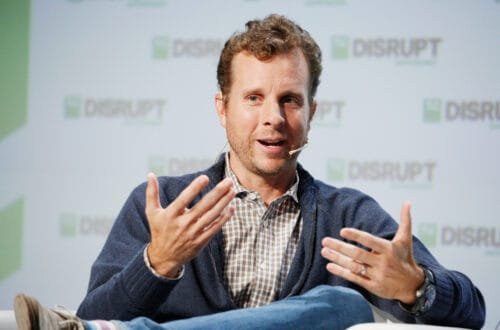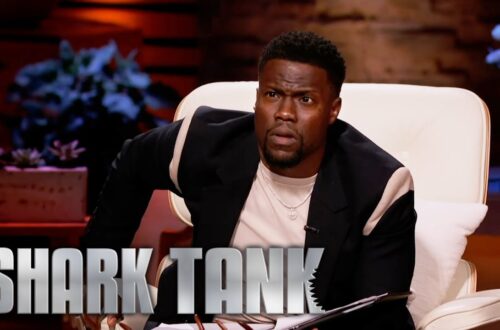
Chris Sacca Net Worth, Shark Tank, and the Billion-Dollar Bets Behind Lowercase Capital
TL;DR: – Chris Sacca built his fortune by betting on internet companies before most of Wall Street knew what to call them – His career turned when a law-school gambler with a giant debt bill learned more from Google and failure than he ever learned in class – Appeared as guest shark in Seasons 7 and 8, where his sharpest on-air win was Brightwheel – Net worth is publicly estimated at $1.2 billion, built across Lowercase Capital, early stakes in Twitter and Uber, and later climate investing through Lowercarbon
Contents
- Early Life
- The Business That Made Them
- Investment Philosophy
- On Shark Tank
- Online Presence
- What People Are Saying
- Net Worth
- FAQ
- Final Take
 Caption: Chris Sacca on the Lowercarbon Capital team page. Screenshot from Lowercarbon Capital.
The scene that explains Chris Sacca does not start in a venture fund conference room. It starts with a man who had already blown himself up once, worked his way back, and learned that embarrassment can be a better teacher than applause. By the time television audiences met him in a cowboy shirt, the real story had already happened.
That is what made him different on Shark Tank. Sacca did not wander in as a celebrity mascot or a rich man looking for fresh camera angles. He came in with one of the best early-stage investing records of his generation, which meant the noise was optional and the math was not. If he liked a founder, there was usually a reason that survived daylight.
His public image has always been a little ridiculous on purpose. The shirts, the interruptions, the habit of sounding like he had already written the postgame column in his head, all of it was theatrical. The substance underneath it was not. Lowercase Capital made him rich because he spotted scale early, then held on while other people were still asking whether the internet business in front of them was real.
Early Life
Christopher Sacca was born on May 12, 1975, in Lockport, New York, just north of Buffalo. He grew up in a family that valued brains but did not have a map into Silicon Valley. His father was a lawyer. His mother worked in education. That gave him stability, but not the polished network that greases so many early careers in finance and tech.
In a January 2025 interview on The Tim Ferriss Show, Sacca described Lockport as a working-class town shaped by the rise and decline of the local GM plant. He talked about watching neighbors lose agency when jobs left and the town changed around them. That is not decorative biography. It helps explain why he still sounds suspicious of elite bubbles, even after becoming rich inside one.
He studied at Georgetown University’s School of Foreign Service and later graduated from Georgetown Law. The résumé looks elegant. The route was messier. Before he ever became an investor, Sacca used student-loan money to trade stocks during the dot-com mania, ran the account up wildly, then watched it collapse into a debt hole that outside profiles have pegged at roughly $4 million before settlement and repayment. That is the sort of mistake that either ends a career or burns vanity out of it.
“I didn’t have a network. I didn’t know anybody. I didn’t even know what money really was.” Chris Sacca, The Tim Ferriss Show
He spent the next stretch doing the unglamorous work of recovery, law, operating jobs, and a climb back to zero. The debt story matters because it filters the rest. A lot of investors talk like risk is a clever abstraction. Sacca learned what it feels like when risk sends the bill to your house.
The Business That Made Them
Chris Sacca was never famous for building one operating company from scratch. His real business was judgment. After work at Fenwick & West and then Speedera, he joined Google in 2003 and became part of the company’s legal, business-development, infrastructure, and wireless machinery. According to his Lowercarbon biography, he worked on spectrum projects, data-center acquisitions, fiber expansion, and Google’s $4.7 billion bid in the FCC spectrum auction. Those are not glamorous startup anecdotes. They are the kind of jobs that teach you how scale gets paid for.
When Sacca left Google in late 2007, he already had a reputation for sticking his nose into the next thing. Forbes reported in 2015 that his early internet bets, especially Twitter, helped turn Lowercase Capital into one of the great seed-stage funds of its era. Lowercarbon’s own profile lists early Lowercase investments in Uber, Twitter, Instagram, Twilio, Docker, Optimizely, Blue Bottle Coffee, and Stripe. That portfolio reads like someone stole the answer key.
The famous fund was small by later standards. The legend comes from what the money touched. If you get into Twitter, Uber, Instagram, and Stripe early enough, the return math stops being normal. It becomes the kind of math that gives a man permission to be insufferably certain in public. Annoying, yes. Also earned.
 Caption: Lowercarbon Capital’s wordmark on the firm’s website. Screenshot from Lowercarbon Capital.
Forbes’ billionaire profile still anchors his public net worth at $1.2 billion, and the broad outline has not changed. Lowercase made the fortune. The later shift changed the mission. In 2021, Sacca and Crystal English Sacca formally pushed harder into climate investing through Lowercarbon Capital, where the pitch is simple enough to survive translation: back companies trying to cut emissions, remove carbon, and do the industrial work that slogans cannot do.
That move says something useful about him. A lot of people who win one game spend the rest of their lives replaying it. Sacca decided consumer internet had made him enough money and went looking for a harder problem. You can call that ambition, conscience, or boredom. It was probably all three.
Investment Philosophy
Sacca has always invested like a man who distrusts vague charm. In long-form interviews he comes back to the same point, the founder has to fit the problem, and the story has to survive the numbers. In a quote that has followed him for years, he argues that ideas are cheap and execution is everything. That line has been repeated so often it risks sounding like a coffee mug, but it fits his record better than most investor slogans fit anybody’s.
The more revealing line comes from his older interviews about teams. He has said that a great idea still dies without the right operator. That sounds obvious until you watch how many founders raise money because investors mistake fluency for ability. Sacca’s best bets were not just product calls. They were judgment calls on who could turn momentum into a category.
“A great idea can’t succeed without a great operator.” Chris Sacca, quoted in Addicted2Success from his investing commentary
He also likes scale, maybe a little too much. That is both the source of his success and the reason some viewers never warmed to him on television. Sacca tends to listen for businesses that can get very large, very quickly, with software-like leverage or platform upside. If your dream is a nice durable company with modest growth, he is probably not your ideal dinner guest.
There is, however, a practical honesty in that bias. He does not pretend to be all things to all entrepreneurs. On Shark Tank, that made him useful because he dragged retail and product conversations toward customer acquisition, margins, defensibility, and category creation. In a room that can drift toward theater, he often forced the talk back to outcomes.
On Shark Tank
Sacca first appeared in Season 7, then returned in Season 8. SharkTankDB’s Chris Sacca page credits him with eight on-air deals totaling about $1.57 million, with activity across Season 7 Episode 6, Episode 14, Episode 17, Episode 26, and Season 8 Episode 8, Episode 10, Episode 14, and Episode 17. That spread matters because it shows he was not a one-night stunt guest. The show kept bringing him back.
The deal list is a mix of hits, flameouts, and one very clear home run. In Season 7 he backed Rent Like a Champion, Hatch Baby, Bee Free Honee, and Brightwheel. In Season 8 he added deals including Jack’s Stands, Nomiku, Pop Up Play, and ToyMail. Brightwheel’s own follow-up post later celebrated its partnership with Mark Cuban and Chris Sacca ahead of the company’s return segment. That is the clue. Brightwheel became the proof point everyone still mentions.
The Brightwheel numbers are what make the story sing. On air, the founders asked for $400,000 for 4%, a $10 million valuation. Cuban and Sacca closed at $600,000 for 6.67%, which implied a post-money valuation just under $9 million. That was not some cruel haircut. It was a grown-up price on a software company that still had to prove it could turn affection into enterprise-grade habit.
“Ideas are cheap; execution is everything.” Chris Sacca, Shark Tank
That judgment aged well. Public follow-up coverage from Bloomberg, cited by PYMNTS in February 2021 put Brightwheel’s valuation above $600 million after a $55 million funding round. That does not make every Sacca deal wise, but it does make the Brightwheel tape look unusually sharp in hindsight. If you want another guest shark who approached technology with a stricter filter than the average TV investor, our Nirav Tolia profile makes a useful comparison.
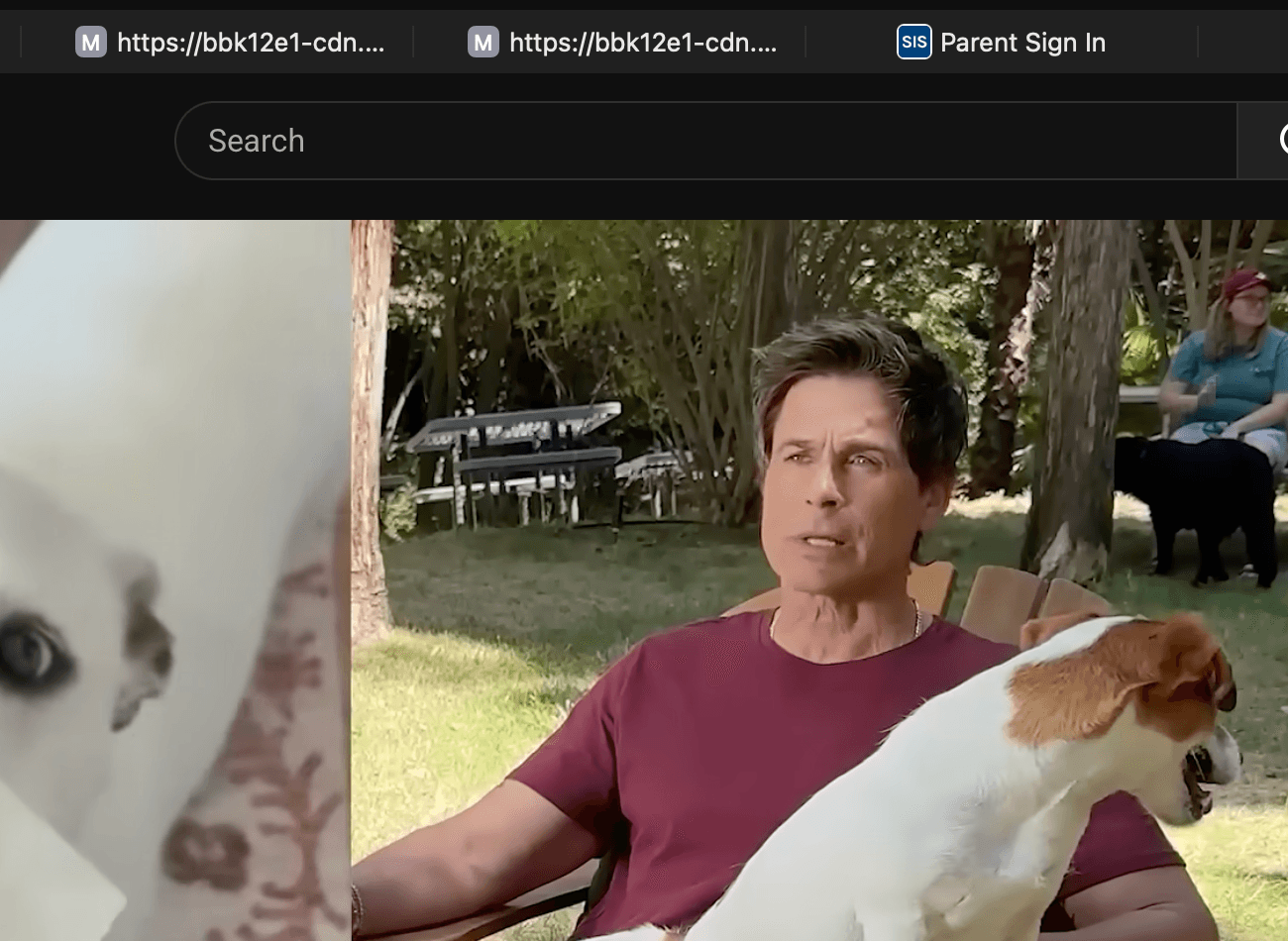 Caption: Sacca sparring with Mark Cuban in the Brightwheel clip on ABC’s YouTube channel. Screenshot from ABC/YouTube.
What Sacca brought to the panel was not warmth. It was a category lens. He was good at seeing when a founder was really building software economics inside a business that looked ordinary to everyone else. He was also good television because he did not mind sounding a little impossible. Some guest sharks want to be liked. Sacca wanted to be right.
Online Presence
Sacca is less of a full-time internet character than he was in the Twitter-first years, but he still has a meaningful public footprint. His audience now is a tighter cluster of founders, investors, climate people, policy nerds, and ambitious listeners who still consume long podcast transcripts on purpose. That is not mass celebrity. It is influence with a spreadsheet.
The brand is also cleaner now. Lowercarbon Capital gives him a modern operator-philanthropist frame instead of the old venture cowboy caricature. He still benefits from the earlier legend, but the public pitch has moved from “I saw Twitter early” to “I want to fund hard climate problems before the room gets there.”
What People Are Saying
The most useful outside judgment still comes from the people who worked with him before the mythology calcified. In Forbes’ 2015 profile, Evan Williams described Sacca not just as an investor, but as someone who kept showing up in more consequential ways.
“He became an investor, an advisor, a friend.” Evan Williams, Forbes
Reddit’s Shark Tank crowd is rougher, which is healthy. The recurring complaints are familiar, too much Uber talk, too much swagger, too much certainty. Fair enough. The interesting part is that even critics usually concede he had a real point of view. Television is full of rich guests who contribute posture. Sacca contributed a thesis.
Net Worth
The cleanest public number remains Forbes’ $1.2 billion estimate, last updated there on April 5, 2021. No fresher Forbes billionaire figure surfaced in current results, so that is still the most defensible public anchor. SharkTankDB uses the same estimate.
The underlying sources of wealth are not mysterious. Lowercase’s early stakes in Twitter, Uber, Instagram, Twilio, and Stripe did the heavy lifting. Lowercarbon adds a second-act portfolio whose eventual value is still being written. He and Crystal also signed the Giving Pledge, which matters because it suggests the future of the fortune is as much about deployment as accumulation. In plain English, Sacca got rich calling the internet early, then decided to spend the next chapter trying to call climate early.
Frequently Asked Questions
Who is Chris Sacca on Shark Tank?
Chris Sacca is a venture investor best known for Lowercase Capital, the fund behind early bets on companies like Twitter, Uber, Instagram, and Twilio. He appeared as a guest shark in Seasons 7 and 8. On the show, he usually played the role of the tech lens in a room that often defaults to product and retail logic.
What companies did Chris Sacca invest in on Shark Tank?
Publicly documented on-air deals tied to Sacca include Rent Like a Champion, Hatch Baby, Bee Free Honee, Brightwheel, Jack’s Stands, Nomiku, Pop Up Play, and ToyMail. Not all of those aged well. Brightwheel is the standout success that still gives his TV investing record real weight.
How did Chris Sacca make his money?
He made his fortune by investing early in internet businesses that later became giant companies. Twitter and Uber are the headline names, but the broader Lowercase portfolio also included Instagram, Stripe, and Twilio. He was not famous for founding one blockbuster operating company, he was famous for buying into the right ones early.
Is Chris Sacca still a billionaire?
The most recent widely cited public estimate still places him at $1.2 billion. There is no stronger public 2026 figure surfaced in current results, so the exact number today is private. The public record still supports calling him a billionaire.
What is Chris Sacca doing now?
He co-runs Lowercarbon Capital with Crystal English Sacca and focuses on climate investing. That means backing companies in energy, industrial materials, transportation, carbon removal, and related hard-tech areas. It is a harder brief than social media, which is probably part of the appeal.
Final Take
Chris Sacca was a strong guest shark because he brought one thing the show too often lacks, a real feel for software scale. He could be irritating. He could sound too pleased with his own diagnosis. He could wear a shirt that looked like a dare. None of that changes the core judgment. When a business had platform upside or enterprise-like leverage hiding inside it, he usually saw it faster than most of the panel.
My judgment is simple. Sacca was better at Shark Tank than people who reduce him to the shirts remember, and worse than his own legend sometimes suggests. The record in the middle is strong enough. He did not just talk like a venture capitalist. He had the exits, the fund history, and the Brightwheel tape to back it up. In a franchise that regularly confuses charisma for edge, Chris Sacca brought an actual edge.
[Article last updated: August 2026. Deal terms and company status reflect publicly available information at time of publication.]

Sebastyen
Sebastyen Wolf is our Editor-in-Chief. He is an analyst and entrepreneur with experience working alongside early-stage founders, launching online ventures, and studying the data patterns that shape successful companies. A fan of Shark Tank since Season 1, he now focuses on translating the show’s most valuable insights into clear, practical takeaways for readers.