Rapid Ramen Cooker on Shark Tank: Numbers, Noodles, and a Cuban Handshake
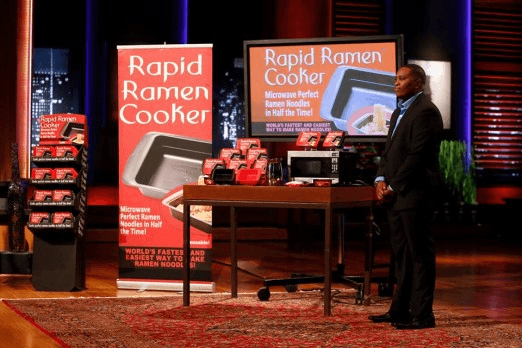
Season 5, Episode 3 (episode 503, aired October 4, 2013) opened with Chris Johnson walking onto the Shark Tank carpet carrying a square orange tray and a grin that said, “watch this.” Mark Cuban, Lori Greiner, Kevin O’Leary, Barbara Corcoran, and Robert Herjavec sat ready. Johnson asked for $300,000 for 10%—a $3 million valuation—backed by his claim that the Rapid Ramen Cooker could make the best microwaved noodles on the planet in four minutes flat.
The Sharks had a full view of the product: a BPA-free, microwave-safe polypropylene tray molded to fit a standard ramen brick with raised fill lines. Johnson said it cost about $0.75 to make and retailed near $5.99. He framed it as a faster, cleaner way to cook ramen without the boiling pot mess, and he argued that keeping the corners submerged solved the “dry corners” complaint that every college student knows too well.
| On-Air Ask | Detail |
|---|---|
| Investment sought | $300,000 |
| Equity offered | 10% |
| Implied valuation | $3 million |
| Unit cost vs. retail | ~$0.75 cost; ~$5.99 retail |
Johnson’s pitch flipped from soft-spoken to a booming “Rapid Ramen!” chant. That moment loosened the room; it also showed he could sell under pressure. He told the Sharks he had hustled a Sacramento Walmart manager into an early test, stocked the shelves himself, and watched them sell out. By taping, he reported roughly $164,000 in revenue in under a year, including a recent $80,000 month, and claimed distribution across about 2,500 stores (Albertsons, Safeway, WinCo, H‑E‑B, and regional grocers). Cash still pinched because purchase orders required inventory upfront, so he framed the ask as working capital more than marketing money.
The Sharks went straight to moat and math. Kevin O’Leary liked the velocity but questioned the patent’s ability to fend off copycats. Lori Greiner warned that dollar-store imitations would appear as soon as the episode aired. Barbara Corcoran worried about the single-SKU risk. Robert Herjavec wanted a steeper equity slice. Cuban initially passed on copycat concerns, then pivoted once royalties entered the chat.
Johnson countered criticism with proofs of hustle: he described refilling shelves himself, relisting online when stockouts hit, and negotiating manufacturing runs that could scale with big-box orders. His answers showed a founder who knew his per-unit margins and the timing of each cash cycle, even if he lacked an airtight patent wall.
| Sales Snapshot (pre-air) | Figure |
|---|---|
| Trailing revenue | About $164,000 |
| Best recent month | Roughly $80,000 |
| Claimed retail doors | Around 2,500 |
| Online pace | About 4 units per minute during peaks |
Royalty talk turned the tide. Kevin floated $300,000 for 10% with a $0.75 royalty until payback, then $0.25 in perpetuity. Lori proposed something similar to buffer risk. Those offers protected investors but carved into a $6 retail price so deeply that cash flow would wheeze. Cuban re-entered with a simpler path: $150,000 for 15% equity plus a $150,000 inventory loan. That deal implied about a $1 million post-money equity valuation with debt covering working capital. Johnson accepted on air with a handshake from Cuban. Later coverage across ABC recaps and Shark Tank blogs confirmed the televised deal did not close, yet the filmed terms remain the factual record of the episode.
The on-air backstory mattered. Johnson, a UC Davis grad and former corporate sales rep, said he dreamed up the tray while watching late-night TV with ramen in hand and a microwave nearby. He wasn’t a food scientist; he was a scrappy tinkerer who cut prototypes from plastic sheets and tested water lines in his kitchen. He won a local Walmart manager over by showing that the tray kept noodle corners submerged and cut cooking time to four minutes without the stovetop clean-up. That guerrilla proof fueled purchase orders before Shark Tank ever called.

Did you know the square footprint isn’t just for looks? Matching the noodle brick keeps every corner under water, which early Walmart shoppers praised as the closest microwave texture to a stovetop boil.
From a financial analyst’s chair, the economics looked friendly: a gross margin wide enough to fund marketing, a single mold that kept tooling costs low, and a retail price that could flex for promotions. The risk sat in defensibility. Microwave trays invite copycats, and Johnson’s utility patent claims—focused on shape and fill lines—could slow but not fully stop similar designs. Cuban’s offer worked because it avoided permanent royalties, kept unit margins intact, and paired Johnson with a Shark who knew how to race retail clocks.
| Deal Terms vs. Royalty Proposal | Impact on Cash |
|---|---|
| Cuban: $150k for 15% + $150k loan | Protects margin; debt repaid from inventory turns |
| O’Leary: $300k for 10% + $0.75 then $0.25 royalty | Heavy tax on every $6 sale, risky for cash flow |
| Greiner royalty concept | Similar margin drag and slower payback for founder |
For viewers, the craziest beat landed when Johnson kept talking over Cuban mid-offer. Cuban snapped, “Stop talking!”—the same clip that the Shark Tank Global channel still features. It felt tense on TV, yet it signaled that Cuban respected the hustle enough to stick around. Barbara bowed out on single-SKU risk, and Robert couldn’t get comfortable with the valuation. The room split between royalty hedges and a clean equity-plus-loan structure; Johnson picked the structure that let him sleep at night.
Post-airing, Rapid Brands (Johnson’s company) raced to expand shelf space. Walmart rolled it out nationally. Target, CVS, and Walgreens followed. College bookstores signed on—more than 1,100 campuses stocked the bright orange tray. In 2016, Rapid Brands signed a licensing deal with Nissin to put the Top Ramen logo on co-branded cookers, placing them next to noodle packs in grocery aisles. By 2023, Rapid Brands cited roughly $55 million in cumulative revenue across the Rapid product family, with lifetime unit sales over 50 million according to follow-up interviews Johnson gave to Shark Tank recap outlets.
| Post-Show Moves | Status |
|---|---|
| National Walmart rollout | Yes, after airing |
| Target, CVS, Walgreens | Yes, confirmed in later retail waves |
| College bookstores | 1,100+ campuses |
| Nissin Top Ramen licensing | Signed in 2016 |
| Line extensions | Rapid Mac, Rice, Oatmeal, Egg, Hot Dog, Pasta, Brownie, Popcorn |
Johnson kept marketing simple: bright packaging, end-cap placement, college bookstore point-of-sale stands, and quick demos that turned water fill lines into the main feature. He avoided heavy ad spend and leaned on in-store velocity. Copycats did appear, but his early store relationships and the “Rapid” family name created a mini-brand that store buyers recognized. That brand recall mattered more than litigation; fighting every clone would have drained margin faster than a royalty.
Did you know instant ramen moves tens of billions of servings every year worldwide? If just 0.05% of those bowls use an accessory like Rapid Ramen, that still means millions of trays—proof that tiny percentages can fuel a tidy hardware business.
From a Shark’s lens, the moat isn’t the patent; it’s speed to retail and brand stretch. A $0.75 cost against a ~$6 retail leaves room for temporary price drops without killing gross margin. The risk is product fatigue: single-purpose gadgets often gather dust. Johnson answered that by launching Rapid Mac and Rapid Rice, giving buyers a reason to trust the brand again. Each additional SKU strengthened negotiations with retailers because a successful end cap can rotate through multiple items without resetting planograms.
On competitive chatter, ABC and CNBC recaps highlighted how fast the tray spawned imitators. SharkTankBlog and SharkTankRecap both noted the Cuban deal never closed, and Reddit threads in r/sharktank cheered Johnson’s hustle while agreeing that a royalty would have choked growth. No Joe Pardo YouTube breakdown exists for this product, so there’s no transcript to pull insights from—but the three on-air clips above capture the key beats.
| Investor Lens | Why it mattered |
|---|---|
| Gross margin | Thick enough to fund promos and withstand copycats |
| Working capital | Big-box payment cycles made inventory loans smarter than royalties |
| Defensibility | Moderate patent protection; brand speed more important |
| Brand stretch | Line extensions kept shelves sticky and refreshed |
Social proof helped too. Rapid Brands posts product reels and customer photos on Instagram under the verified handle @rapidbrands. The post below shows the orange cooker set next to a Top Ramen pack, echoing the 2016 licensing move that put both on the same shelf.
So what worked? A simple mold, a clear benefit (“no dry corners”), and a founder willing to restock shelves himself. What didn’t? A patent moat strong enough to slow clones, and a deal that closed post-show—the Cuban handshake looked clean on TV but stayed on TV. Still, the exposure and speed to retail produced a business that lasted beyond its 15 minutes, backed by tens of millions in lifetime revenue.

Sebastyen
Sebastyen Wolf is our Editor-in-Chief. He is an analyst and entrepreneur with experience working alongside early-stage founders, launching online ventures, and studying the data patterns that shape successful companies. A fan of Shark Tank since Season 1, he now focuses on translating the show’s most valuable insights into clear, practical takeaways for readers.