Tony Xu Net Worth, Shark Tank, and the DoorDash Empire Built From the Back Room
TL;DR: – Tony Xu built DoorDash around a simple idea, local businesses lose sales when delivery is clumsy, and software can fix that – His origin story starts in his mother’s restaurant, where washing dishes taught him what small-business stress looks like up close – Appeared as guest shark in Season 14, Episode 11, on January 13, 2023, and made three deals in a single episode – Net worth is estimated at $2.1 billion, built across DoorDash equity, options, and the scale of the delivery platform he still runs
Contents
- Early Life
- The Business That Made Them
- Investment Philosophy
- On Shark Tank
- Online Presence
- What People Are Saying
- Net Worth
- FAQ
- Final Take
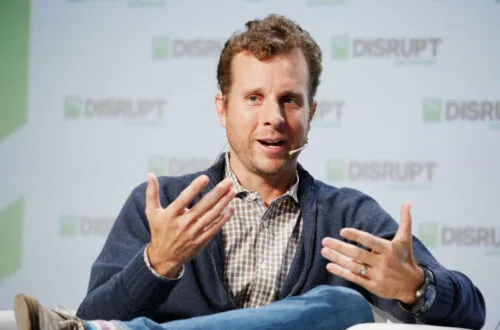
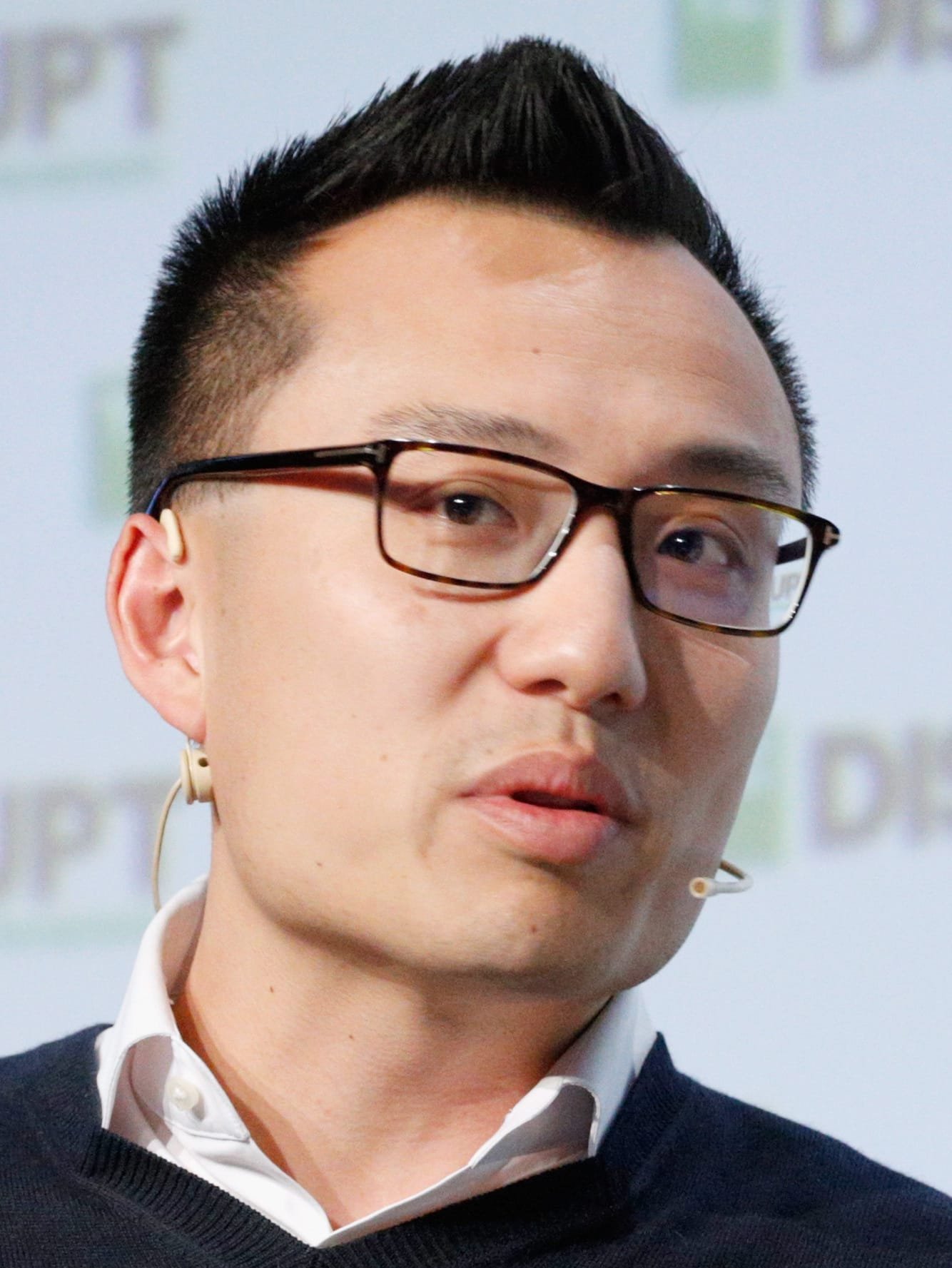 Caption: Tony Xu in a public speaking appearance during his DoorDash rise. Image via Wikimedia Commons.
The useful way to start Tony Xu’s story is not with a bell at the New York Stock Exchange. It is with a kid in Illinois doing the jobs nobody writes speeches about, washing dishes, bussing tables, fixing small problems in his mother’s restaurant because that is what the business needed that day. DoorDash looks like a Silicon Valley company, but its emotional logic came from the back room of a restaurant.
By the time America met him on Shark Tank, Xu was already running the largest food delivery platform in the country. He still carried himself less like a glossy celebrity investor and more like the guy who remembers what happens when a family business misses ten orders and has to eat the loss.
Early Life
Tony Xu was born in Nanjing, China, then moved to the United States with his parents as a small child. Public sources disagree on the exact birth year, but Forbes listed him at 41 on August 27, 2026, and DoorDash’s 2026 proxy materials also listed him as 41. His father studied aerospace engineering and applied mathematics at the University of Illinois Urbana-Champaign. His mother had been a doctor in China, then had to start over in America because her credentials did not carry over.
That restart shaped the house. Xu told the Los Angeles Times that his mother worked multiple jobs, including as a server in a Chinese restaurant, before later opening her own acupuncture and medical clinics. He worked there from childhood into his teens, doing whatever needed doing, and learned early how quickly a small business can feel squeezed.
“DoorDash exists today to empower those like my Mom who came here with a dream to make it on their own.” Tony Xu, Forbes
He later earned a B.S. in industrial engineering and operations research from UC Berkeley and an MBA from Stanford. He has tied the name “Tony” to learning English through television, including Who’s the Boss?, which is one of those details too odd to be made up by a media coach.
Before founding DoorDash, Xu worked at McKinsey, eBay, PayPal, RedLaser, and spent time around Square. The résumé taught him process. The restaurant taught him consequences.
The Business That Made Them
DoorDash grew out of a very plain question. Xu and his co-founders spoke with local merchants in Palo Alto and kept hearing the same complaint: they were turning away delivery orders because they had no clean way to fulfill them. Xu described the first experiment to the Los Angeles Times in simple terms, a Saturday website, a Google Voice number, PDF menus, and founders taking turns dispatching and driving.
The anecdote that stayed with him came from a cake shop owner. In the How I Built This transcript, Xu recalled hearing she was turning down 10 to 15 orders a week because she could not handle delivery. To a founder raised in a restaurant family, that was not a nuisance. It was lost oxygen.
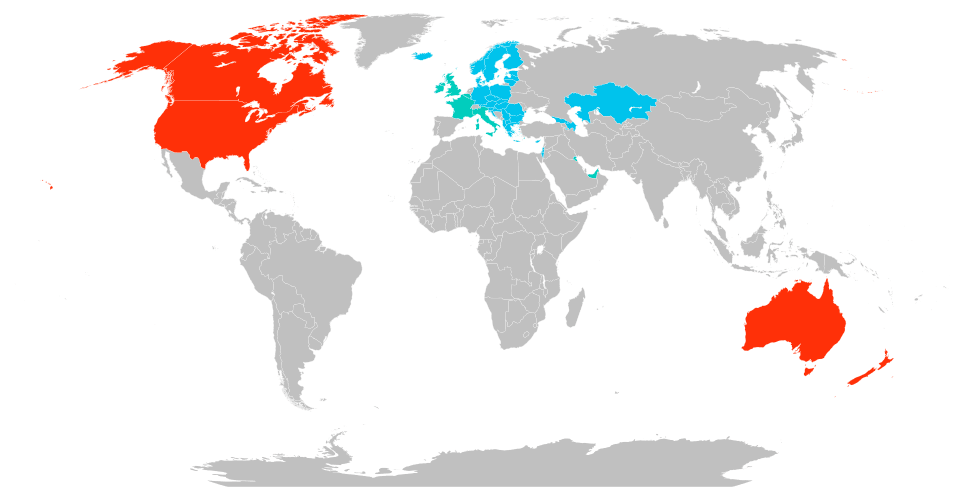 Caption: DoorDash’s operating footprint as reflected in a public company overview image on Wikimedia Commons.
The scale that followed is why Tony Xu belongs on a guest-shark list at all. DoorDash’s 2025 annual report filed with the SEC reported 3.172 billion total orders, $102.018 billion in marketplace GOV, and $13.717 billion in revenue for 2025. Divide revenue by GOV and you get a take rate of roughly 13.4%, matching the filing’s reported net revenue margin.
DoorDash said in its February 18, 2026 results release that it generated nearly $75 billion in sales for local merchants and over $20 billion in earnings for Dashers during 2025. Xu and his wife Patti also signed the Giving Pledge, while DoorDash’s ABC biography points to programs like Project DASH and its merchant accelerators. The business is enormous. The pitch is still local.
Investment Philosophy
Xu’s investing style starts with sympathy for operators, but it does not end there. In public interviews he keeps returning to customer obsession, operational detail, and the need to solve a real problem for several parties at once. DoorDash is not one business serving one customer. It is a constant negotiation among merchants, drivers, and consumers.
One of the clearest stories he tells about values is also one of the most expensive. In a 2026 Stripe LinkedIn post featuring Xu, he recalled a night early in DoorDash’s life when every order was late and the company refunded everyone despite having less than two weeks of runway left.
“We made the decision to refund everyone. That cost us over 40% of the bank account.” Tony Xu, quoted by Stripe on LinkedIn
That anecdote tells you more about Xu than ten press releases would. He is willing to take short-term pain if he thinks it buys long-term trust.
He also stays close to the work. On his LinkedIn profile, Xu still talks about WeDash, the practice of company employees making deliveries themselves.
On Shark Tank
Tony Xu made his first guest-shark appearance on Friday, January 13, 2023, in Season 14, Episode 11. The TVDB episode record and the Apple TV listing match on the date and episode number. ABC now labels him a recurring shark, but the reviewed episode records still point to that January 13, 2023 appearance as the first verified one.
It was a busy debut. Xu saw pitches from Kinfield, Metric Mate, wildwonder, and Cabinet Health. The full episode transcript shows him making or joining deals on three of the four. He teamed with Barbara Corcoran on Kinfield for $250,000 for 10% combined. He backed wildwonder at $500,000 for 6% plus 3% advisory shares. He then joined Kevin O’Leary on Cabinet Health for $1 million total, 7% equity, and a 2% top-line royalty until the investors had recouped $1 million.
“I’m not a beverage guy, but I do understand scaling capital efficient businesses.” Tony Xu, Shark Tank Season 14 Episode 11 transcript
The numbers are a better TV résumé than the title card. Kinfield came in asking $250,000 for 5%, which implied a $5 million valuation. Xu cut through the royalty circus and offered straight equity instead. Wildwonder asked for $500,000 for 5%, a $10 million valuation, and he still leaned in because he liked the founder’s sequencing. Cabinet Health was the biggest swing, asking $500,000 for 2.5%, a $20 million valuation, and Xu still found a structure after hearing the company had already reached 700,000 customers.
What happened next was mixed in the way real portfolios usually are. wildwonder said in a January 2024 LinkedIn update that the company had reached over 3,000 stores after the show. Fast Company later reported Cabinet Health had expanded into more than 700 CVS stores. If you want another tech-minded guest shark who also worked from a marketplace lens, our Nirav Tolia profile is the clean comparison.
Community reaction was split, which usually means the episode had a pulse. In the PrimeTimer discussion thread, some viewers said Xu brought more energy than they expected and liked the way he explained operating reality. Others were skeptical when he recognized wildwonder founder Rosa Li from Stanford and suspected the deal had a head start.
 Caption: Tony Xu in promotional Shark Tank footage distributed on YouTube by Shark Tank Global.
Online Presence
Xu’s public footprint is large, but it is not the usual founder-influencer routine. His LinkedIn profile showed about 24,000 followers in search results this month, while DoorDash’s corporate LinkedIn page sat around 1.48 million. The content is mostly product launches, local-commerce reports, hiring, and company milestones.
That tone fits the brand. Recent posts highlighted DoorDash’s State of Local Commerce report and 10^10 lifetime orders, usually with more gratitude than chest-thumping. For a billionaire CEO, he is low on perfume.
What People Are Saying
Peers who know the inside of the business tend to praise Xu for the same thing, balance under pressure. In a public LinkedIn post surfaced this month, DoorDash executive Joseph Wu argued that Xu’s real strength is keeping several constituencies in view at once without freezing.
The audience outside the company sees something similar, even with caveats. PrimeTimer posters called him thoughtful, fascinating, and more grounded than some guest sharks who arrive with bigger celebrity halos and lighter operating chops. The skeptical faction, especially around the wildwonder connection, saw him as too cozy with one founder.
“No one is better at balancing the needs of every stakeholder while still moving with speed.” Joseph Wu, LinkedIn
What nobody really says is that Xu is there to be charming. He is not. On Shark Tank, that is useful. A lot of guest sharks show up ready for applause. Xu showed up ready to price risk.
Net Worth
The cleanest current estimate comes from Forbes, which listed Tony Xu at $2.1 billion on August 27, 2026. Forbes also says he owns 4.6% of DoorDash plus options. His wealth is still tied mainly to the business he built.
“10^10 lifetime orders!” Tony Xu, LinkedIn
There is a simple lesson in that number. Xu got rich by holding enough equity in a business that turned local delivery from a messy convenience into a durable public company.
FAQ
Who is Tony Xu on Shark Tank?
Tony Xu is the co-founder and CEO of DoorDash and a guest shark who first appeared on Shark Tank Season 14, Episode 11, on January 13, 2023. He came to the panel with real logistics and marketplace experience.
What companies did Tony Xu invest in on Shark Tank?
On his verified January 13, 2023 episode, Xu made on-air deals with Kinfield, wildwonder, and Cabinet Health. He passed on Metric Mate.
How did Tony Xu start DoorDash?
DoorDash started after Xu and his co-founders interviewed local merchants and heard repeated complaints about losing delivery orders. Their first version was a stripped-down site with PDF menus and a Google Voice line, and the founders handled dispatch and delivery themselves.
“We built a site literally on a Saturday afternoon.” Tony Xu, Los Angeles Times
What is Tony Xu’s net worth in 2026?
Forbes estimated Tony Xu’s net worth at $2.1 billion as of August 27, 2026. That figure is tied mostly to his DoorDash stake and options, so it can move with the stock.
Is Tony Xu still CEO of DoorDash?
Yes. DoorDash’s current investor-relations biography says Xu has served as CEO since May 2013 and remains on the board.
Final Take
Tony Xu makes sense as a guest shark because he built a company in a category where scale is hard, margins are tight, and customers complain fast. He thinks in systems, but the system starts with a merchant missing sales and a family feeling the stress.
My judgment is straightforward. Tony Xu is one of the more credible guest sharks the show has used in recent years because his expertise is not decorative. He has real founder-market fit for businesses that need operations, sequencing, and distribution judgment.
[Article last updated: August 2026. Deal terms and company status reflect publicly available information at time of publication.]

Sebastyen
Sebastyen Wolf is our Editor-in-Chief. He is an analyst and entrepreneur with experience working alongside early-stage founders, launching online ventures, and studying the data patterns that shape successful companies. A fan of Shark Tank since Season 1, he now focuses on translating the show’s most valuable insights into clear, practical takeaways for readers.